Practice and Growth: Women in Africa's Higher Education Workforce in the AI Era
On 29 April 2026, in the computer lab of the Networks and IT Centre at Ain Shams University in Cairo, thirty faculty members sat at their screens learning prompt engineering, artificial intelligence (AI) instructional design and automated assessment generation under the guidance of Professor Hany N. Yousef. The five-hour hands-on session was titled The AI Educator's Toolkit: Transforming Your Teaching Practice. There were thirty places. There had been 336 applicants. The gap between those two figures reflects how pressing the demand for digital and AI competencies has become among higher education professionals.
Responding to that demand is the day-to-day work of the International Centre for Higher Education Innovation under the auspices of UNESCO (UNESCO-ICHEI). Strengthening the digital and AI competencies of the higher education workforce is the core mission of UNESCO-ICHEI. Within that mission, the sustained participation and leadership of women in the higher education workforce is a priority in its own right.
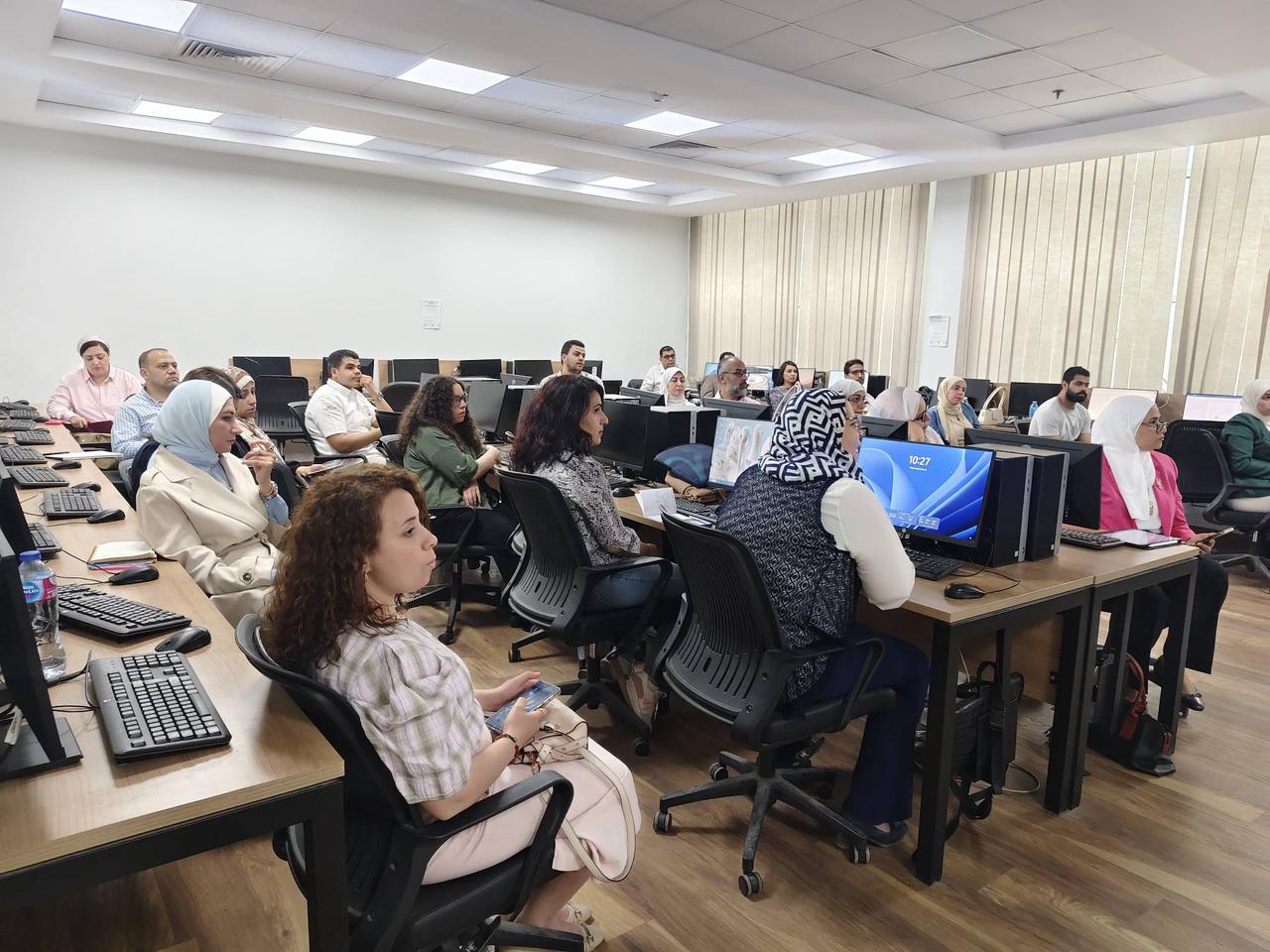
April 29, 2026, the training session "AI Educator Toolkit: Transforming Your Teaching Practice"
Written into the Mission: Turning Global Priorities into Action
The 2025 Global Education Monitoring Report gender report, Women lead for learning, published by UNESCO, notes that women hold only 30% of leadership positions in higher education worldwide. Challenging systematic prejudices: an investigation into bias against women and girls in large language models finds that women account for only 12% of AI researchers worldwide and 20% of technical roles in major machine-learning companies. At the front of the academic pipeline, at the table where decisions are made and at the frontier of technological change, women remain markedly underrepresented. Gender equality is one of UNESCO's two global priorities, and the same conviction runs through UNESCO's recent work on AI governance and digital skills development. As a UNESCO Category 2 Centre, UNESCO-ICHEI has consistently attended to gender inclusion in building the digital and AI competencies of the higher education workforce, translating global priorities into action through its projects.
Why It Began: The Origins of Women Leading Change in Africa
The project Women Leading Change in Africa: Future Higher Education Professionals and Leadership in the Intelligence Era was jointly initiated by UNESCO-ICHEI and the UNESCO Institute for Information Technologies in Education (UNESCO IITE) at the the High-Level Policy Dialogue in Africa. Formally launched in December 2024, it runs for 36 months. The project serves professionals across Africa's higher education systems, with particular emphasis on women educators, researchers, administrators, learning-support staff and university leaders, and aims to strengthen the professional competencies and leadership of women in the higher education workforce. The project puts UNESCO's global priorities of Gender Equality and Priority Africa into practice. UNESCO-ICHEI's partnerships in Africa run deep: the region hosts more International Institute of Online Education (IIOE) National Centres, more partner institutions and more training participants than any other sub-region. Over these years of collaboration, African partner institutions have voiced an increasingly clear need — both for digital and AI capacity-building and for stronger gender equality within it — and the Women Leading Change in Africa project grew directly out of that need. December 13, 2024, the 2024 High-Level Policy Dialogue in Africa was held in Dakar, Senegal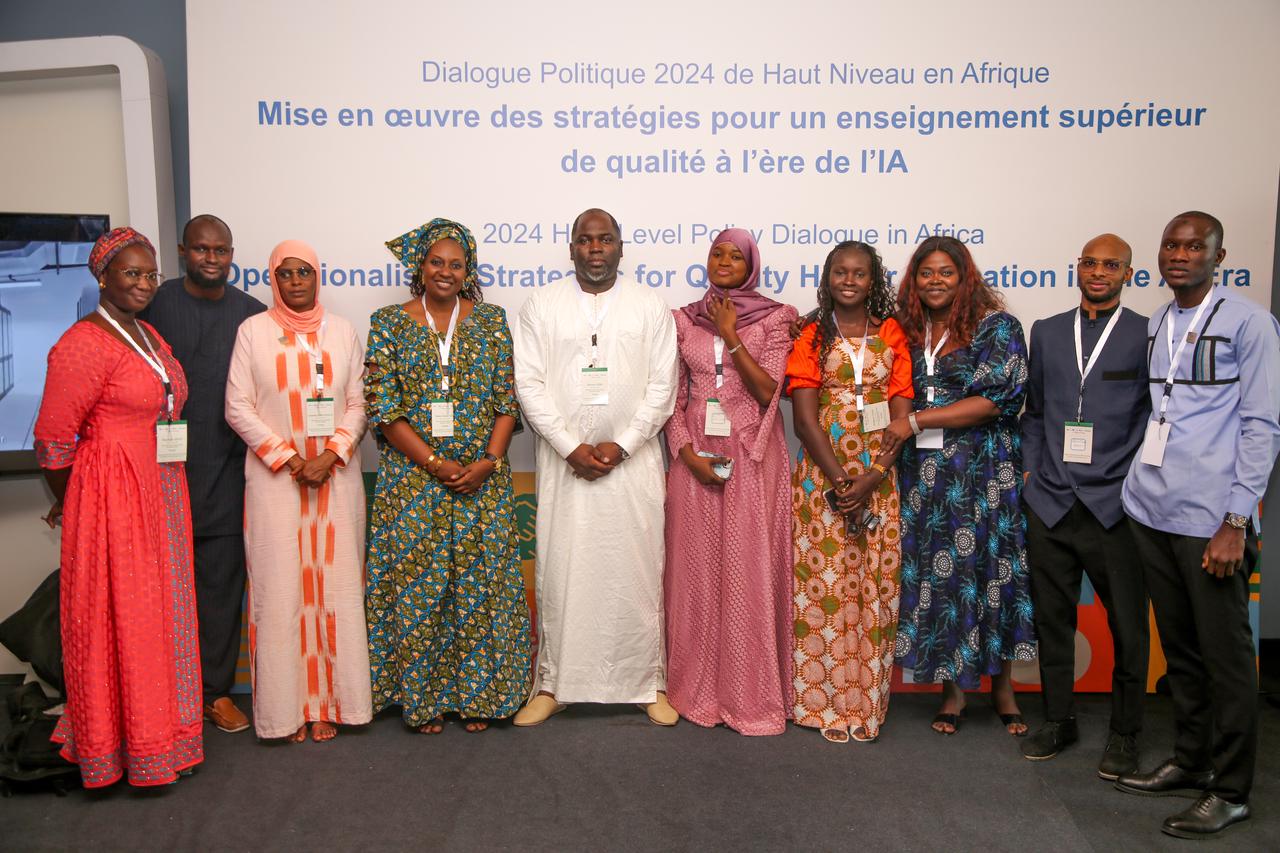
How It Works on the Ground: First-Hand Experience from Partner Institutions in Africa
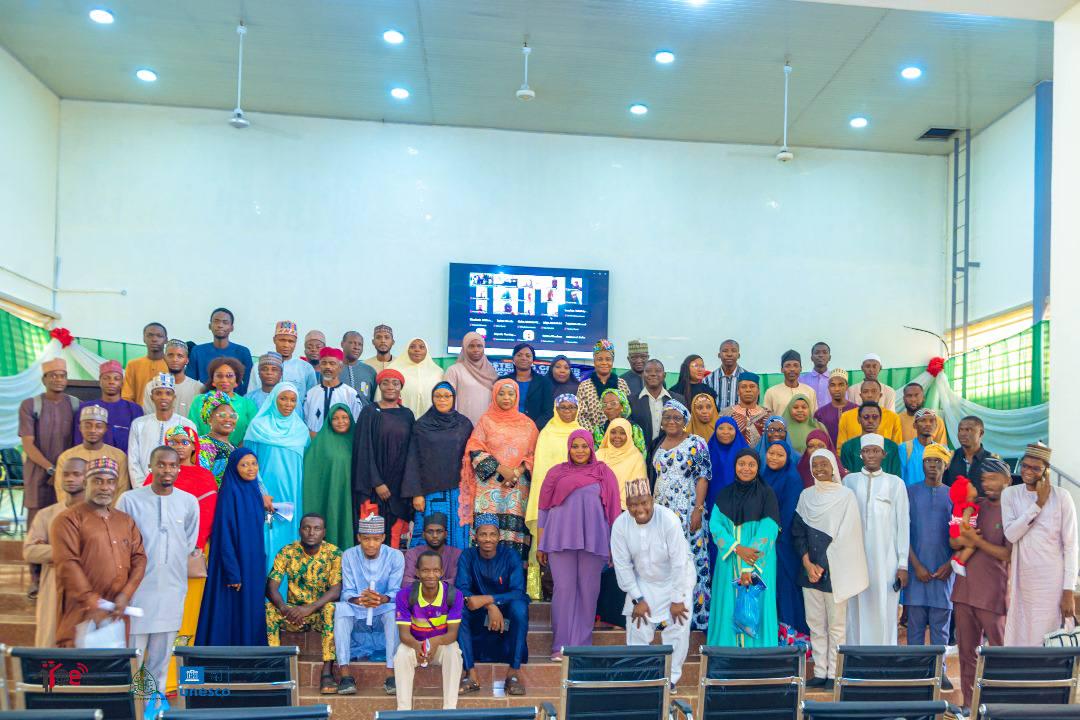
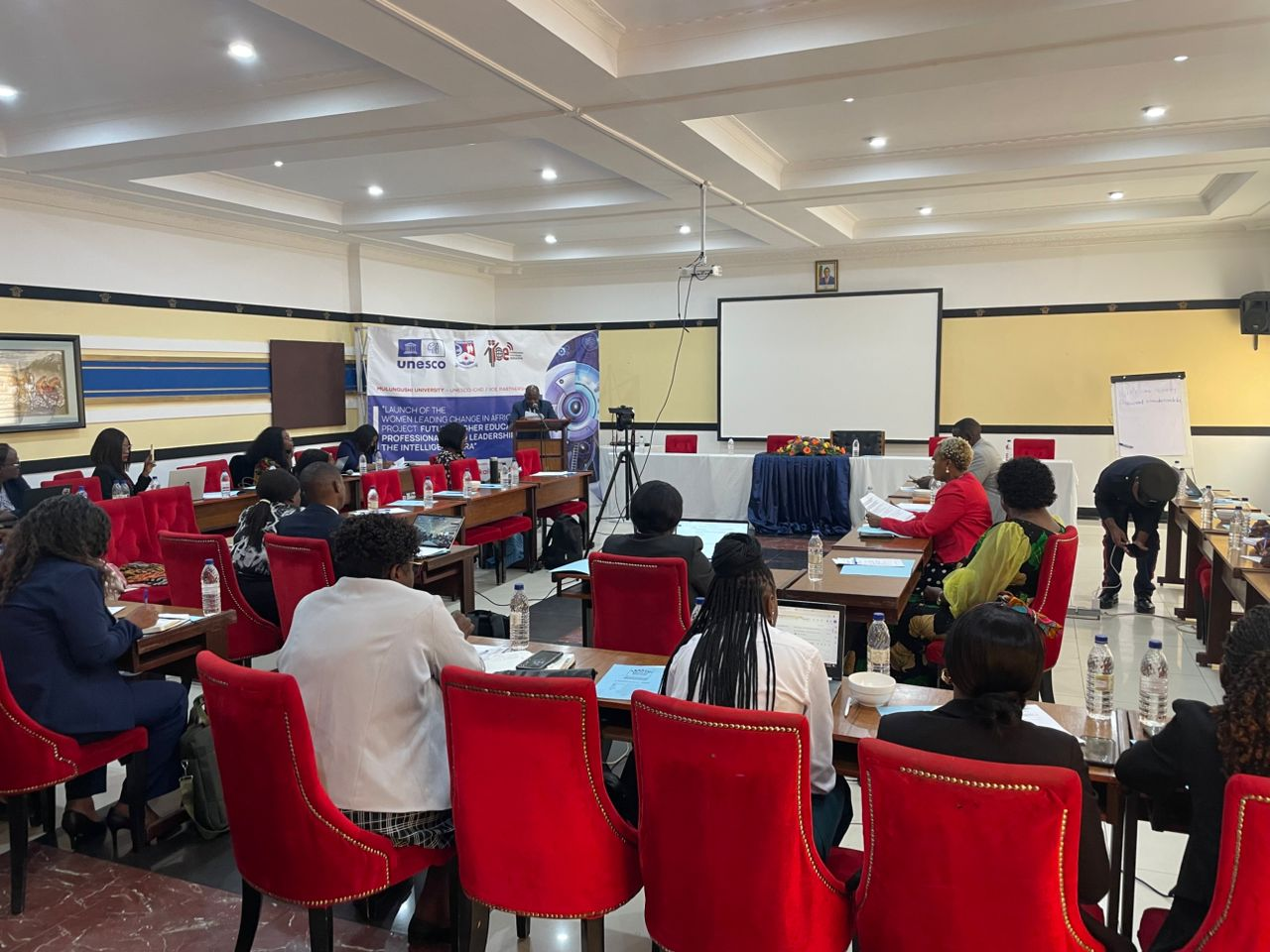
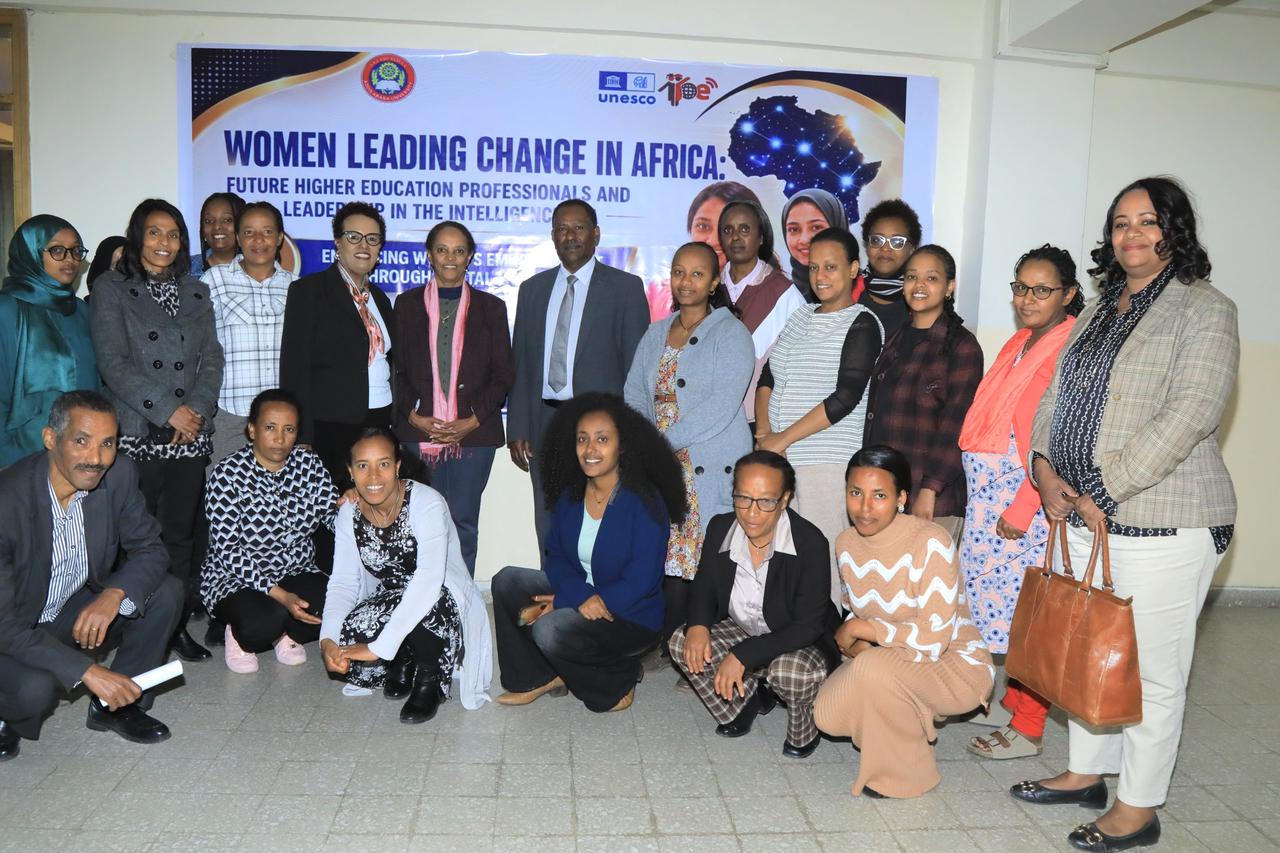
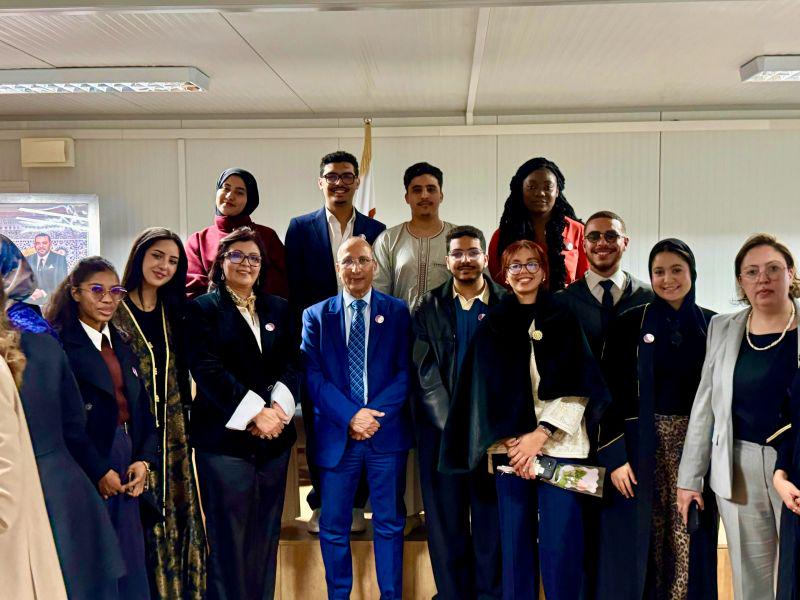
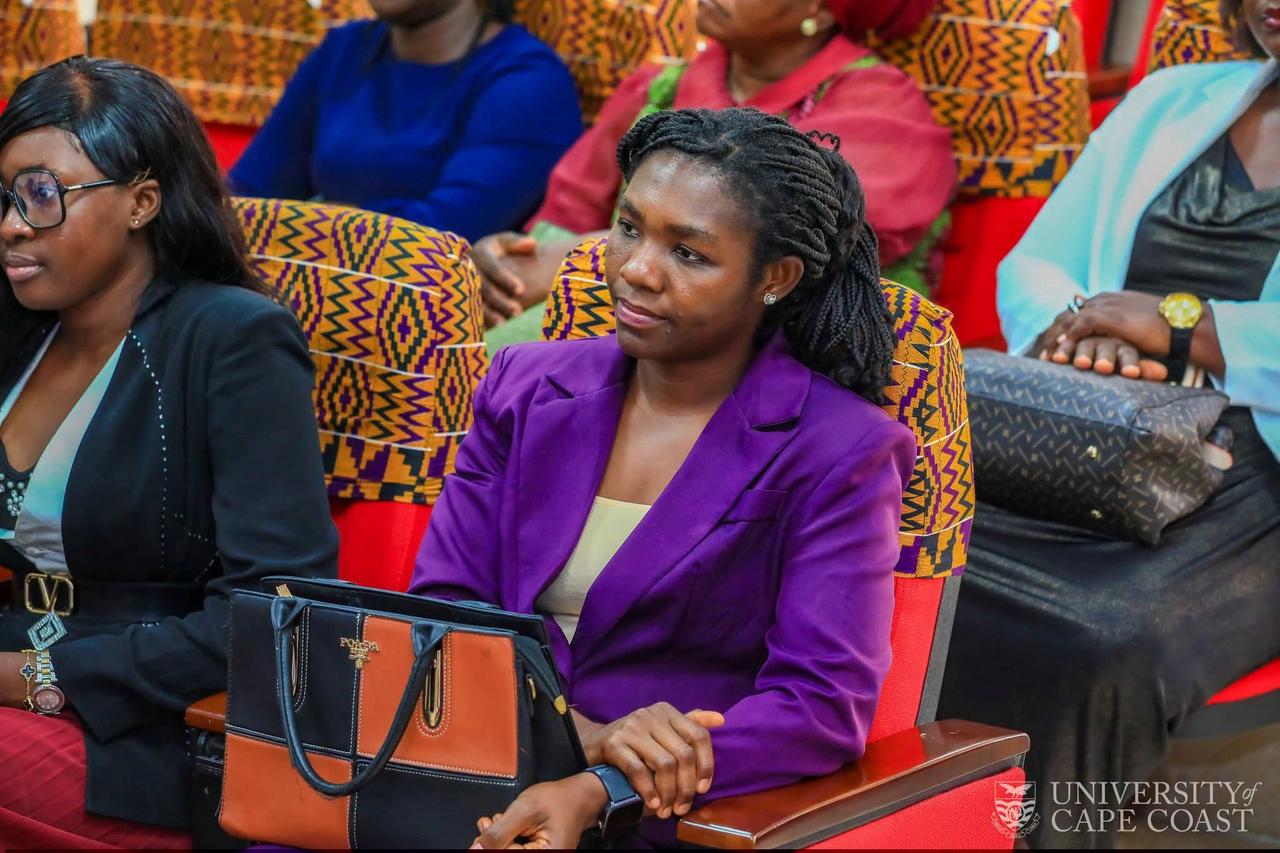
The project is designed to cover at least ten African countries. It is currently being implemented in eight — Côte d'Ivoire, Egypt, Ethiopia, Ghana, Morocco, Nigeria, Uganda and Zambia — and is expected to extend to partner institutions in further countries. Egypt IIOE Egypt National Centre, through sustained and in-depth operation, has embedded AI capacity-building in its framework for faculty development and established a dedicated award encouraging women academics to lead change. By early 2026, more than 4,000 people in Egypt had registered for micro-certification courses through the IIOE platform, and over 2,300 had completed at least one course. Women accounted for 66% of those certified, far exceeding the project's original target of 50%. Ain Shams University, the IIOE Egypt National Centre, has extended its collaborative network to 25 public universities nationwide, giving the project a base of implementation well beyond a single campus. In 2026, the IIOE Egypt National Centre launched She Leads: Digital Education Excellence Award, open to women in teaching, research and professional support roles at universities across the country, identifying and showcasing the innovations they are already delivering — using AI and digital tools to advance teaching and research. A national award dedicated to women educators allows that work to gain wider professional recognition. In August 2025, the university introduced seven AI application training programmes through the IIOE platform and required academic staff applying for promotion to complete at least one of them. Digital and AI capacity-building thus ceased to be a matter of individual choice and became part of the institutional framework for career progression. April 19, 2026, showcase of the winning cases of the She Leads: Digital Education Excellence Award Nigeria IIOE Nigeria National Centre has built women academics' confidence in AI through a women-led team and a learning community. At Ahmadu Bello University, the IIOE Nigeria National Centre, the project is coordinated by a team of women academics and professionals who bring both technical expertise and a clear understanding of the reality women face in higher education. The project has reached 2,338 participants, including 1,108 women. A dedicated WhatsApp learning community sustains engagement and interaction by providing technical guidance, course information, mentoring, peer support and encouragement. Interest has since spread across the university, with senior managers requesting AI training for their own units. The experience shows that visible women role models, practical learning, continuous support and inclusive communities can transform uncertainty about AI into confidence, capability and leadership. 3 September 3,2025, the Women Leading Change in Africa workshop hosted by the IIOE Nigeria National Centre at Ahmadu Bello University Zambia IIOE Zambia National Centre has built a local cross-institutional network and secured policy recognition at the national level. In May 2025, Mulungushi University, IIOE Zambia National Centre, and UNESCO-ICHEI convened representatives of eight Zambian higher education institutions for AI training, establishing formal cooperation among them. In March 2026, the launch ceremony of the Women Leading Change in Africa project was held at Mulungushi University, where Zambia's Minister of Education formally launched the project and delivered the Government's official address, publicly confirming that the project is aligned with the country's priorities for higher education reform and gender equality. That initial collaboration among eight institutions has since continued to expand, growing into a partner network connecting 18 universities and colleges in Zambia and the region. To date the project has reached 1,653 participants, including 971 women, or 58.74%. Mulungushi University also runs the Women Leading Change in Africa Webinar Series, which discusses practical approaches to strengthening women's leadership in higher education. At these events women are not only in the audience: they are the speakers, the facilitators and the mentors — showing in practice how diverse leadership teams foster innovation. March 6, 2026, the launch ceremony of the Women Leading Change in Africa project at Mulungushi University, Zambia Ethiopia IIOE Ethiopia National Centre has incorporated micro-certification courses into its continuous professional development framework for faculty. Addis Ababa University, the IIOE Ethiopia National Centre, implements the Women Leading Change in Africa project together with Hawassa University, Arba Minch University and Wollo University, strengthening women academics' digital and AI competencies through blended training. Between February and June 2026, enrolment in the micro-certification courses on AI applications in education rose from 501 to 1,039, while women's share of participants grew from 9.98% to 21.37%. Eighteen micro-certification courses are now available on the university's own training site, and the university has formally integrated these micro-certificates into its continuous professional development framework for faculty. 20 August 20, 2026, the Women's Leadership Workshop at Addis Ababa University, Ethiopia Morocco IIOE Morocco National Centre has pursued deep localisation, raising the project's national profile through multi-partner collaboration. Cadi Ayyad University (UCA) worked with UNESCO-ICHEI to develop the local platform of the IIOE Morocco National Centre (iioe.uca.ma), which brings together IIOE courses and learning content suited to local needs, and developed localised French-language courses. Held on International Women's Day, the W4I – Women For Impact workshop brought together 102 participants — women leaders, experts and entrepreneurs, 60% of them women — adding a dimension of leadership and community-building to capacity-building. Cadi Ayyad University has gradually built a cross-sector partnership ecosystem that includes the National Agency for the Promotion of Employment and Skills (ANAPEC) and the Association of Women Entrepreneurs of Morocco, connecting capacity-building to wider socio-economic needs. March 11,2026, the "W4I – Women For Impact" workshop in Morocco Côte d'Ivoire, Uganda, Ghana Progress in the countries that moved first have drawn in further partners, and institutions in Côte d'Ivoire, Uganda and Ghana have taken a first step, beginning to design and implement the project. In Côte d'Ivoire, implementation began in June 2026, mainly through French-language micro-certification courses and online training. In June, the Institut National Polytechnique Félix Houphouët-Boigny (INP-HB) held five training sessions reaching 2,339 learners. In Uganda, Makerere University has convened a forum for the promotion of gender equality, with the emphasis on raising gender awareness on campus. On 26 August 2026, the Institute for Educational Planning and Administration (IEPA) at the University of Cape Coast, the IIOE Ghana National Centre, joined the university's Centre for Gender Research, Advocacy and Documentation (CEGRAD) in launching the Women Leading Change in Africa programme in Ghana, with plans to provide digital competency training for 1,000 women and face-to-face leadership training for more than 100 women leaders each year. August 26, 2026, the launch of the Women Leading Change (WLC) in Africa programme in Ghana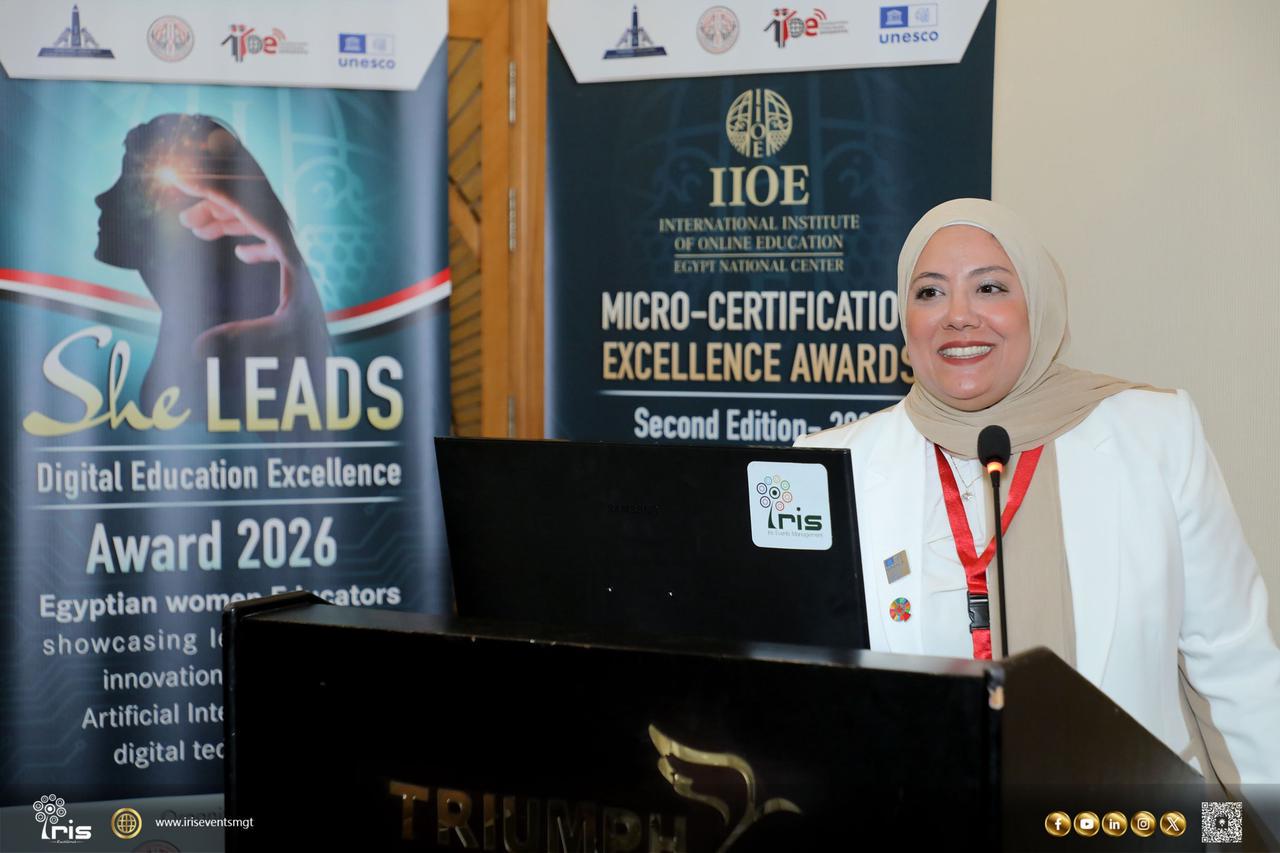
UNESCO-ICHEI has long been committed to advancing gender equality in the digital transformation of higher education. This experience belongs to Africa, and to higher education worldwide. Looking ahead, UNESCO-ICHEI will extend the results and experience accumulated over two years of the Women Leading Change in Africa project to more countries of the Global South, enabling more women in the higher education workforce to strengthen their digital and AI competencies and to lead the digital transformation of higher education.
Selected cases from the Women Leading Change in Africa project will be shared during UNESCO Digital Learning Week and featured in Issue 17 of CLOUD. PLease follow us for updates.