Regional Insights into Higher Education Digitalisation: Collaborative Exploration in the Arab Region
The readiness of higher education institutions (HEIs) for digital transformation is a key factor in their ability to effectively adapt to the integration of artificial intelligence (AI) into education. Since 2023, the International Centre for Higher Education Innovation under the auspices of UNESCO (UNESCO-ICHEI) has collaborated with UNESCO regional offices, category 1 institutes, regional and international organizations, and higher education research institutions to conduct joint research. This includes studies on the digital transformation of higher education across eleven sub‑regions of the Global South, as well as an examination of critical issues related to the integration of AI into higher education systems. This series of articles will review the findings of these reports, aiming to provide knowledge‑based guidance for all stakeholders in higher education as AI continues to reshape the educational landscape.
Digital Transformation: A Prerequisite for AI Integration in Education
As new technologies, such as AI, are increasingly integrated into the educational field, higher education institutions are undergoing systematic and digital transformations that impact everything from governance structures to operational models. The UNESCO-ICHEI and the ALECSO jointly published the Research Report on Digital Transformation of Higher Education Teaching and Learning in Arab Region. This report focuses not only on the introduction of technology but also aims to identify the challenges, demands, and opportunities during this transformation, sharing best practices to prevent an expanding gap between countries that lead in digitalisation and those in the Arab region.
The report investigates ten Arab countries, focusing on the following key questions: What policies need to be developed in the Arab region to promote digital transformation? What infrastructure is necessary? What valuable successful cases can be emulated? How can a timeline be designed? Are educators and students fully prepared to embrace digital transformation? And how can governance structures be optimised to effectively lead this transformation?
The digital transformation in the Arab region must be rooted in its unique social, economic, and educational realities. Despite significant advances in enrollment rates, literacy rates, and gender equality, recent years have seen political upheaval and humanitarian crises that have continuously impacted educational continuity, resource equity, and quality assurance. The exploration of these issues aims to provide adaptable and effective pathways for transformation in the Arab region, which is crucial for shaping its future competitiveness.
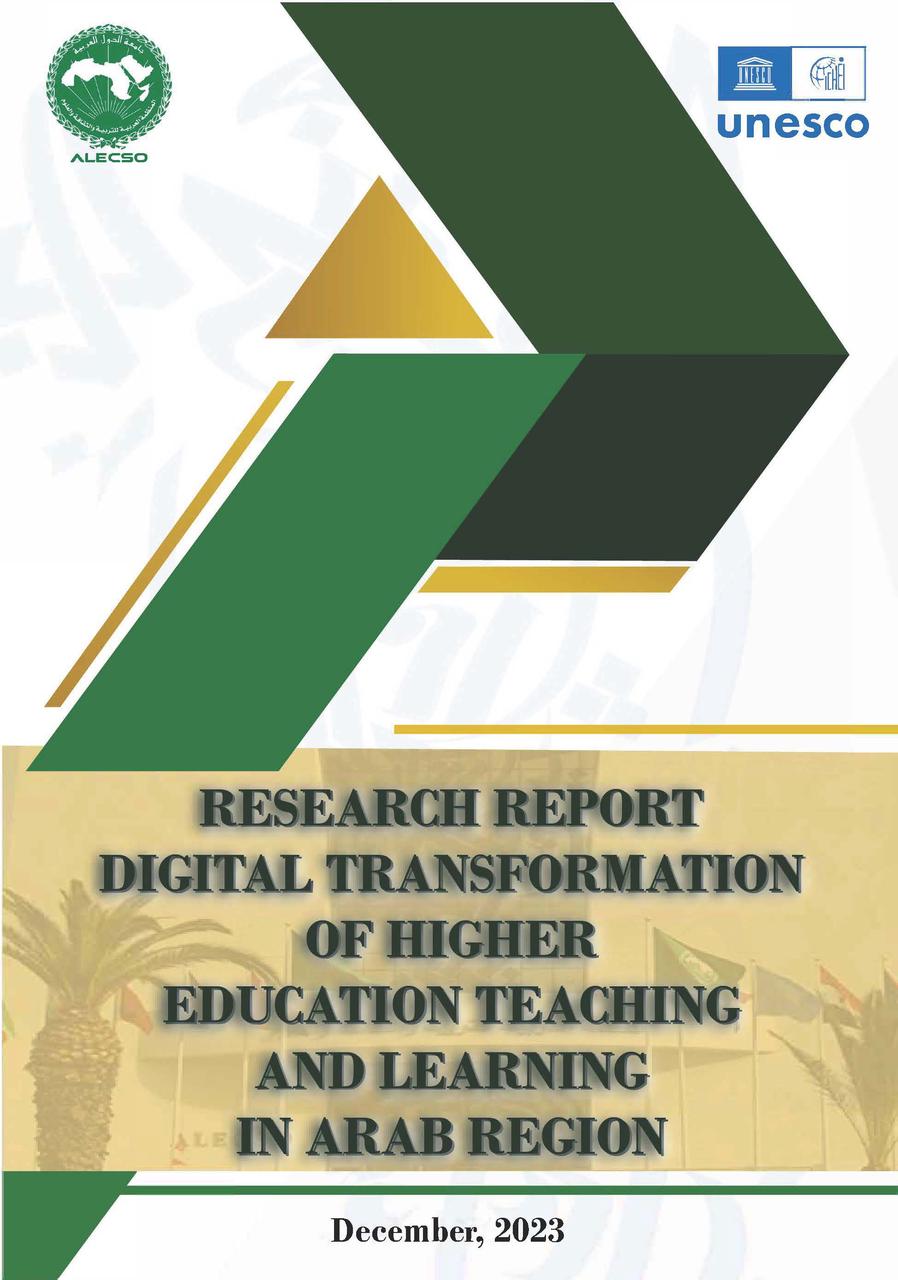
Research Report on Digital Transformation of Higher Education Teaching and Learning in Arab Region (Read full report)
Collaborative Research: Crossing Three Economic Gradients
This investigation did not merely stop at macro-level summaries but delved deeply into ten of the most representative countries in the Arab region. The sample covered high, medium, and low-income economies to ensure that the study was both broadly representative and reflective of actual conditions at different stages of development.
High-income Countries
United Arab Emirates, Saudi Arabia
Middle-income Countries
Algeria, Egypt, Iraq, Jordan, Morocco, Tunisia
Low-income Countries
Mauritania, Yemen
This research is based on policy analyses and institutional data submitted by experts from each country and selected 15 typical higher education institutions for in-depth analysis, including King Saud University in Saudi Arabia, the Higher Colleges of Technology in the UAE, and the Virtual University of Tunisia, revealing real progress and challenges in digital transformation from multiple dimensions including institutional policies, teaching practices, and quality assurance.
Core Findings: A Significant "Digital Divide"
The report, through detailed data analysis, reveals significant discrepancies in the digital transformation of higher education across the Arab region.
Significant Infrastructure Gaps
Infrastructure serves as the foundation for transformation. Data indicate that infrastructure remains the biggest bottleneck for transformation, with considerable differences in household internet access and computer ownership rates across different income countries. In Gulf countries, digitalisation has become a way of life; whereas in low-income countries, it remains a luxury. Middle and low-income countries face the main challenges of lacking widespread home computer access and low internet penetration and usage rates.
Insufficient Policy Coverage
While all countries recognise the importance of digitalisation, very few have translated this into national-level higher education strategies. Among the ten survey countries, as of December 2023, only four (Jordan, Morocco, Algeria, Mauritania) had clear higher education digitalisation strategies, and most of the surveyed countries still lack a regulatory framework dedicated to overseeing digital learning.
Weak Teacher Training Systems
Although most countries have initiated training for teachers in digital skills, systematic and ongoing professional development mechanisms remain underdeveloped. The coverage of digital teaching training aimed at all teachers is insufficient and lacks certification and incentive systems linked to professional development. Training tends to focus on the use of tools rather than nurturing deeper teaching capabilities in online teaching design and innovative assessment, failing to support a meaningful transformation in teaching.
Lack of Quality Assurance Mechanisms
The study found that only Iraq and Saudi Arabia have established a quality assurance framework for digital teaching and learning. Other countries lack specific quality standards, assessment mechanisms, and responsible institutions. Most universities have not established internal quality control systems for digital education and lack monitoring tools, assessment processes, and improvement mechanisms, resulting in difficulties in guaranteeing online teaching quality and the accumulation of experiences.
National Practices and Case Studies
In the digital transformation process, five countries in the Arab region have established national digital teaching support institutions, which play a key role in promoting the digital transformation of higher education institutions.
Egypt has created a collaborative support system that includes a National Centre for Digital Learning (with 23 branches), an Open Education Centre in public universities, and the IIOE National Centre in Ain Shams University. This system is dedicated not only to promoting digital learning culture and overseeing the implementation and quality of electronic teaching in universities but also to providing educational opportunities for disadvantaged groups. It also facilitates cross-institutional course development, teacher dialogue, and international cooperation through a network of national centres.
Tunisia relies on the Virtual University of Tunisia as a hub for distance education, responsible since 2002 for developing online courses, teacher training, and technical support for all universities nationwide. This institution provides lifelong learning opportunities for registered students and also offers digital teaching content and training services to other public universities, systematically integrating distance education into the national higher education system.
Saudi Arabia established the National Centre for Digital Learning in 2018 as the governing and advisory body for electronic education and training nationwide. Its mission includes ensuring quality assurance in online learning, promoting equitable opportunities, improving flexibility and efficiency, and actively investing in new technologies such as artificial intelligence and blockchain to innovate and drive education's digital transformation.
Jordan's National Centre for Digital Learning and Open Educational Resources was established in 2020, focusing on promoting educational technology, increasing learning opportunities, and enhancing classroom engagement, while also developing a new generation of digital learning resources, learning analytics tools, and open educational resources to encourage inclusive education and deeper integration of educational technology.
Yemen aims to improve IT services in higher education institutions through its Higher Education Information Technology Centre, focusing on building library information systems and digital learning platforms, fostering connections with both domestic and international data resources to support teaching and research.
Under the coordination and promotion of ALECSO, the Arab region is forming a diverse ecology of digital transformation, progressing with regional collaboration. The Higher Colleges of Technology in the UAE has established a comprehensive digital service system covering learning, sports, and career development through its "Digital Campus" platform and the MyHCT mobile application. The First University of Oran and Continuing Education University in Algeria advance large-scale online course construction by relying on the national digital overarching planning. Meanwhile, the University of Information Technology and Communications in Iraq is actively exploring innovations in electronic teaching models based on adaptive learning and bidirectional dialogue. These practices not only showcase diverse transformation pathways in various countries but also gradually realise resource sharing and experience mutual learning under a regional cooperation mechanism, providing important examples for institutional cooperative efforts to bridge capability gaps and systematically respond to the challenges of education in the digital age.
Systematic Recommendations
Based on the research conclusions, the report presents 26 strategic recommendations across five key dimensions, aiming to progressively advance digital transformation in higher education in the Arab region in a layered and systematic manner, ultimately achieving an inclusive, high-quality, and sustainable common vision.
National Level
Governments should integrate broadband internet into public infrastructure, accelerating the coverage and quality improvement of national networks. Active measures should be taken to promote the affordability of household computers and internet costs, fundamentally alleviating educational equity issues stemming from resource disparities. At the same time, IT skills education should be integrated into the high school curriculum to prepare students for entering a digital higher education environment.
Institutional Policy and Strategy
Countries should develop specialized policies and strategies for digital transformation in higher education and establish strong leadership mechanisms. Institutions are encouraged to formulate implementation plans that fit their specific characteristics within the national framework while simultaneously perfecting regulatory and assessment systems for digital learning. It is suggested to build high-speed, dedicated inter-institutional networks managed by professional organisations; institutions should provide public learning terminals for classrooms and libraries and collaborate with equipment suppliers and network operators to offer students discounted digital devices and network services. Additionally, digital cultural cultivation programmes for teachers, students, and administrative personnel should be implemented, strengthening the networking of existing support institutions, creating a platform for shared and replicable regional experience.
Teachers and Teaching component
A sustainable training system for teachers’ digital teaching skills should be established to ensure that their teaching skills develop in accordance with technology and instructional methodologies. It is recommended to introduce certification mechanisms, such as micro-credentials, which formally recognise teachers upon completion of digital teaching training, alongside corresponding incentive measures to encourage teachers to continue engaging in professional development and course innovation.
Digital Learning and Transformation Component
Nationally clarifying the proportional goals and assessment standards of different digital teaching modalities (online, blended, face-to-face) while allowing institutions the flexibility to adjust according to their actual circumstances should be encouraged. Higher education institutions should actively explore new teaching methods suited to the digital environment and establish platforms for sharing practical case studies. Institutions should participate in open educational resource initiatives, develop guidelines for the implementation and assessment of digital teaching, and promote a culture of sustainable innovation and reflection.
Quality Assurance for Digital Teaching and Learning Component
It is recommended to collaborate with all stakeholders to build a digital teaching quality assurance framework, clarifying evaluation standards and responsible institutions. Support should be given to establishing or designating specialized agencies to supervise and assess the implementation of digital teaching, and to regularly publish quality evaluation reports. Partnerships with domestic and international organizations focused on digital teaching quality assurance should be encouraged to promote experience sharing and continuous system improvement. At the same time, universities should establish dedicated internal units responsible for the construction, monitoring, and evaluation of campus-based quality assurance systems, equipped with appropriate leadership support to mobilize the entire university to participate in the quality improvement process.
About Authors
This research report was jointly completed by the UNESCO International Centre for Higher Education Innovation (UNESCO-ICHEI) and the Arab League Educational, Cultural, and Scientific Organisation (ALECSO). The research amalgamates the collective wisdom of policymakers, university leaders, and domain experts from ten countries: Algeria, Egypt, Iraq, Jordan, Saudi Arabia, Mauritania, Morocco, Tunisia, the UAE, and Yemen, reflecting the cooperative spirit of the higher education sector in the Arab region pushing for common development through collaborative research.