Insights on the Digital Transformation of Higher Education: An Overview of Changes in Latin America
The readiness of higher education institutions(HEIs) for digital transformation is a key factor determining their ability to effectively adapt to the integration of artificial intelligence(AI) into education. Since 2023, the International Centre for Higher Education Innovation under the auspices of UNESCO (UNESCO-ICHEI) has collaborated with UNESCO regional offices, category 1 institutes, regional and international organizations, and higher education research institutions to conduct joint research. This includes studies on the digital transformation of higher education across eleven sub‑regions of the Global South, as well as an examination of critical issues related to the integration of AI into higher education systems. This series of articles will review the findings of these reports, aiming to provide knowledge‑based guidance for all stakeholders in higher education as AI continues to reshape the educational landscape.
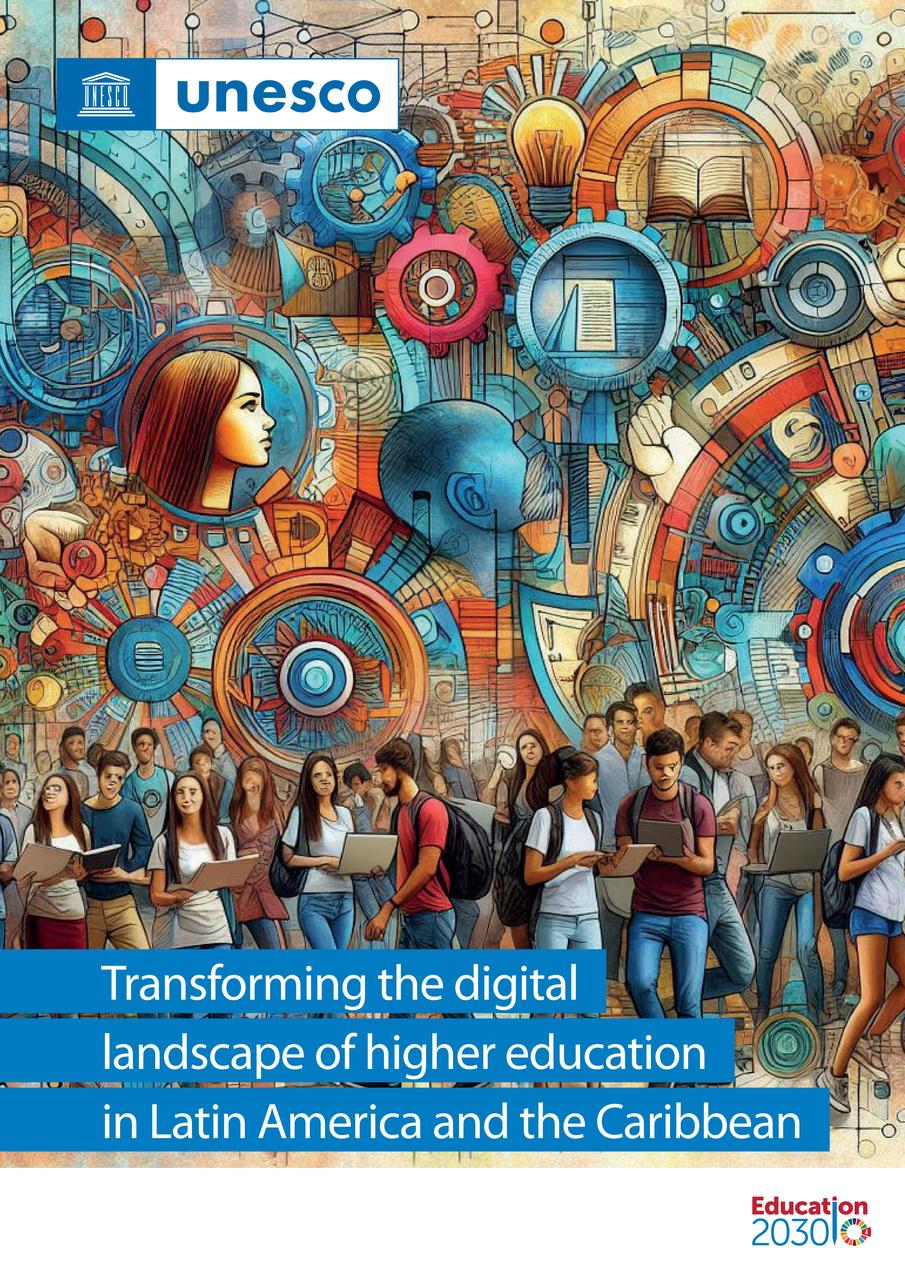
In today's rapidly changing educational landscape, reshaped by AI, the digital transformation readiness of higher education has become crucial for institutions to effectively adapt to these changes. In 2024, a comprehensive study was conducted by the International Institute for Higher Education in Latin America and the Caribbean (UNESCO IESALC) in collaboration with the UNESCO-ICHEI to release the report titled Transforming the Digital Landscape of Higher Education in Latin America and the Caribbean. This report systematically reveals the current state, challenges, and pathways of digital transformation in higher education across the region.
The report indicates that while the pandemic significantly propelled the use of technology in teaching and learning in Latin America, it primarily accelerated digital change rather than genuine digital transformation in higher education. To achieve true transformation, the report recommends a series of strategies tailored to the socioeconomic contexts and phases of digital transition across different countries. For instance, Brazil and Argentina lead by implementing national strategies and investments; Chile and Colombia focus on quality frameworks and technology pilots; while Ecuador and Bolivia face infrastructure and resource bottlenecks.
Click the image to read the original text
In collaboration with UNESCO IESALC, Transforming the Digital Landscape of Higher Education in Latin America and the Caribbean, July 2024.
A necessary step in digital transformation
The necessity for digital transformation is underscored by the COVID-19 pandemic, which has become an accelerator for such changes. The pandemic affected over 26 million students and 1.4 million professors in the Latin American region, forcing educational systems to rapidly shift from in-person courses to online modes. However, this transition has exposed deep-seated structural issues: the digital divide, inadequate teacher preparation, and insufficient infrastructure. As a specialised agency of the United Nations responsible for education, UNESCO promotes a global education agenda through the 2030 Education Action Framework, positioning digital transformation as a key pathway to achieve Sustainable Development Goal 4 (quality education). This joint research aims to provide empirical evidence for policy development.
The methodology employed is rigorous and comprehensive. The study is based on a multilingual literature review from 2018 to 2022, encompassing mainstream academic databases in English, Spanish, and Portuguese, thereby improving the previous predominantly English-based search approaches. Additionally, nine in-depth interviews were conducted with government officials and representatives of university associations from Argentina, Brazil, and Chile, along with feedback from 1,420 students across 12 universities, ensuring the representativeness and reliability of the data.
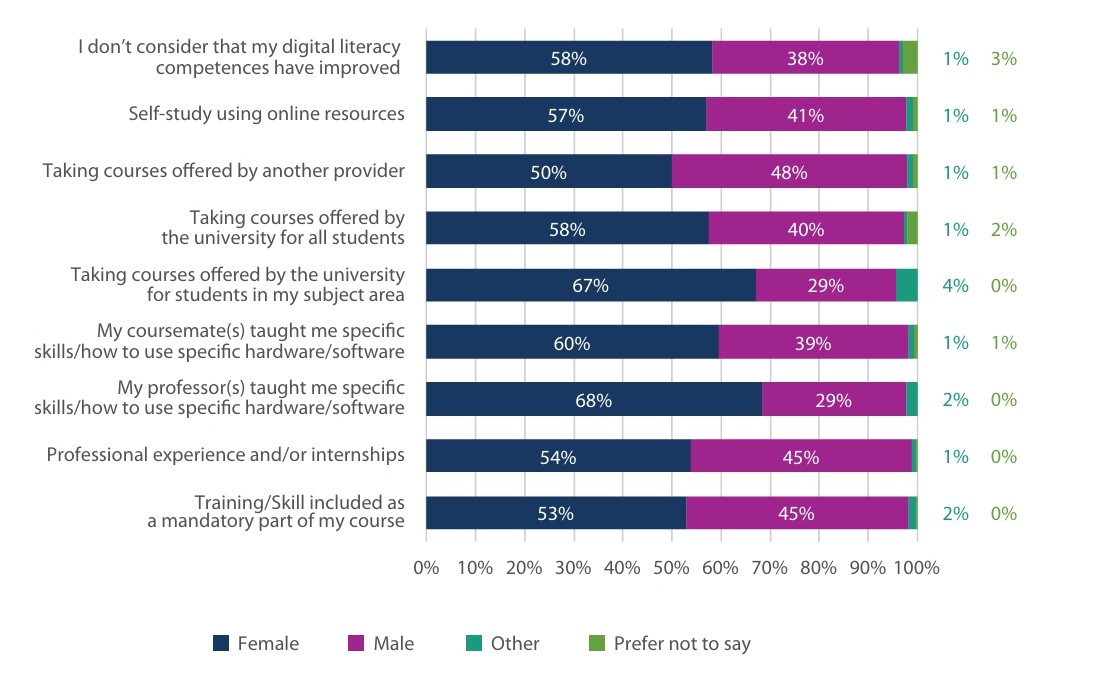
Methods of Digital Competence Acquisition Among Surveyed Students
Key Findings: The current state of Digital Transformation and Challenges
1、The Dual Effect Catalysed by the Pandemic
The Gap Between Emergency Response and Long-term Transformation: Research findings indicate that 80% of higher education institutions in Latin America were already equipped with remote education platforms before the pandemic; however, the majority of institutions achieved only a "digital transition" rather than a true "digital transformation." Ten percent of students felt that their universities were "completely unprepared" for the transition to online teaching, while 31% believed they were "underprepared."
Blended Learning as the New Norm: Surveys have shown that the proportion of entirely face-to-face learning has significantly declined from its dominant position in 2019, with a net increase of 35% in blended learning models post-pandemic. However, this increase has raised concerns about teaching quality, as 45% of students expressed a desire for technology to be applied more personalised in their learning experiences.
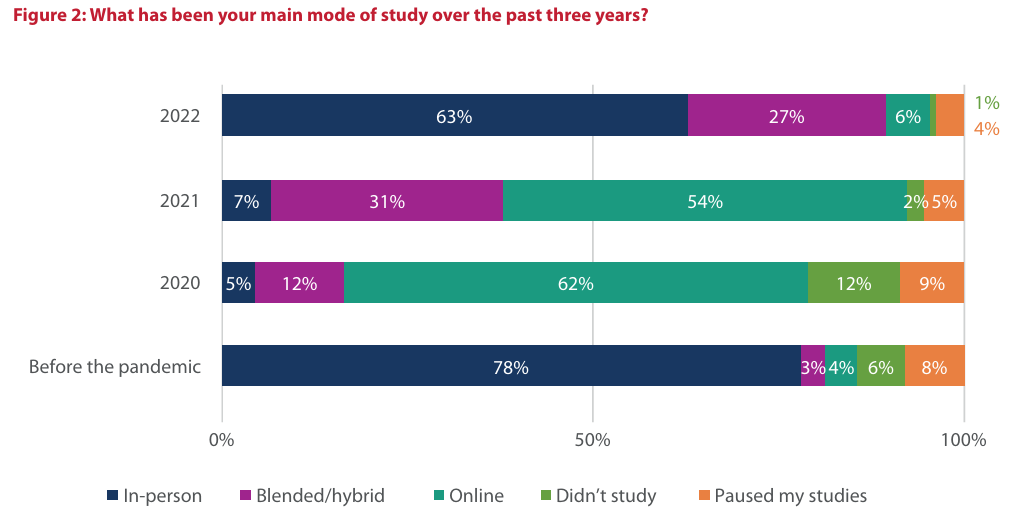
UNESCO IESALC Digital transformation student survey (2023)
2、The Stark Reality of the Digital Divide
Inequality in Infrastructure: As of 2023, 32% of the population in Latin America (78 million people) lacks internet access, with 46 million of these individuals residing in rural areas. The most advanced AI models are concentrated in a few regions with technological advantages, which leads to underdeveloped areas in the higher education system being forced to rely on traditional assessment methods.
Challenges of Equipment and Connectivity: Student surveys indicate that outdated devices and unstable internet connections are major obstacles. The case of the University of Campinas in Brazil illustrates that even prestigious institutions require additional budgets to improve network connectivity and student equipment.
3、The Intersecting Impact of Gender and Equity
Significant Gender Disparities: Female students reported a lower level of preparedness for the transition to online learning, with 62% requiring technical support, compared to only 30% of male students. Students identifying as "other" expressed more negative evaluations, with 76% providing low ratings for the course design.
Multiple Challenges for Equity-deserving Groups: Students from marginalised groups, such as indigenous populations and ethnic minorities, are more likely to indicate that their universities are insufficiently prepared. Among students belonging to equity-deserving groups, 29% stated that their university was "completely unprepared," while 57% believed they were "underprepared."
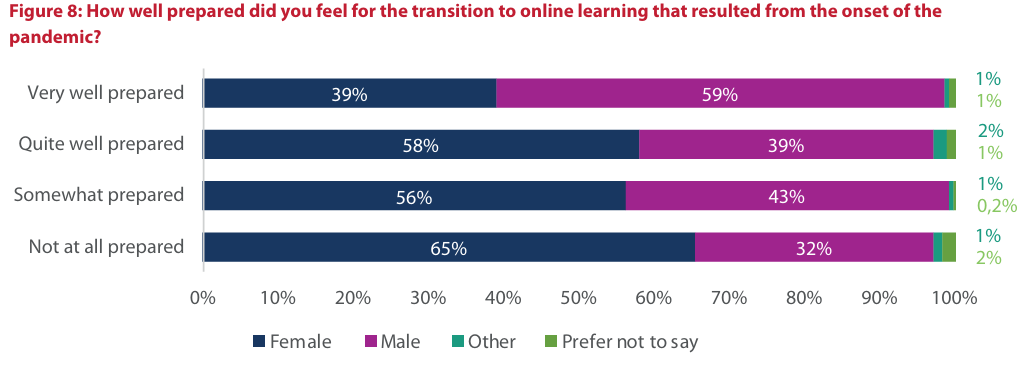
UNESCO IESALC Digital transformation student survey (2023)
4、Student Experience and Skill Development
Uneven Improvements in Digital Literacy: Students have experienced the most significant gains in information and data literacy, with 68% believing there has been a marked improvement; however, advancements in problem-solving and security skills have been less pronounced, with only 42% indicating substantial improvement.
Divergent Evaluations of Teaching Quality: More than half of the students affirmed the quality of the learning materials, yet evaluations of online interaction and course design were lower. Blended learning is regarded as the most popular format, while online learning has also garnered significant attention.
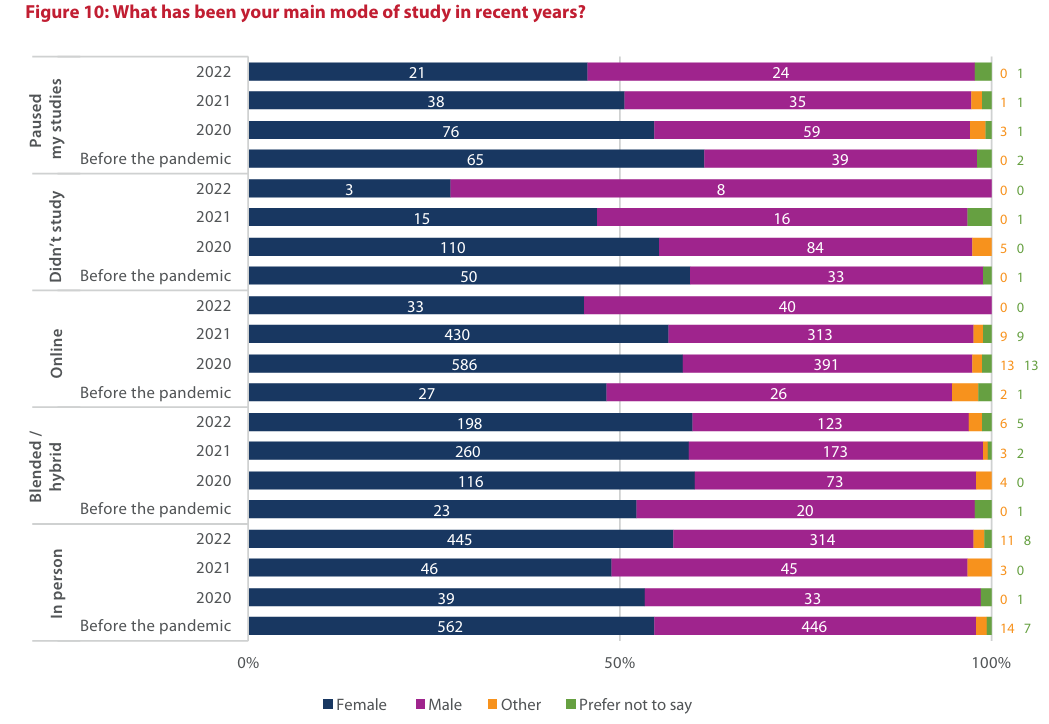
UNESCO IESALC Digital transformation student survey (2023)
Policy and Institutional Responses
Diverse Government Initiatives
There is a significant disparity in the scale of funding allocated by governments during the pandemic, with investments ranging from $1.5 million to $358 million across different countries. Argentina's "Higher Education Virtualisation Plan" received an investment of $2.5 million, while Peru's public university enhancement plan was allocated $358 million.
Innovation in Regulatory Frameworks. By the end of 2021, 17 out of 22 countries in Latin America had approved new agreements allowing for the adjustment of in-person courses to blended formats. Ecuador eliminated import taxes on technological equipment, and Brazil developed a digital diploma certification platform.
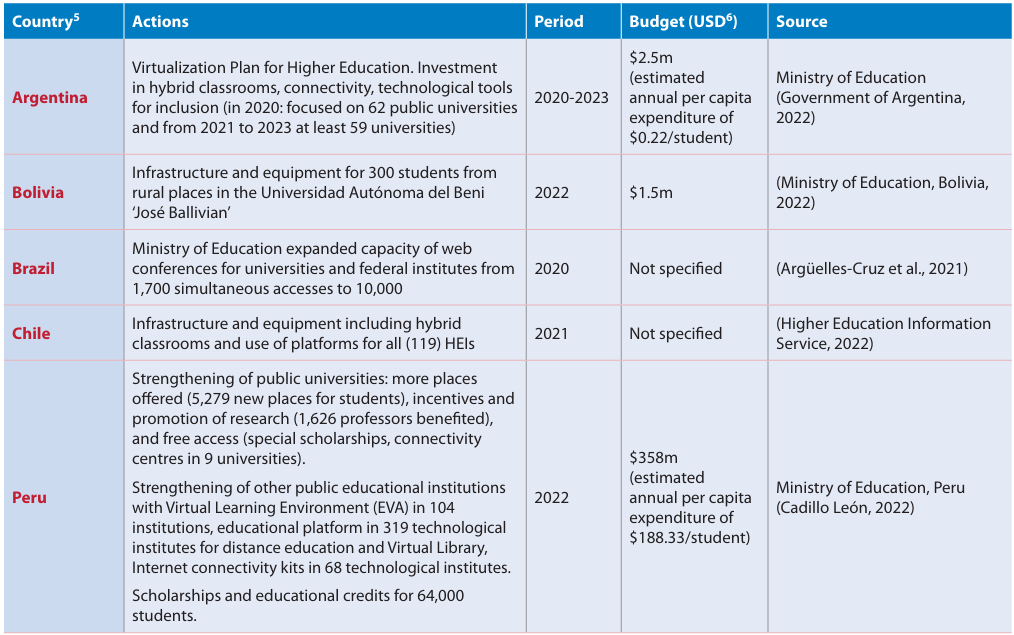
Examples of LAC government investment in DTHE during the COVID-19 pandemic
Differentiated Responses from Higher Education Institutions
Innovative Practices by Leading Institutions:
The Southwest Provincial University of Buenos Aires, Argentina, employs blockchain technology to ensure the authenticity of diplomas.
The Monterrey Institute of Technology in Mexico uses an AI chat assistant to enhance student services, managing 14,000 inquiries.
The University of the Republic in Uruguay promotes the EVA virtual training environment.
The importance of inter-institutional collaboration is evident. The Federal Network in Brazil successfully negotiated internet access solutions through a collective effort of 41 institutions, demonstrating the power of unity in achieving common goals.
Seven Strategic Recommendations
Establish Long-term Planning and Build Process Agility: Create a phased target system that goes beyond immediate tasks, incorporating continuous and consistent dynamic development. The collaborative model seen in Chile’s “New Patagonia” initiative is a noteworthy example to promote.
Emphasise the Quality of Digital Transformation: Develop quality frameworks aligned with local needs, encouraging innovation rather than merely layering technology upon technology. The collaboration between Argentina and France regarding the managerial digital transformation plan serves as a good practice.
Ensure Higher Education Institutions Can Respond to Digital Changes: Empower institutions with the autonomy to swiftly adjust courses and services. The multi-channel financing model employed by the Federal Institute of Rio Grande do Sul in Brazil showcases flexibility by combining institutional resources, governmental sponsorship, and corporate collaboration.
Promote a Variety of Blended Learning Formats: Respond to the strong student demand by integrating face-to-face interaction with online flexibility. Surveys indicate that blended learning is the preferred future learning model.
Integrate Digital Transformation into Ongoing Professional Development for Faculty and Staff: Provide continuous training to transition faculty from "tool users" to "learning designers." The National Association of Private Universities in Argentina has a six-year digital literacy programme that has reached 45% of its teachers.
Create and Maintain Spaces for Digital Transformation within HEIs: Address resource bottlenecks through public-private partnerships. The Private University Association in Brazil has held digital transformation seminars in state capitals to enhance awareness.
Utilise Digital Transformation in Higher Education to Promote Educational Equity: Prioritise access for disadvantaged groups. For example, the Peruvian government has established connectivity centres in remote areas, while Brazil has distributed laptops and modems.
This research was officially released in July 2024 through UNESDOC and on the UNESCO-ICHEI's official website. Serving as a systemic investigation into the digital transformation landscape of higher education in Latin America through comprehensive interviews with educators across the region, this report reveals core findings and highlights potential AI digital divides and capacity-building challenges, thereby providing valuable information and reference points for institutions and experts looking to understand AI integration in higher education.
About the Authors
This collaborative research on the digital transformation of higher education was conducted by the International Institute for Higher Education in Latin America and the Caribbean (UNESCO IESALC) and the International Centre for Higher Education Innovation (UNESCO-ICHEI).
The International Institute for Higher Education in Latin America and the Caribbean, a category 1 institute under UNESCO, was established in 1997 in Caracas, Venezuela, with the aim of assisting countries in addressing challenges related to higher education. Its operational objective is to enhance the capacity of member states in the region to develop and implement high-quality, equitable, and inclusive higher education policies at the regional, national, and institutional levels, in alignment with the Sustainable Development Goals (SDGs), thereby promoting the right to higher education.
This research received strong support from staff and management at higher education institutions in Argentina, Brazil, Chile, and Venezuela. It also includes interviews with senior government officials responsible for higher education in Argentina, Brazil, and Chile, as well as key representatives from national university associations. The successful completion of this study reflects a shared vision for advancing the digital transformation of higher education within the Latin American and Caribbean region.