Regional Insights into Higher Education Digitalisation: Decoding the Practical Pathways in Central Asia
The readiness of higher education institutions (HEIs) for digital transformation is a key factor in their ability to effectively adapt to the integration of artificial intelligence (AI) into education. Since 2023, the International Centre for Higher Education Innovation under the auspices of UNESCO (UNESCO-ICHEI) has collaborated with UNESCO regional offices, category 1 institutes, regional and international organizations, and higher education research institutions to conduct joint research. This includes studies on the digital transformation of higher education across eleven sub‑regions of the Global South, as well as an examination of critical issues related to the integration of AI into higher education systems. This series of articles will review the findings of these reports, aiming to provide knowledge‑based guidance for all stakeholders in higher education as AI continues to reshape the educational landscape.
At this historical juncture, the five Central Asian nations are embracing the growing digital economy. As nations roll out their digital economy strategies and the pace of global industrial digitalization accelerates, the transformation of higher education and the cultivation of digital talent have become critical pathways for national development. Yet, across this vast Eurasian heartland, exploration is accompanied by challenges that cannot be overlooked: the digital gap remains pronounced, the reserve of high-skilled professionals is insufficient, and infrastructure distribution is uneven…
This article reviews the Research report on Digital Talents and Digitization of Higher Education in Central Asia, jointly released by UNESCO-ICHEI, Tashkent University of Information Technologies (Uzbekistan), and the Institute of Central Asian Studies at Lanzhou University. The report focuses on the landscape of digital transformation in higher education across Central Asia, examining five countries: Kazakhstan, Kyrgyzstan, Tajikistan, Turkmenistan, and Uzbekistan. Through practical case studies from each nation, it explores the challenges and opportunities they face in the digital era, while also shedding light on broader opportunities to advance equitable development in global education.

(available in Chinese and Russian) Read full report
Digital Transformation of the Industries and Demand for Talent
In this land that connects the heart of Eurasia, a profound economic transformation is underway—shifting from traditional development models toward a digital economy has become a shared imperative for the five Central Asian nations. Each country is elevating digitalization to the level of national strategy, responding to this transformation with distinct design and approaches.
As a regional leader, Kazakhstan launched the "Digital Kazakhstan" national program as early as 2017, taking solid steps in e‑government innovation and digital infrastructure. Uzbekistan, through its "Digital Uzbekistan 2030" strategy, has spurred a wave of digital transformation across all sectors of its society and economy. Kyrgyzstan, with an open and inclusive approach, actively builds bridges for international cooperation, attracting external resources to support its own development. Meanwhile, constrained by practical limitations in infrastructure and funding, Tajikistan and Turkmenistan are advancing their digital transitions with more cautious, gradual steps.
Despite varying paces and pathways of development, these countries share common challenges: a severe shortage of digital talent—over 90% of enterprises struggle to find qualified IT specialists —and a limited contribution of the digital economy to the national economy, accounting for only 2.2% of Uzbekistan’s GDP. More concerningly, the urban-rural digital gap is widening, with many rural areas still suffering from inadequate and unreliable internet coverage. This has become a deep-seated structural barrier constraining the digital transformation of industries across the region.
The Digital Transformation of Higher Education
The foundation of industrial transformation lies in talent, and cultivating talent is rooted in education. As the digital economy deepens, higher education—as a critical hub for nurturing future talent—has become a central focus for countries across Central Asia. Through legislative safeguards, policy guidance, and multilateral cooperation, these nations are advancing educational reform in their respective ways.
Kazakhstan has released the National Education and Science Development Plan 2020-2025, systematically deploying digital education resources and online education systems. Uzbekistan has launched the "One Million Programmers" initiative, establishing a nationwide IT talent training network. Kyrgyzstan has prioritized educational digitalization in its Digital Transformation Concept. Tajikistan and Turkmenistan have also introduced their respective blueprints for digital education development.

Digital Transformation Concept of Kyrgyzstan, 2019-2023
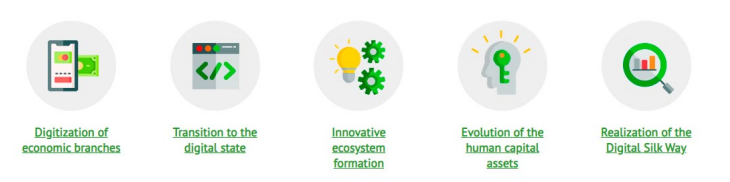
The Five Pillars of the "Digital Kazakhstan"
However, when ideals meet reality, the path forward remains fraught with challenges. The overall digital literacy of the teaching workforce remains weak, lacking systematic training mechanisms; there is a noticeable gap between university curricula and industry needs, with university-enterprise collaboration mechanisms yet to be fully established; the rapid development of distance education during the pandemic faces issues such as inconsistent teaching quality and difficulties in ensuring learning outcomes; meanwhile, the uneven distribution of digital education resources and the scarcity of high-quality multilingual learning material have become practical bottlenecks constraining the depth of transformation. These intertwined challenges collectively impact the effectiveness of higher education's digital transformation in Central Asia.
National Practice Cases
Confronting these challenges, Central Asian countries have taken practical steps to explore digital transformation pathways suited to their development stage and local conditions.
Kazakhstan's Nazarbayev University has taken a leading role, establishing a comprehensive digital library system and developing the "Univer 2.0" teaching platform, which has enabled a full‑process digital upgrade of teaching management. Kyrgyzstan, through the international cooperation project "Tempus," has built the KIRLBNET library resource‑sharing network. Its annual International Conference on "Libraries and Social Democratization" has become a key platform for knowledge exchange in the region.

Kazakhstan University 2.0 Official Platform Website

International Conference on "Libraries and Social Democratization" in Kyrgyzstan
Tajikistan Technical University has built a comprehensive digital education ecosystem that integrates multiple functional modules, including learning management, online examinations, and academic exchange. It also actively participates in the EU's "Erasmus+" program to align its curriculum system with international standards. From a national strategic perspective, Uzbekistan has established the nationwide educational information network "ZiyoNet" and, through deep collaboration between IT industry parks and universities, has pioneered a new model of talent cultivation that integrates industry and education.
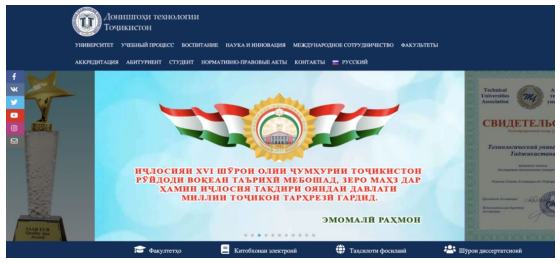
Tajikistan www.tut.tj
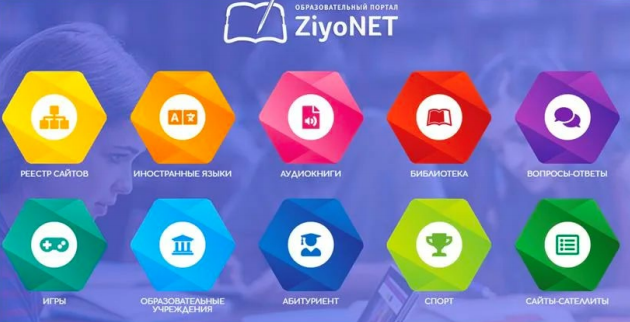
Uzbekistan ZiyoNet
These diverse practices not only reflect the differences in digital foundations and development priorities among the countries but also provide a rich repository of cases for experience exchange and mutual learning across the region. Each pathway holds its unique value, collectively painting a multifaceted picture of the digital transformation of higher education in Central Asia.
From the practices of Central Asian countries, we can discern a clear path: by building a comprehensive support system, institutions can drive the deep transformation of education in the AI era. As AI technologies continue to profoundly reshape higher education, these concrete approaches remain key to enhancing the overall capabilities of higher education institutions:
Building an integrated educational ecosystem
Promote the parallel development of traditional classrooms, distance learning, and blended learning models. Establish a unified and open digital education platform that consolidates high-quality electronic resources from both domestic and international sources. Pay special attention to digital access in rural and remote areas to effectively bridge the educational digital divide across different regions.
Teacher Capacity Building
Establish a competency development framework encompassing digital literacy, instructional design, and ethical judgment. Through micro‑credential certifications, specialized workshops, and other formats, assist teachers not only in mastering AI tools but also in gaining a deeper understanding of how to integrate them effectively into teaching practice.
Deepening multilateral and diverse international cooperation
Expand the reach of transnational educational programs, establish regional higher education partnership networks, and promote the open sharing of teaching resources. Promoting mutual recognition of academic standards and facilitating the healthy mobility of talents.
Strengthening industry‑education integration
By establishing joint innovation laboratories with enterprises, collaborating with IT training centers, and launching cutting-edge courses such as big data analytics and intelligent manufacturing under the "AI + Disciplines" framework, higher education institutions can closely align with industry's talent demands. This enables them to better cultivate interdisciplinary professionals who meet the needs of the digital economy, ensuring that education genuinely serves societal development.
About Authors
This report was initiated and coordinated by UNESCO‑ICHEI(Shenzhen, China),and jointly completed with the Tashkent University of Information Technologies (Uzbekistan), and the Institute of Central Asian Studies at Lanzhou University. The research was supported by expert teams from Kazakhstan, Uzbekistan, Kyrgyzstan, Tajikistan, and Turkmenistan, reflecting the collective insights of policymakers, scholars, and practitioners.