UNESCO-ICHEI Joined UNESCO Digital Learning Week Training on Teachers' GenAI Competencies
On 8 September 2026, the International Centre for Higher Education Innovation under the auspices of UNESCO (Shenzhen, China) (hereafter "UNESCO-ICHEI") took part in the training session "A practical guide to strengthen GenAI-responsive competencies for higher education teachers: A framework, a self-assessment tool and local cases" during the UNESCO Digital Learning Week 2026.
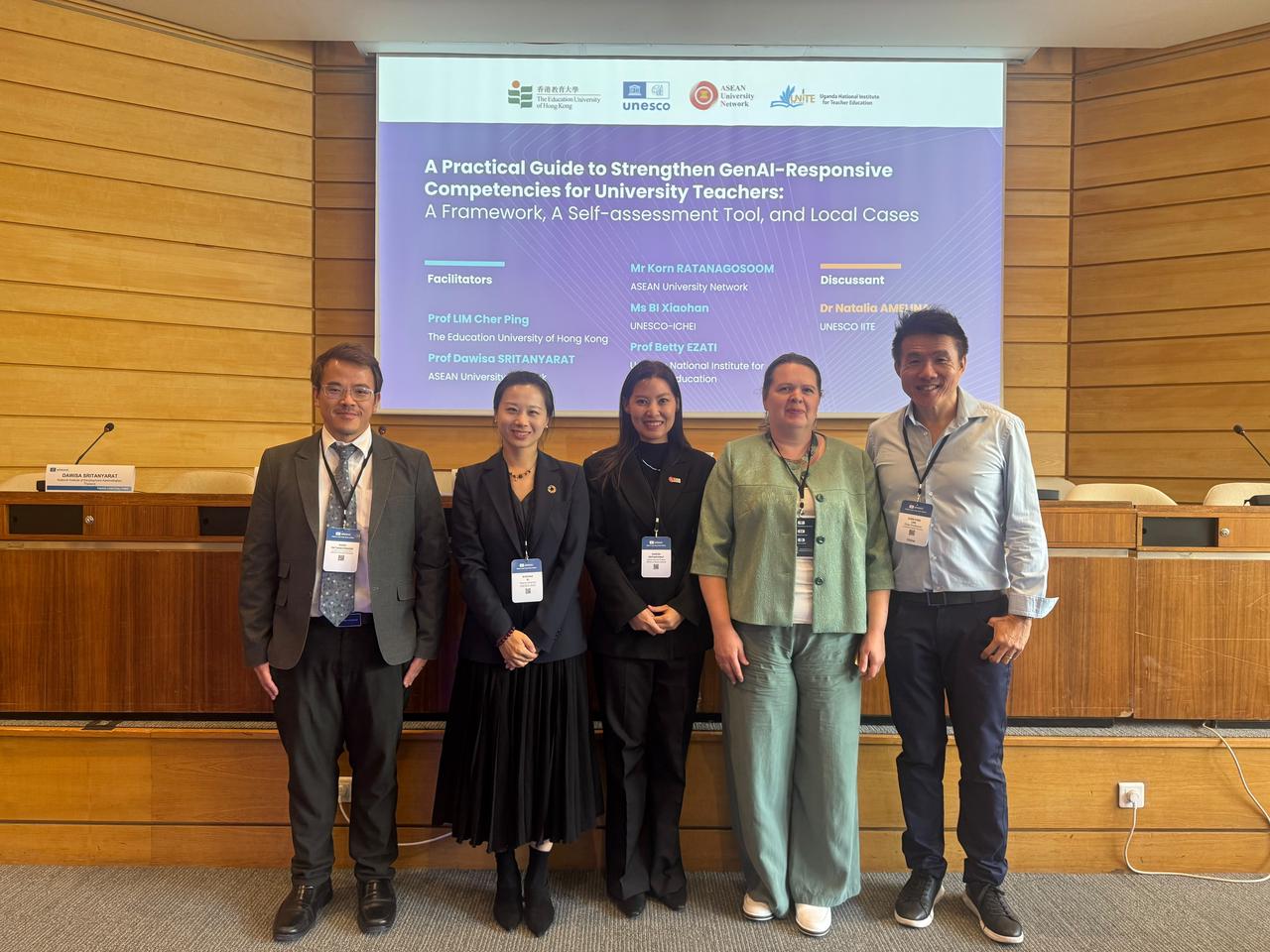
Group photo of the training organiser and speakers
Hosted by the Education University of Hong Kong (EdUHK) in collaboration with Shanghai Jiao Tong University (SJTU), UNESCO-ICHEI, the ASEAN University Network (AUN) and other global partners, the session centred on the GenAI-Responsive Competency Framework for University Teachers (hereafter "the Framework") and its accompanying self-assessment tool—co-developed by EdUHK and SJTU in consultation with UNESCO-ICHEI, AUN and other partners. The session aimed to guide participants in translating the Framework into policies and teacher professional development plans for their own countries and institutions.
The session highlighted how generative AI (GenAI) is reshaping higher education across three dimensions—epistemology, modes of learning, and the role of the teacher: education is being reconceptualised as a generative process; the mode of interaction is shifting from teacher-prescribed to learner-directed; and the teacher's role is moving from transmitter of knowledge to designer of learning and collaborator with AI. Yet there has long been no clear, unified framework defining exactly which "GenAI-responsive competencies" teachers need. The Framework and self-assessment tool presented at the session were developed precisely to respond to these shifts and fill this gap.
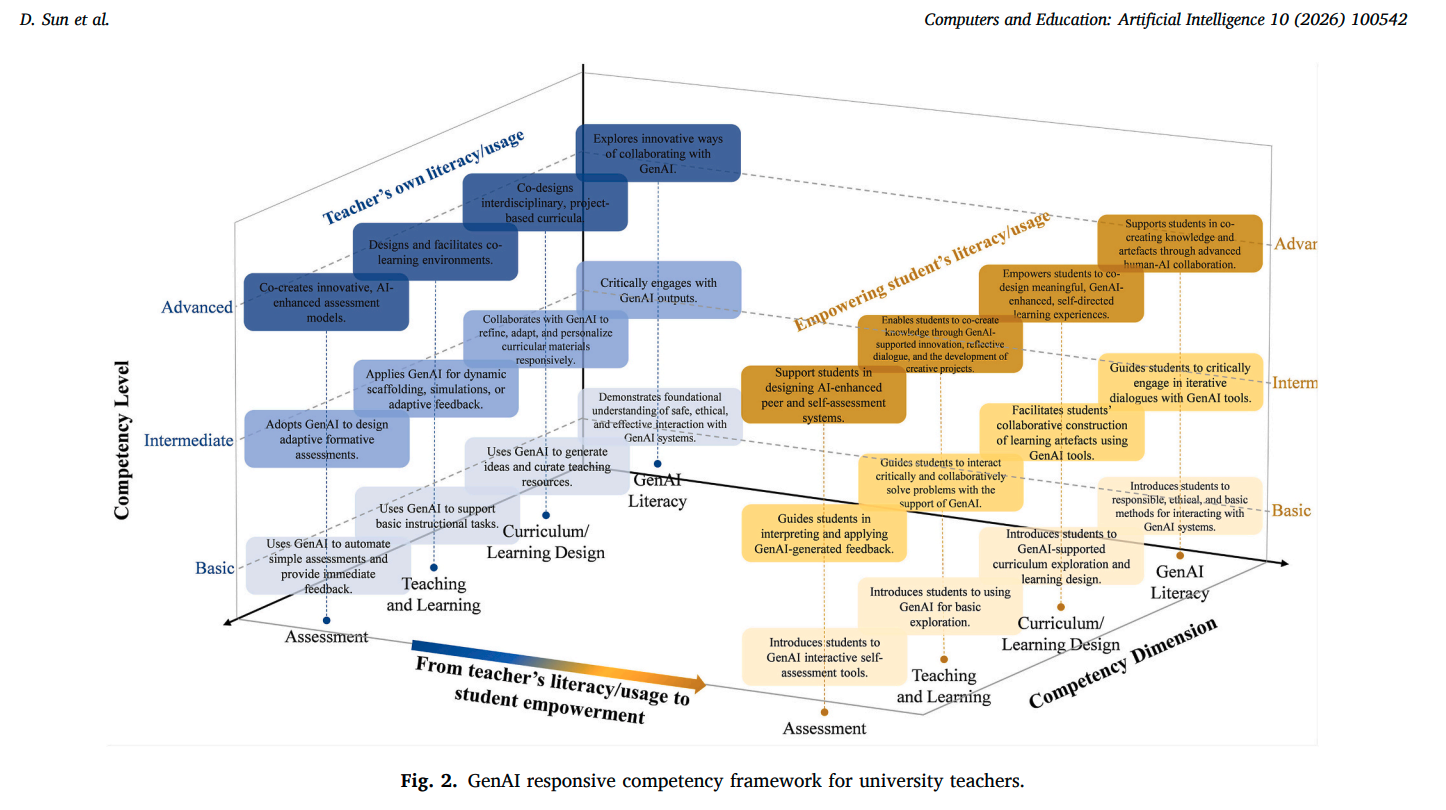
The GenAI-Responsive Competency Framework for University Teachers
As a co-developer of the Framework, Professor Lim Cher-ping, Chair Professor of Learning Technologies and Innovation and Co-Director of the Global Institute for Emerging Technologies at EdUHK, set out the Framework's design logic and theoretical grounding. He noted that existing teacher competency frameworks were largely developed before the emergence of GenAI, and are either too abstract or pay insufficient attention to human–AI collaboration, making them ill-suited to new demands. The Framework's core idea, he explained, is that the use of GenAI is driven by students; rather than avoiding or restricting it, teachers should actively design innovative teaching, activities and assessments that guide students to use AI effectively. He further introduced the Framework's two-dimensional structure: horizontally, it spans four competency dimensions—GenAI literacy, curriculum design, teaching, and assessment—each viewed from two perspectives, "teachers' own literacy and usage" and "empowering students' literacy and usage"; vertically, it is divided into three developmental tiers—basic, intermediate and advanced—representing a progression from foundational to advanced competencies. Professor Lim noted that the Framework has undergone global consultation and validation across universities in a number of countries, and was launched at BettUK 2026 in the United Kingdom in January 2026, together with SJTU and UNESCO. Professor Lim Cher-ping, Chair Professor of Learning Technologies and Innovation and Co-Director of the Global Institute for Emerging Technologies, EdUHK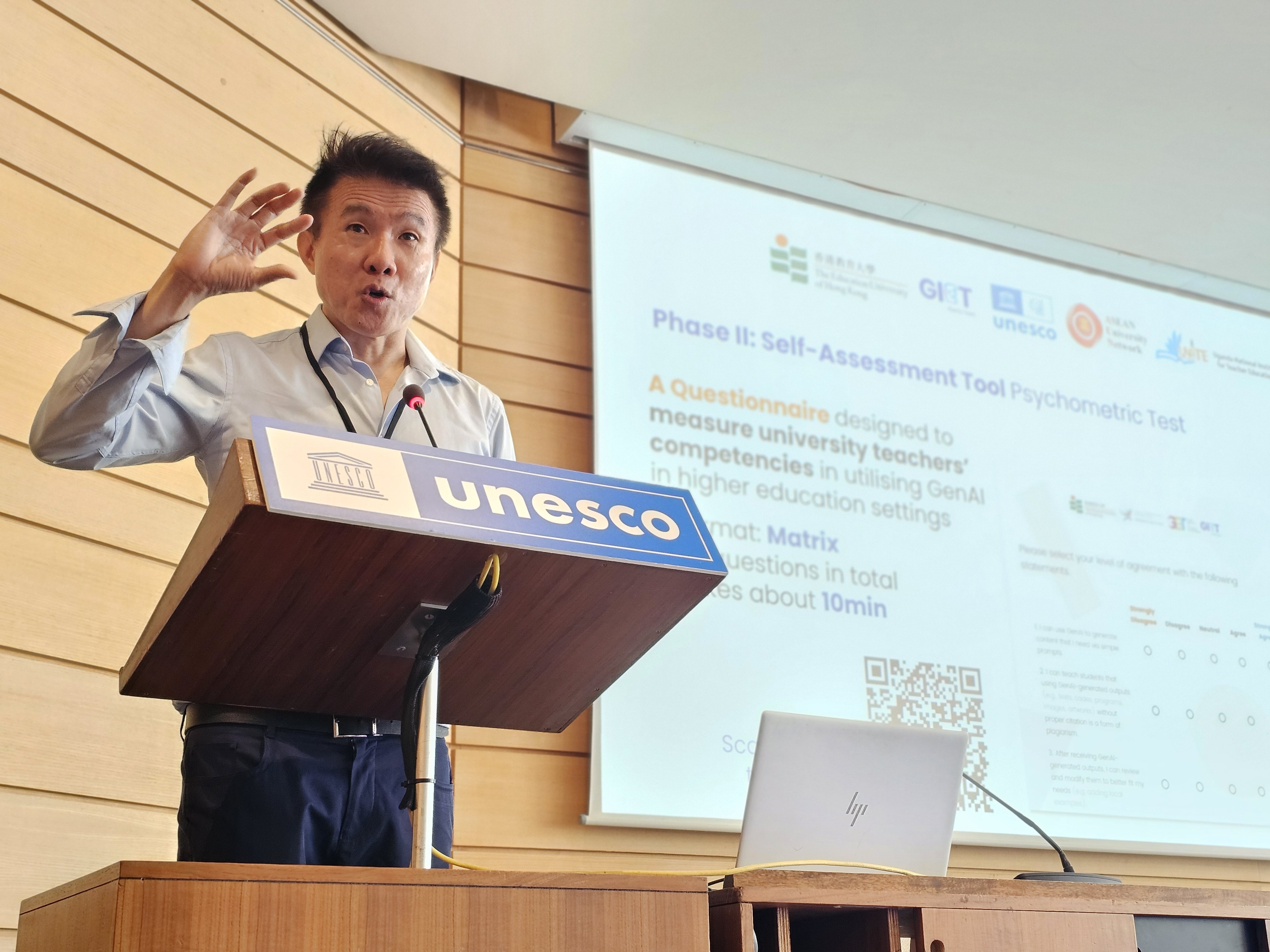
Ms. BI Xiaohan, Deputy Director of UNESCO-ICHEI, outlined UNESCO-ICHEI's core role in leading the translation of the Framework into standardised course resources and training programmes, and in driving its local delivery through the network of the International Institute of Online Education (IIOE). She observed that having AI tools does not by itself bring about the digital transformation of teaching; what higher education institutions truly need is a unified competency framework to diagnose, plan for and assess teachers' AI readiness. UNESCO-ICHEI's core work, she said, is precisely to lead the translation of this framework into standardised course resources and to refine these into training programmes ready for on-the-ground delivery; at the same time, drawing on the regional and national centre network of the IIOE, UNESCO-ICHEI drives the local adaptation, implementation and certification of these training programmes across different settings, progressively building a targeted micro-credential training curriculum system adaptable to diverse global contexts. For the Framework to take root, she noted, it must connect with course resources, professional development models and institutional implementation—and this is precisely where IIOE proves essential, carrying the Framework's translation into practice and building the ecosystem for its implementation. Ms. BI Xiaohan, Deputy Director of UNESCO-ICHEI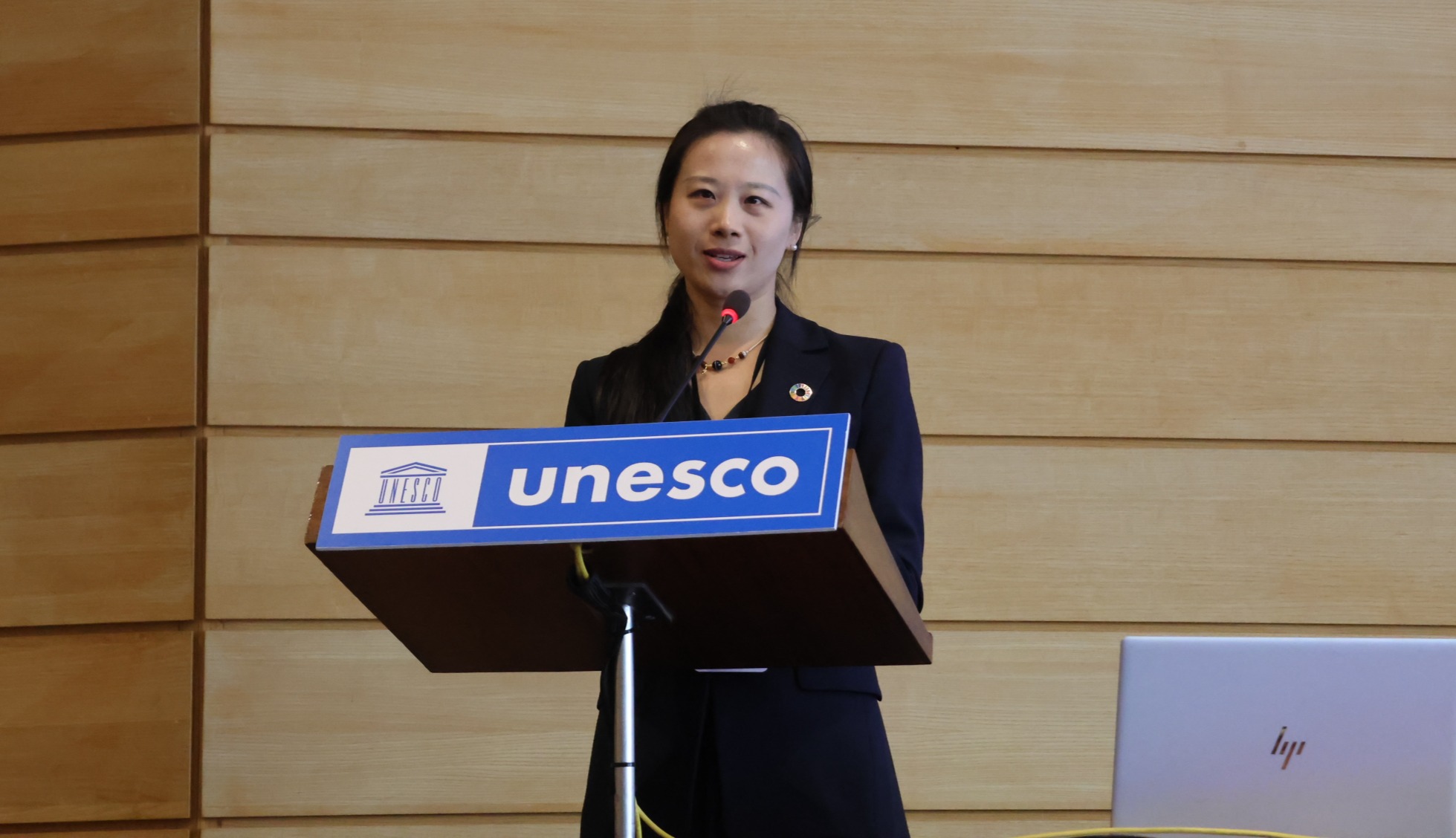
Under the theme "ASEAN Perspectives on GenAI-Responsive Competency Development," Dr. Dawisa Sritanyarat, Deputy Executive Director of the AUN Secretariat, and Mr. Korn Ratanagosoom, Chief Strategy Officer, shared their reflections across three areas: regional policy, university needs, and pathways for collaboration. They explained that the ASEAN Work Plan on Education (2026–2030) has established AI as a cross-cutting enabler of education transformation, and that AUN supports regional universities through three mechanisms covering governance and ethics, educator capability, and curriculum and assessment quality. Citing the consensus of the 17th AUN Rectors' Meeting, they noted that ASEAN universities broadly hold that AI should remain human-centred and be aligned with inclusion and well-being, and that regional approaches should offer common direction while retaining flexibility at the institutional level. The Framework's four dimensions, two perspectives and three tiers, they observed, align closely with the capacity-building needs of ASEAN universities; they went on to outline possible directions for future collaboration, including regional contextualised application, faculty development and peer learning, and synergies between the Framework and AUN's existing mechanisms. Mr. Korn Ratanagosoom, Chief Strategy Officer, AUN Secretariat In the closing discussion, participants exchanged views and questions on applying the Framework and self-assessment tool in their own national and institutional contexts. Through framework briefings, sharing of cases from multiple partners, and contextualised discussion, the session offered systematic guidance to help universities worldwide translate a globally applicable teacher AI-competency framework into actionable policies and professional development practices.