"AI-Enabled Empowerment: Women's Leadership in Higher Education in the Global South" Programme Launched at Digital Learning Week
On 10 September 2026, during UNESCO Digital Learning Week 2026, the parallel session "AI and Women's Leadership in Higher Education" was held at UNESCO Headquarters in Paris, France. The session was jointly convened by the International Centre for Higher Education Innovation under the auspices of UNESCO (hereinafter "UNESCO-ICHEI") and the UNESCO Institute for Information Technologies in Education (hereinafter "UNESCO IITE"). Administrators, experts and scholars from government authorities, international organisations and higher education institutions took part in an in-depth dialogue on how women's leadership in higher education can be developed in the age of AI.
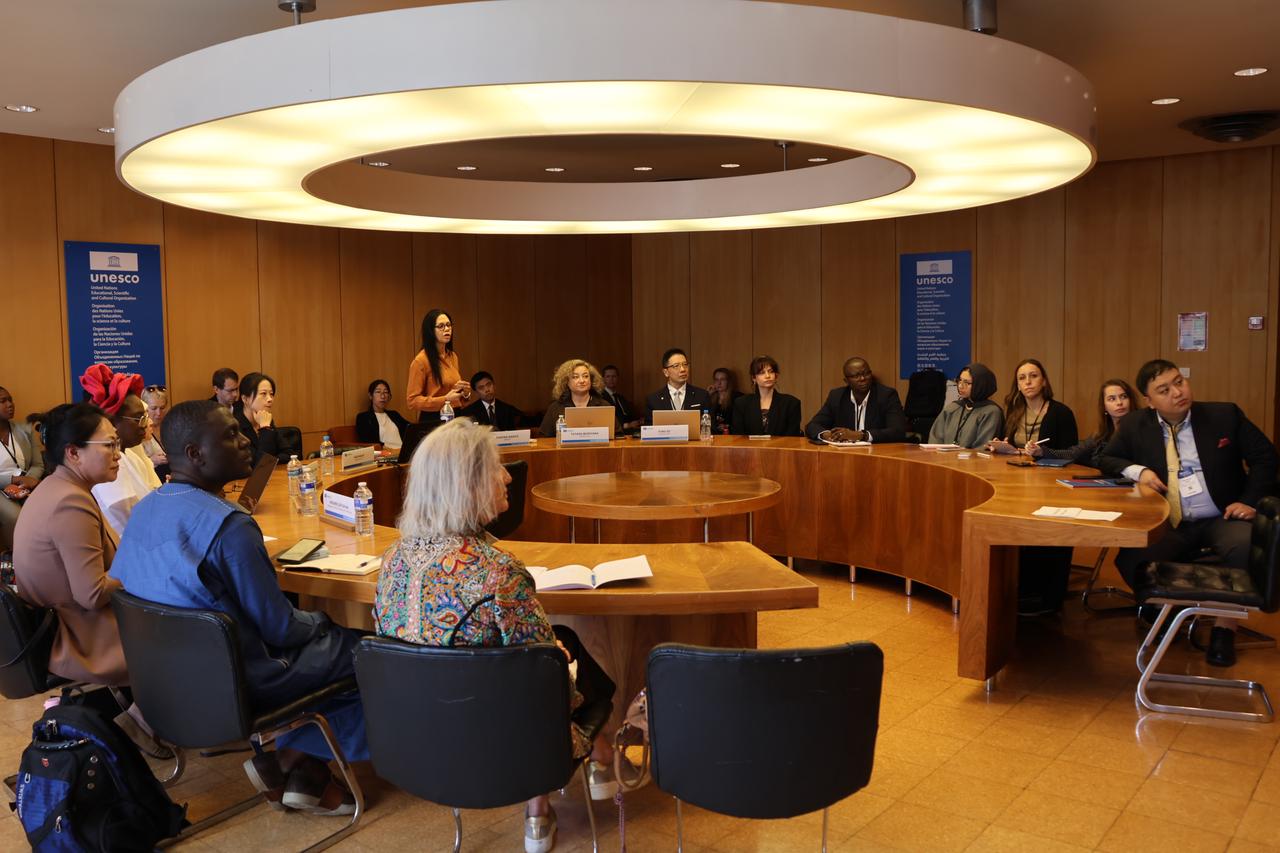
The parallel session "AI and Women's Leadership in Higher Education"
The session marked the launch of the "AI-Enabled Empowerment: Women's Leadership in Higher Education in the Global South" Programme. Jointly initiated by UNESCO-ICHEI and UNESCO IITE with the support of UNESCO Headquarters, the programme is built around three strands — AI capacity building, women's leadership development and cross-regional knowledge sharing — and will offer higher education institutions across the Global South a platform for regional dialogue, professional development and cooperation. Building on the results of the "Women Leading Change in Africa" Programme jointly initiated by UNESCO-ICHEI and UNESCO IITE in 2024, it extends Africa's experience to more countries of the Global South and empowers a growing number of women in the higher education workforce.
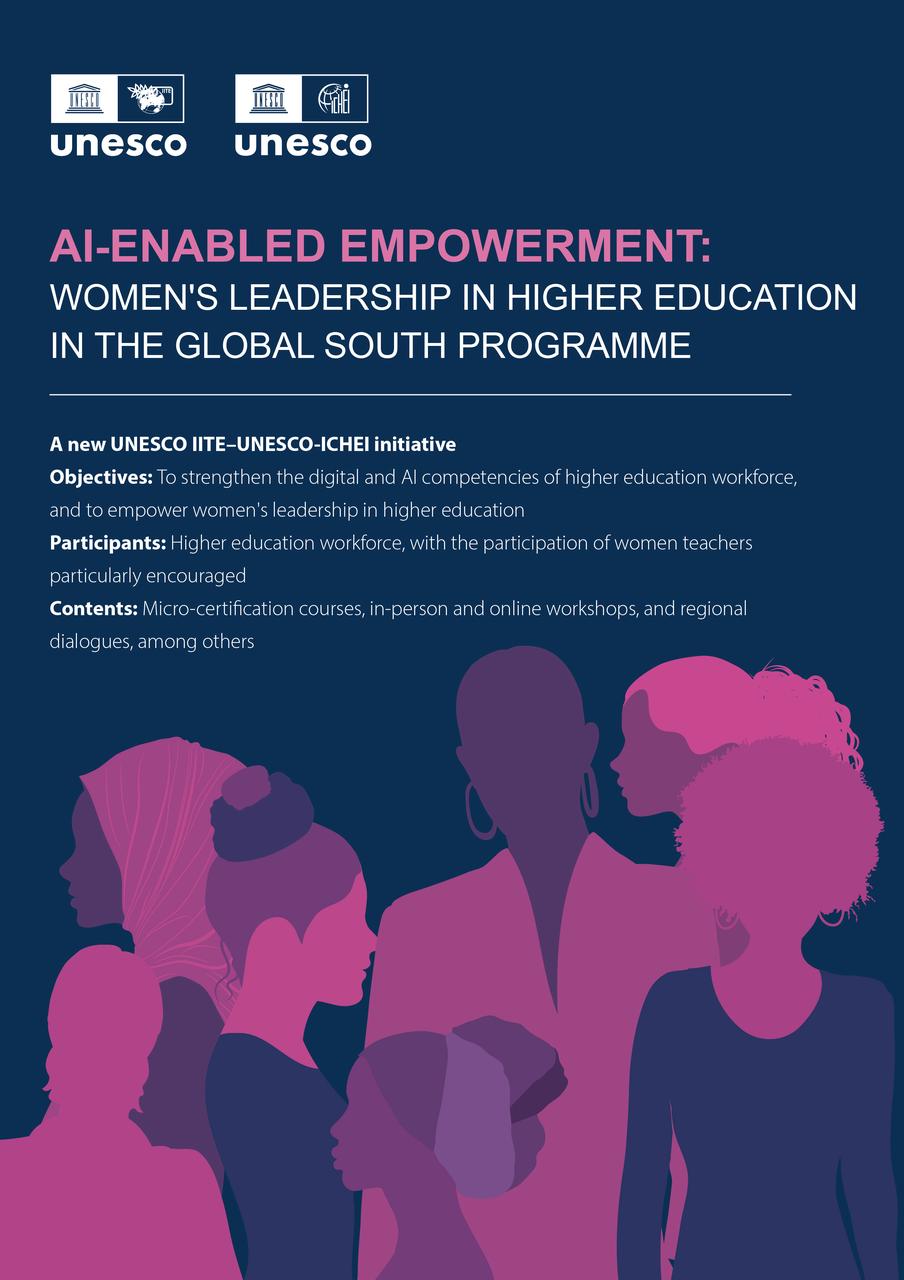
"AI-Enabled Empowerment: Women's Leadership in Higher Education in the Global South" Programme
Opening Remarks
Dr. Shafika Isaacs, Director a.i. of the UNESCO Institute for Information Technologies in Education and Chief of the Section for Technology and AI in Education, Division for the Future of Learning and Innovation, UNESCO, noted in her opening remarks that cooperation between UNESCO IITE and UNESCO-ICHEI began with a capacity-building programme for higher education institutions in Central Asia between 2021 and 2023. This developed into an advanced course on generative AI and ethics for universities and, building on that foundation, narrowed its focus to women's leadership to become the "Women Leading Change in Africa" Programme. She stressed that effective strategies still need to be explored together, including overcoming competitiveness among women, building communities of mentorship, holding space for young women and establishing strong cross-regional exchange networks.
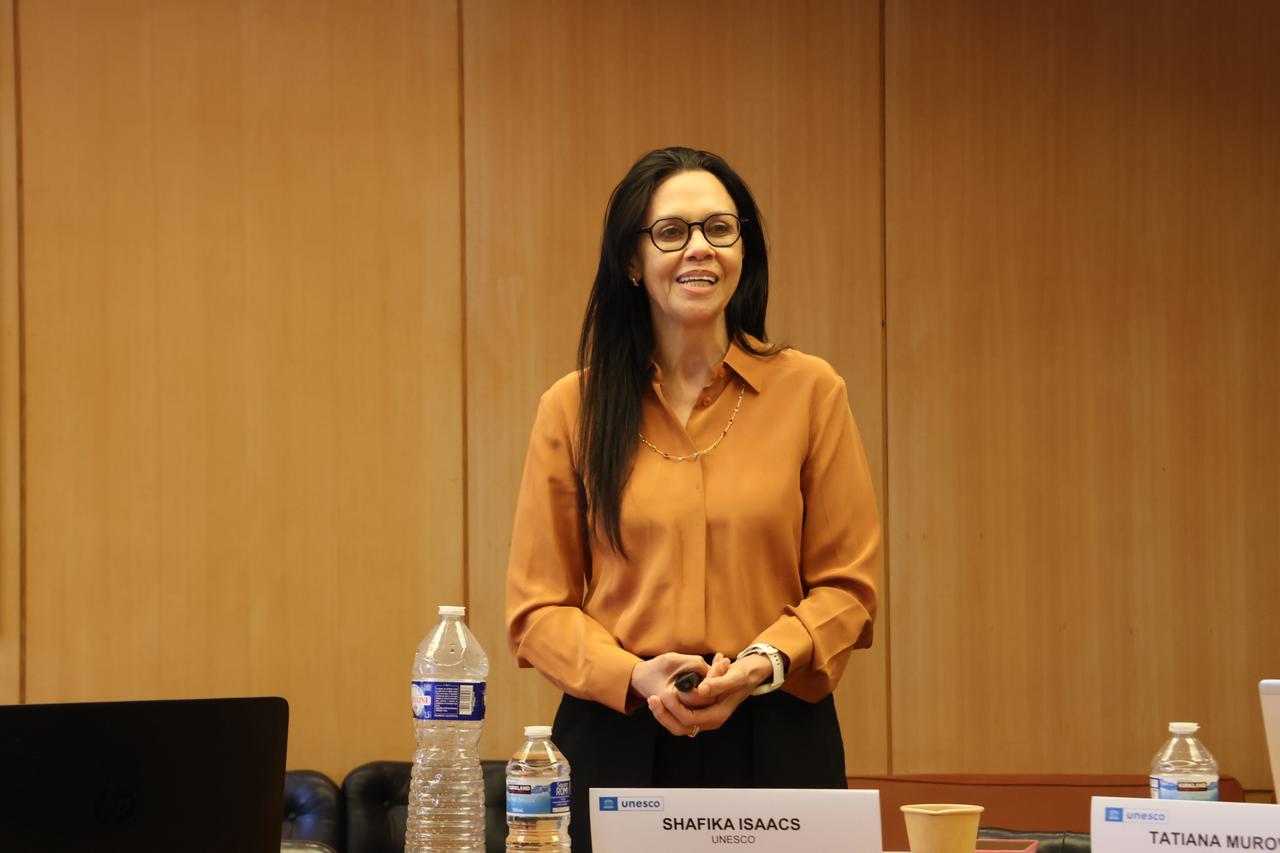
Dr. Shafika Isaacs, Director a.i. of the UNESCO Institute for Information Technologies in Education and Chief of the Section for Technology and AI in Education, Division for the Future of Learning and Innovation, UNESCO
Presentation: An Overview of the "Women Leading Change in Africa" Programme
Ms. BI Xiaohan, Deputy Director of UNESCO-ICHEI, explained that the "Women Leading Change in Africa" Programme was jointly initiated by UNESCO-ICHEI and UNESCO IITE in December 2024 and runs until December 2027. It currently covers eight African countries — Côte d'Ivoire, Egypt, Ethiopia, Ghana, Morocco, Nigeria, Uganda and Zambia — and comprises four components: digital and AI competency development, leadership capacity building, institutional transformation and knowledge exchange. She noted that the programme builds on the existing ecosystem of the International Institute of Online Education (IIOE), which is made up of three layers: course provision, localised delivery capacity and a global partner network. She summarised three lessons from the first eighteen months of implementation: global initiatives need local implementation mechanisms, and IIOE national centres and partner institutions are the critical agents of change; institutional networks generate greater impact than individual programmes; and capacity building must be embedded in institutional policies and structures if a programme is to have a lasting impact.
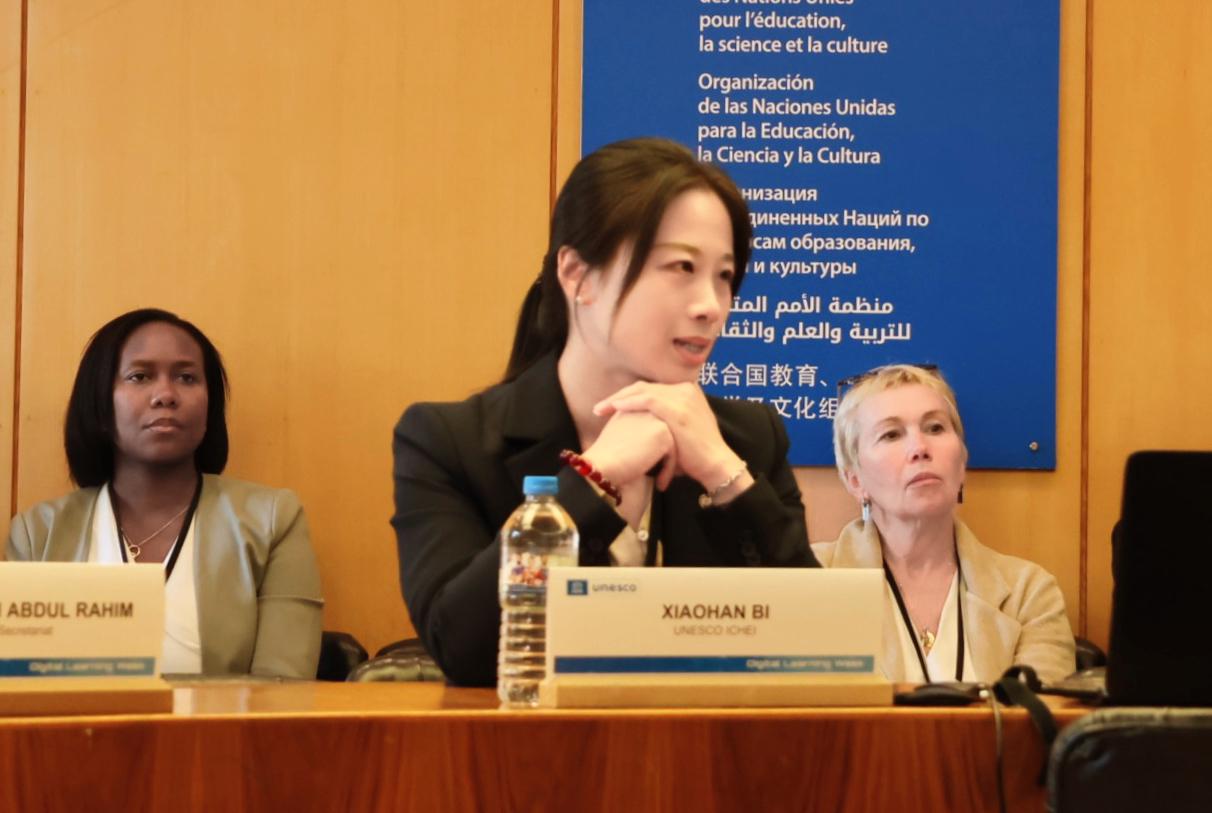
Ms. BI Xiaohan, Deputy Director of UNESCO-ICHEI
Case Sharing: Practice in "Women Leading Change in Africa" Programme
Dr. Akébié Stéphanie Allogba, Teaching Assistant at the Félix Houphouët-Boigny National Polytechnic Institute (INP-HB) in Côte d'Ivoire, shared how the institute had carried out the first round of the pilot. She explained that the micro-certification courses were opened to teaching staff, administrative staff and students across the institute. As of 1 September 2026, 386 participants had registered for the micro-certification courses, of whom 113 had earned a micro-certification. The institute plans to open a new round of online courses from October to November, followed by on-site sessions, and to host a national workshop on AI in education in December to widen the programme's reach.
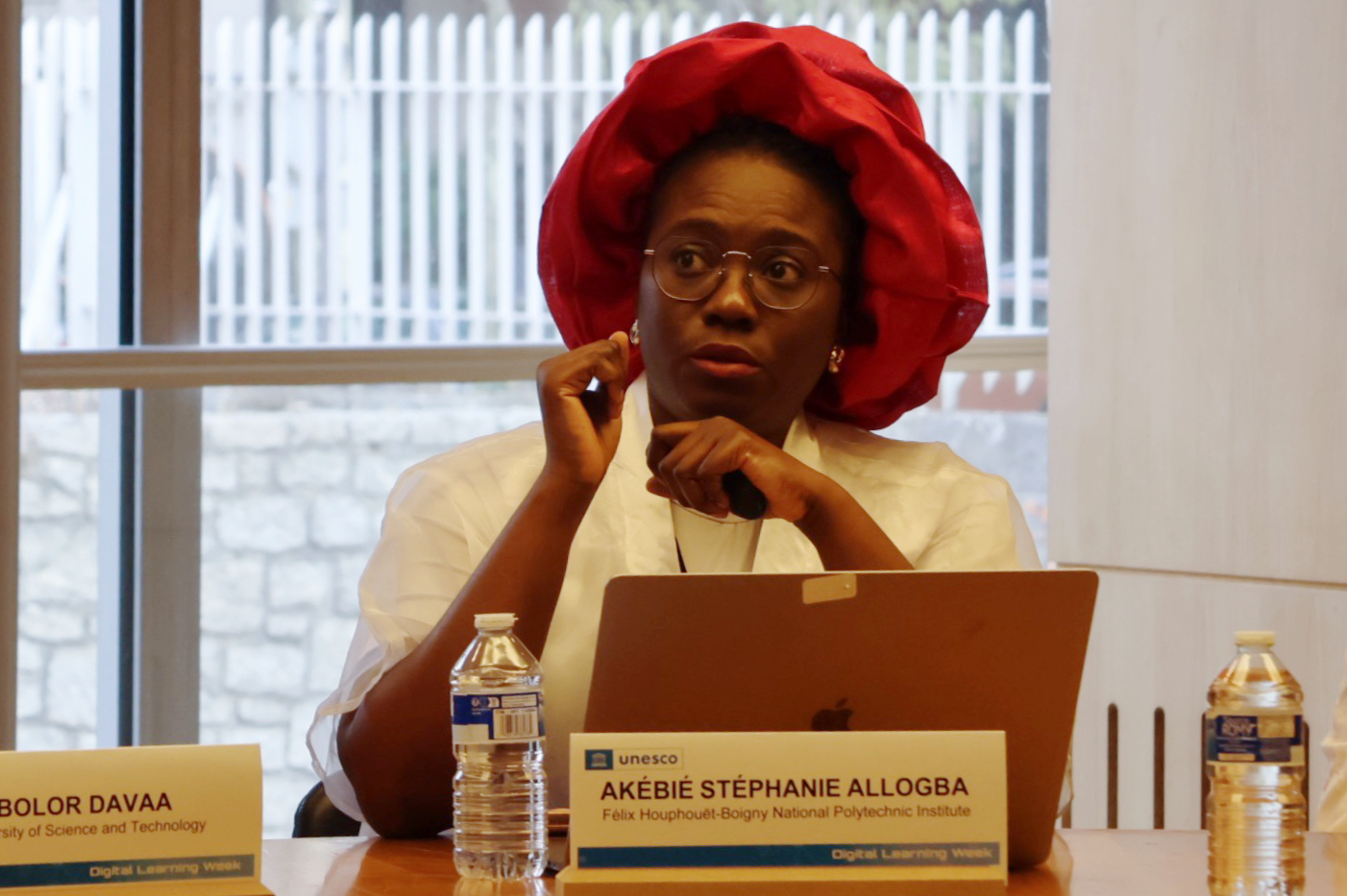
Dr. Akébié Stéphanie Allogba, Teaching Assistant at the Félix Houphouët-Boigny National Polytechnic Institute (INP-HB) in Côte d'Ivoire
Dr. Dalia Yousef, Director of the Central eLearning Unit at the Education Strategies and Research Centre of Ain Shams University and Head of the IIOE Egypt National Centre, reported that the centre has reached its first strategic milestone: more than 4,000 faculty members have strengthened their competencies through dedicated micro-certification programmes, with women accounting for 66% of all participants, and the certificates awarded are recognised by university leadership and count towards academic promotion. On 19 April 2026, the IIOE Egypt National Centre hosted a high-level thematic session, "Transforming Education in the Digital Era: Professional Development and Gender-Inclusive Leadership in Egypt", and announced the 2026 IIOE Egypt Awards, among which the "She Leads Digital Education Excellence Award" recognised a group of women researchers and educators.

Case Study Presentation: IIOE Egypt National Centre
Dr. Temtim Assefa, Associate Professor at the School of Information Science of Addis Ababa University, explained that the centre works to strengthen women's digital literacy, leadership capacity and ability to make effective use of emerging technologies, with capacity-building training covering artificial intelligence, the application of AI in research, cybersecurity and social media content creation, among other areas. It recently held a face-to-face training session on AI literacy for women faculty, which drew highly positive feedback from participants.

Dr. Temtim Assefa, Associate Professor at the School of Information Science of Addis Ababa University
Dr. Basira Yahaya, Head of the Department of Computer Engineering at Ahmadu Bello University and Head of the IIOE Nigeria National Centre, explained that the project is driven by a women-led team. Since its launch on 3 September 2025, the project has reached 2,338 participants, 1,108 of them women, or 47.4%, while 457 participants have completed IIOE micro-certification courses, comprising 232 women and 225 men. She noted that the WhatsApp learning community set up by the team carries course information, registration guidance, technical support and peer assistance, and has been the key mechanism for sustaining engagement.
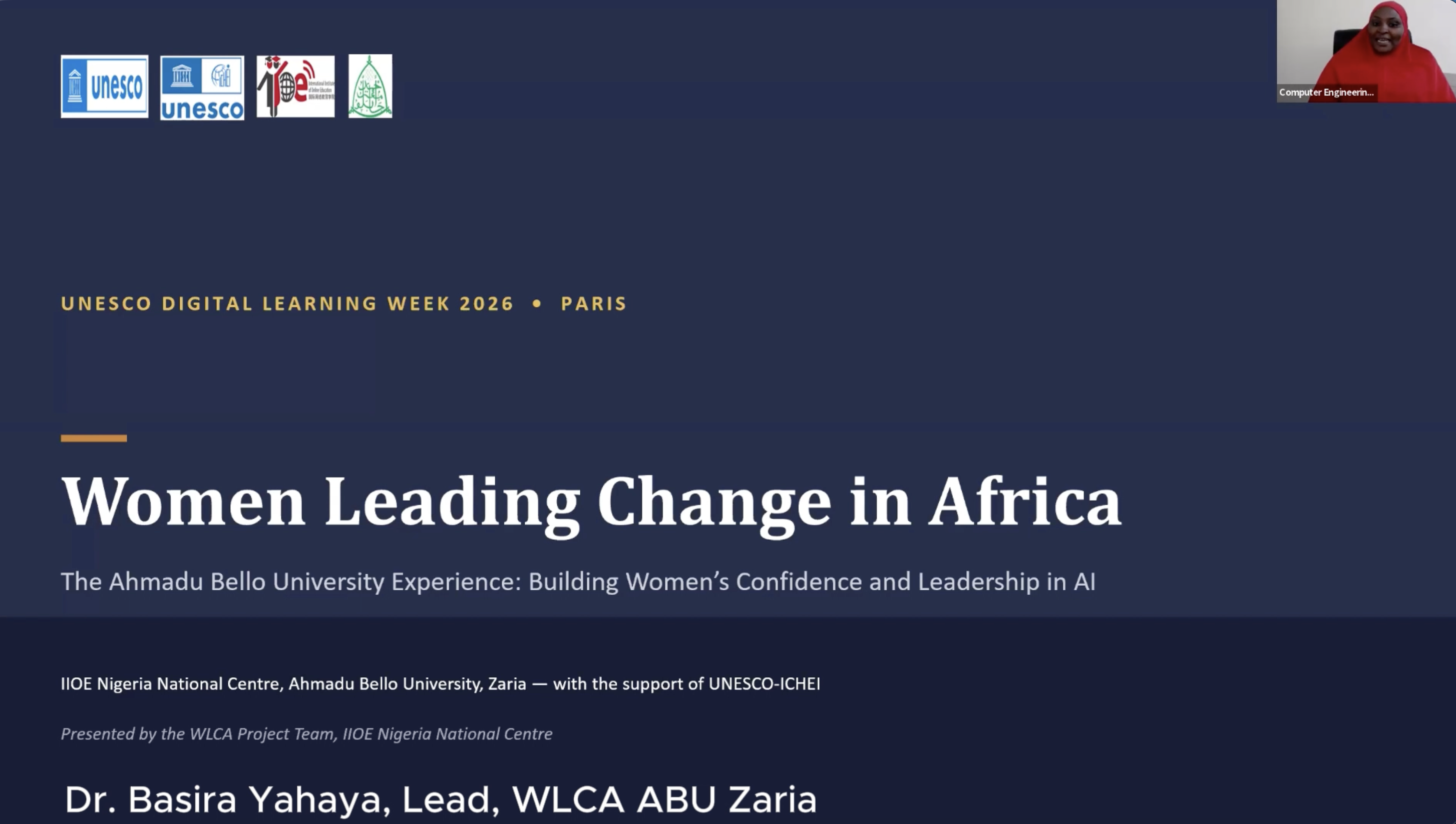
Case Study Presentation: IIOE Nigeria National Centre
Dr. Brian Halubanza, Dean of the School of Engineering and Technology at Mulungushi University and Head of the IIOE Zambia National Centre, said that the project has reached more than 1,650 higher education professionals in Zambia, more than 970 of them women. Zambia's experience, he noted, shows that gender inclusion is a necessary dimension of digital and AI capacity building for the higher education workforce, and that the next challenge is to translate digital and AI competencies into leadership, innovation and institutional influence.
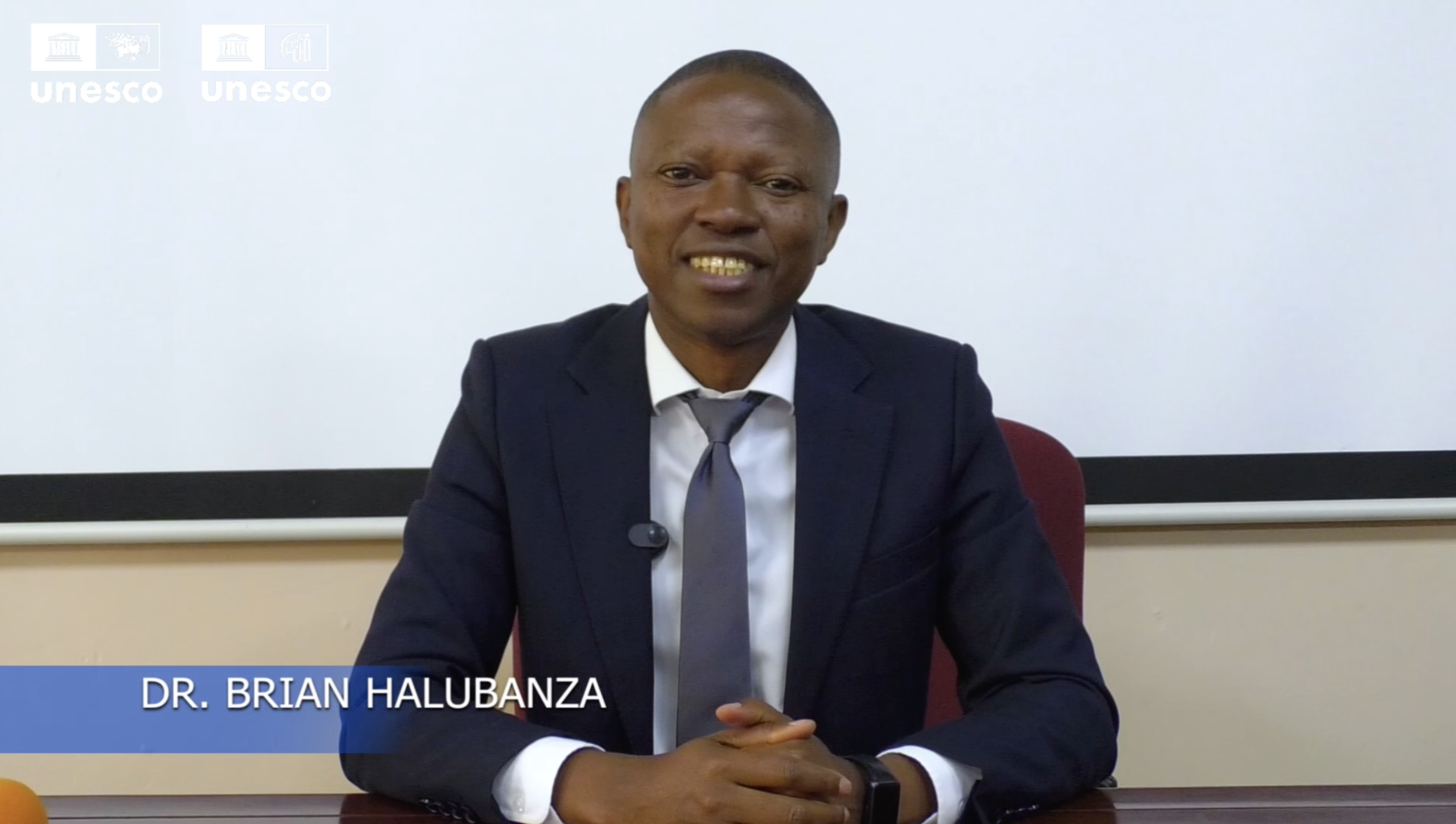
Dr. Brian Halubanza, Dean of the School of Engineering and Technology at Mulungushi University and Head of the IIOE Zambia National Centre
Global Launch: "AI and Women's Leadership in Higher Education" Programme
Mr. SIT Fung, Assistant Director & Chief of the Global Partnership and Programme Office, UNESCO-ICHEI, and Ms. Tatiana Murovana, Project Officer in Education at UNESCO IITE, jointly launched the "AI-Enabled Empowerment: Women's Leadership in Higher Education in the Global South" Programme.
Mr. SIT Fung explained that the programme is aimed at women faculty engaged in teaching and research, as well as women administrators and academic leaders in universities, and that its coverage will gradually extend from the original eight African countries to Central Asia, East Asia, Southeast Asia, South Asia, the Arab States, and Latin America and the Caribbean. The programme sets four objectives: to build AI competencies among women higher education professionals in line with the relevant UNESCO competency frameworks; to enable women to take part in institutional AI governance and to lead institutional transformation; to develop gender-responsive, context-adapted training resources and toolkits; and to establish cross-regional peer-learning communities.
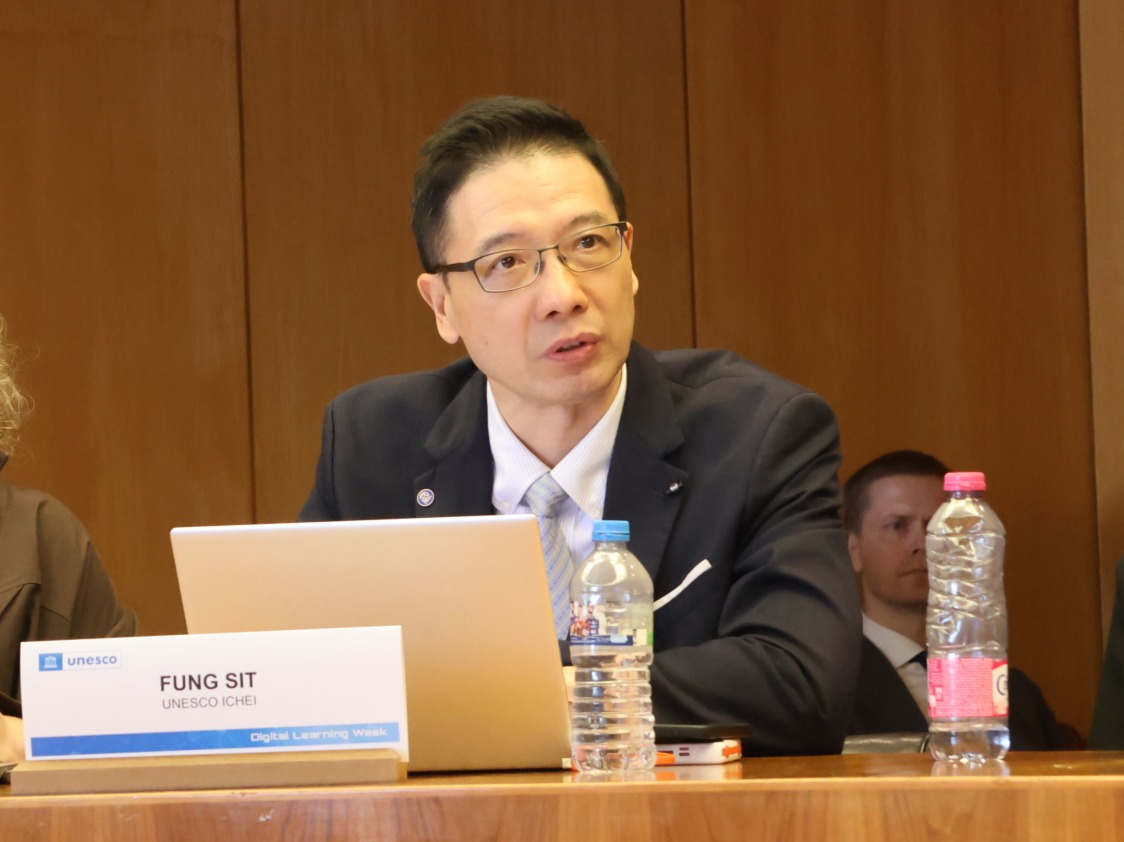
Mr. SIT Fung, Assistant Director & Chief of the Global Partnership and Programme Office, UNESCO-ICHEI
Ms. Tatiana Murovana explained that the programme will run blended training workshops for women faculty and academic leaders, combining knowledge of AI with its practical application in higher education settings; make gender-responsive courses, teaching guidelines and AI governance toolkits openly available through the IIOE platform; build cross-regional peer-learning communities and hold policy dialogues to exchange the practices now emerging in different contexts; and systematically document local practice so that it can inform wider policy discussion and research. In terms of delivery, the programme adopts an approach of global coordination with local ownership: UNESCO-ICHEI and UNESCO IITE provide the strategic framework, resources and overall coordination, while IIOE Regional Centres and National Centres deliver activities in their own regions and countries. The three-year programme plans to hold kick-off meetings with IIOE National Centres and Regional Centres in the fourth quarter of 2026, run the first pilot cohorts in selected regions in the first quarter of 2027, expand to further regions and sub-regions in the third quarter of 2027, complete a mid-term review in the first quarter of 2028 and move to full-scale implementation in the second quarter.
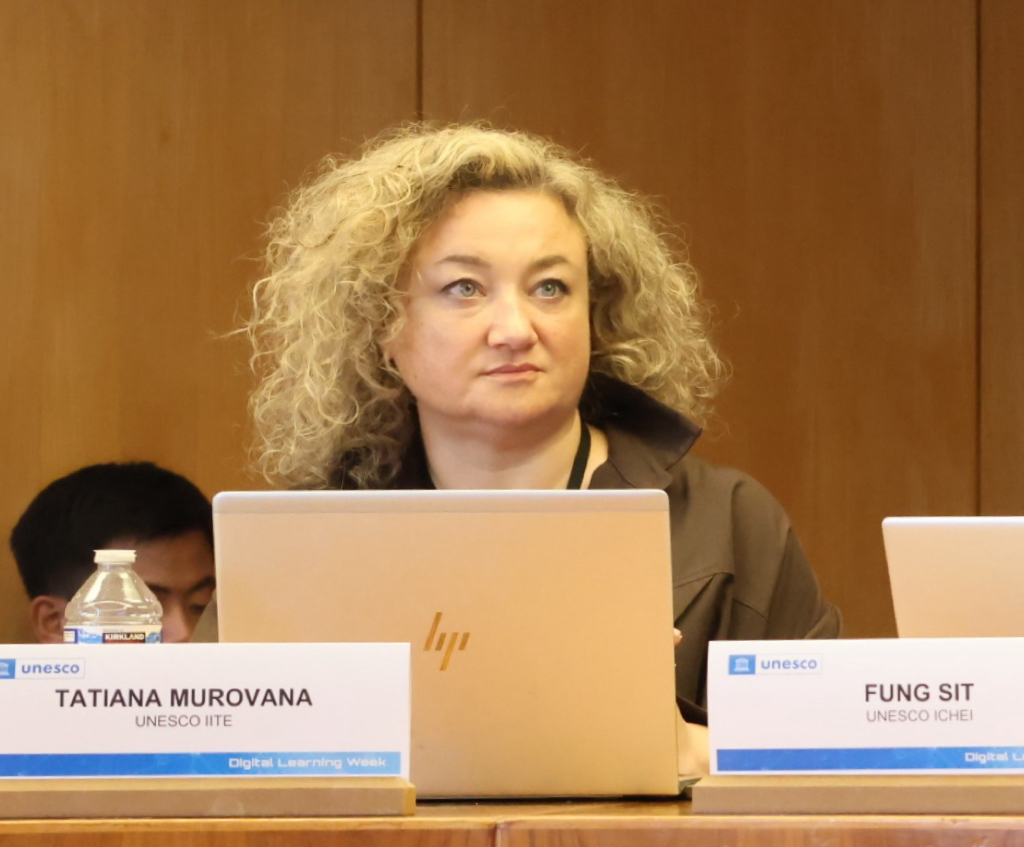
Ms. Tatiana Murovana, Project Officer in Education at UNESCO IITE
Voices from the Field: AI and Women's Leadership in Higher Education
Datuk Dr. Habibah Abdul Rahim, Director of the SEAMEO Secretariat and head of the IIOE Southeast Asia Regional Centre, presented progress under SEAMEO's regional initiative "Empowered and Equal Futures for Girls in Southeast Asia" (Future4Girls): a first capacity-building workshop for member countries was held in March 2025; a community of practice for gender-transformative education has been running since September 2025; and a regional mapping study of gender-related policies and programmes in Southeast Asia was completed in November 2025, alongside a multi-stakeholder consultation on "Youth Voices". She put forward three directions for joint action: first, to change what is measured, shifting the focus from counting participants to tracking what actually changes after participation; second, to change who decides, so that women are present throughout the process of framing problems, setting priorities and allocating resources; and third, to build shared capability, connecting Africa and Southeast Asia through peer learning, joint research and honest exchange.

Datuk Dr. Habibah Abdul Rahim, Director of the SEAMEO Secretariat and head of the IIOE Southeast Asia Regional Centre
Dr. Aida Sagintayeva, Vice Provost and Dean of the Graduate School of Education at Nazarbayev University in Kazakhstan, argued that for universities in Central Asia, multilingual contexts and uneven institutional capacity are issues that require serious attention. Nazarbayev University is taking forward work that links AI with research capacity building, higher education reform and research on native languages. Women, she said, should help shape AI rather than merely use it.
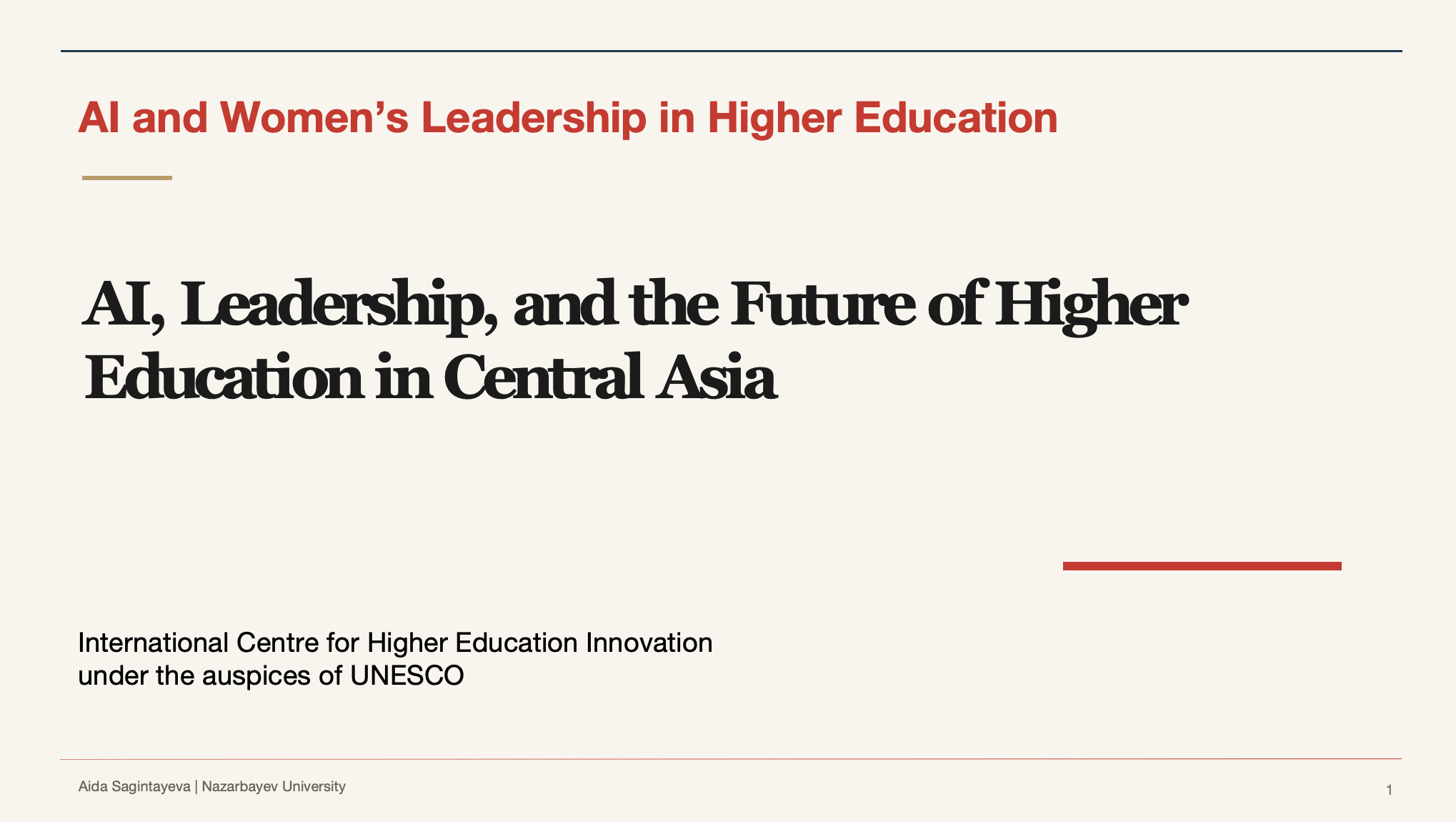
Case Study Presentation: Nazarbayev University in Kazakhstan
Prof. Ariunbolor Davaa, Professor at the Open Education Institute of the Mongolian University of Science and Technology and representative of the IIOE Mongolia National Centre, explained that IIOE's AI courses have been localised for Mongolia's language, culture and teaching traditions, that 22 master trainers have been prepared, 70% of them women, and that faculty development is being delivered at national scale through a combination of online and face-to-face modes, with micro-certification linked to teachers' professional development and academic recognition. On behalf of the IIOE Mongolia National Centre, she proposed co-creating a "Mongolia Women AI Leadership Pilot" with UNESCO-ICHEI, framed around micro-certification training, mentoring and institutional AI projects.
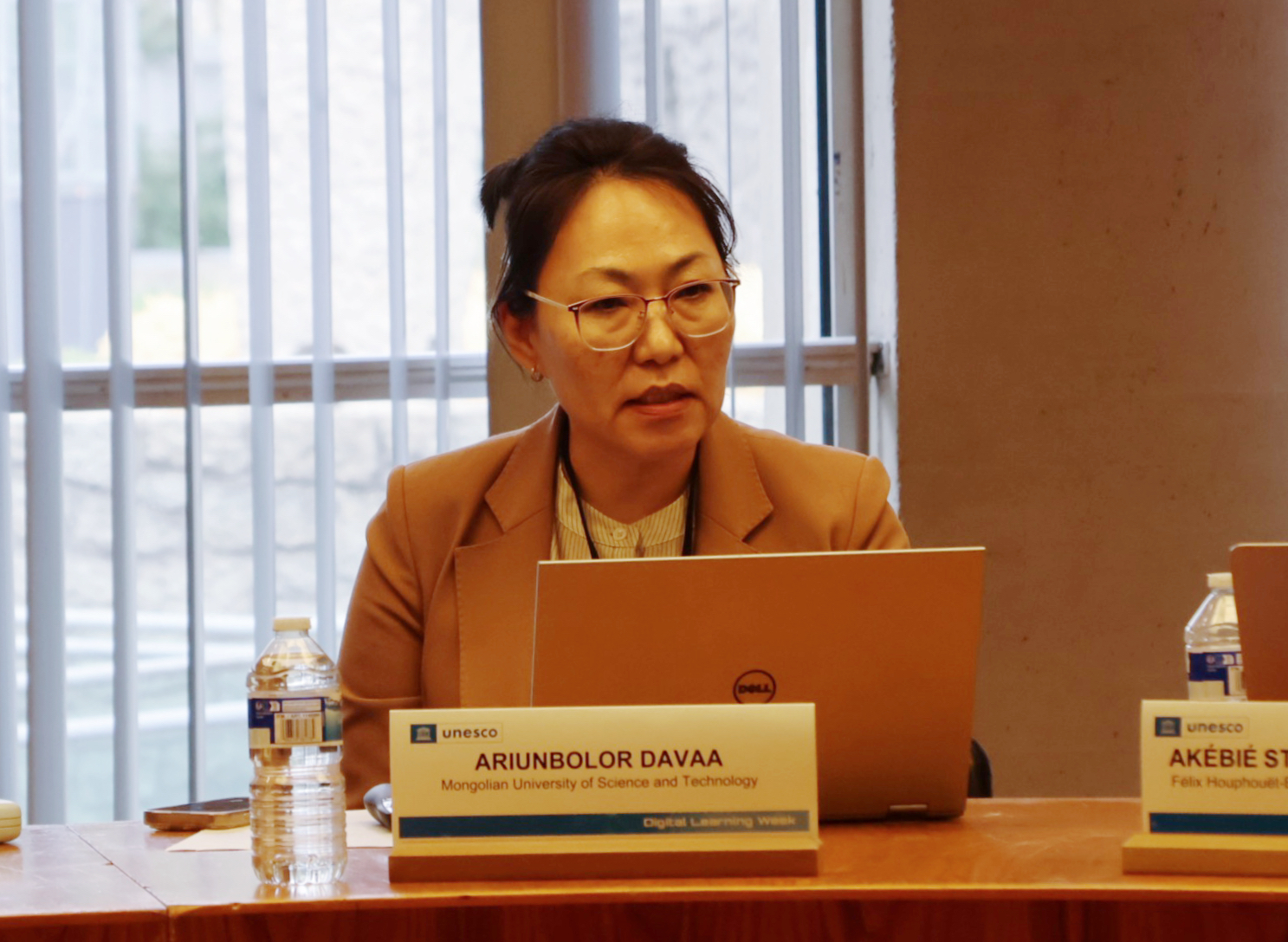
Prof. Ariunbolor Davaa, Professor at the Open Education Institute of the Mongolian University of Science and Technology and representative of the IIOE Mongolia National Centre
Prof. Chitra Bahadur Budhathoki, Professor at the Central Department of Education and former Dean of the Faculty of Education at Tribhuvan University in Nepal, and Coordinator of the IIOE Nepal National Centre, recommended that universities set up leadership programmes for women academics that bring AI and digital skills, research capacity, mentoring networks, communication skills and leadership development into a single design. He also noted that flexible online learning helps women balance work, family and professional development, and so reduces traditional barriers to advancement.
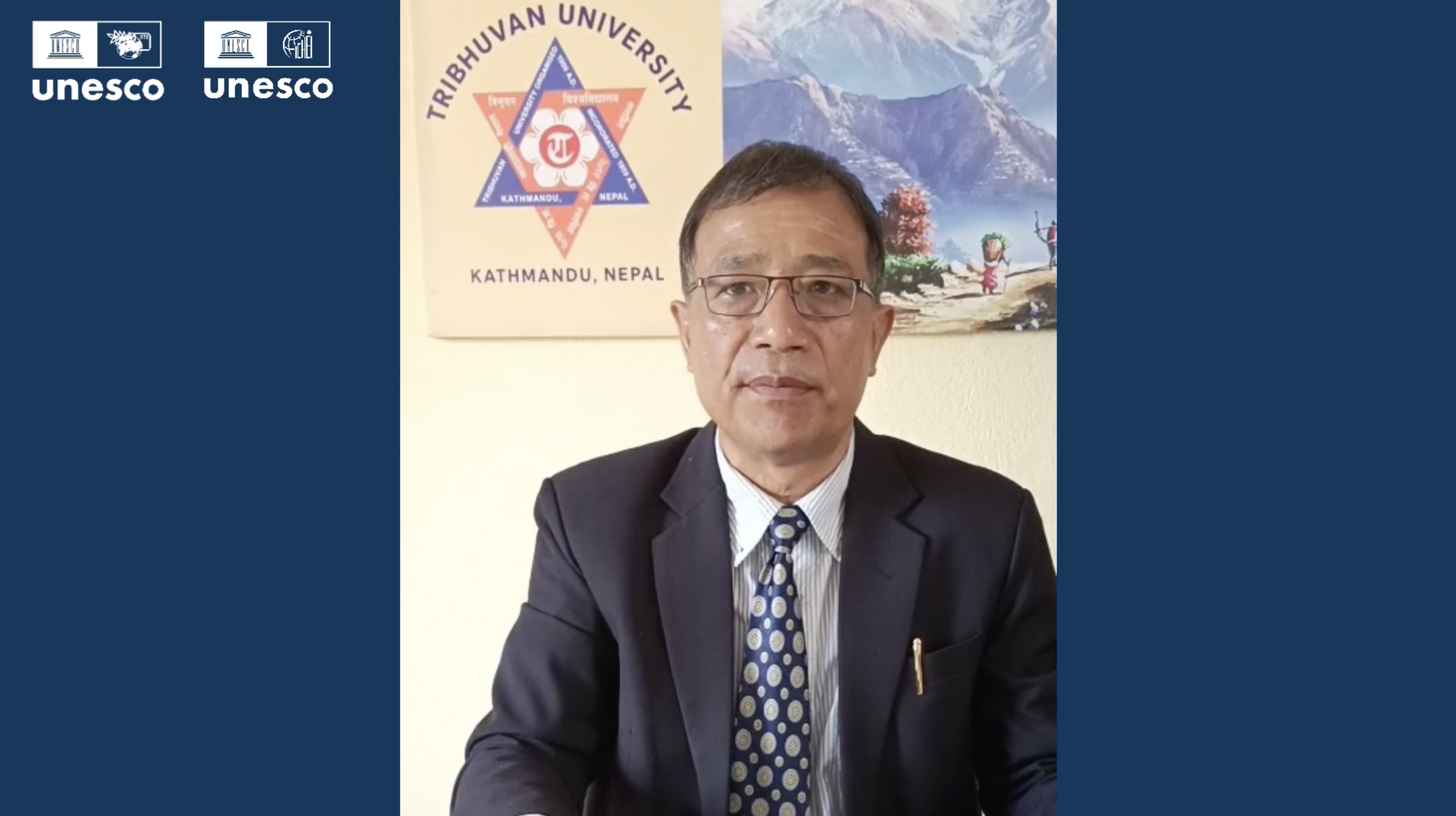
Prof. Chitra Bahadur Budhathoki, Professor at the Central Department of Education and former Dean of the Faculty of Education at Tribhuvan University in Nepal, and Coordinator of the IIOE Nepal National Centre
The session extended the experience of the "Women Leading Change in Africa" Programme to higher education institutions across the Global South, establishing a cross-regional platform for policy dialogue and knowledge sharing and encouraging all parties to explore together how to build the digital and AI competencies of women in the higher education workforce and to develop their leadership. With the launch of the "AI-Enabled Empowerment: Women's Leadership in Higher Education in the Global South" Programme, UNESCO-ICHEI and UNESCO IITE will work with IIOE National Centres and IIOE Regional Centres to turn transferable experience into programmes that can be delivered in each region, so that women in the higher education workforce not only take part in the digital transformation of higher education in the age of AI, but lead it.