Report Highlights | International Institute of Online Education (IIOE) Development Report 2019–2026
The International Institute of Online Education (IIOE) Development Report (2019–2026) (hereinafter the “IIOE Development Report”) was officially launched at the Global Future Higher Education Summit on 6 June 2026. The report systematically reviews seven years of IIOE development and achievements—anchored in the three pillars of technological foresight, local adaptation, and multilateral cooperation—in building the digital and AI competencies of higher education professionals and advancing the digital and intelligent transformation of universities. Looking ahead, IIOE will continue to advance technology empowerment, multilateral collaboration, local operations, and mutual benefit, working to transform SDG 4's vision of inclusive and equitable quality education into intrinsic momentum for the development of higher education across the Global South.
In 2019, the International Institute of Online Education (IIOE) was jointly launched in Shenzhen, China, by the International Centre for Higher Education Innovation under the auspices of UNESCO (UNESCO-ICHEI), together with 15 partner institutions from 12 countries and 9 technology enterprises. Seven years on, it has grown into an IIOE Ecosystem — connecting more than 190 partner institutions across 49 countries and over 40 enterprises, and cumulatively empowering more than 400,000 higher education workforce through its online learning platform and training programmes.
The IIOE Development Report is a systematic review of seven years of IIOE practice, distilling the practice of IIOE Ecosystem partner in real educational settings into experience that is replicable and transferable. Guided by the principle of "extensive consultation, joint contribution, and shared benefits", IIOE has formed an Ecosystem model centred on technological empowerment, grounded in local adaptation, and supported by multilateral cooperation — a practical pathway toward bridging both the digital divide and the education divide. This article offers an in-depth reading of the core of the IIOE Development Report along the main threads of technological foresight, local adaptation, and multilateral cooperation.
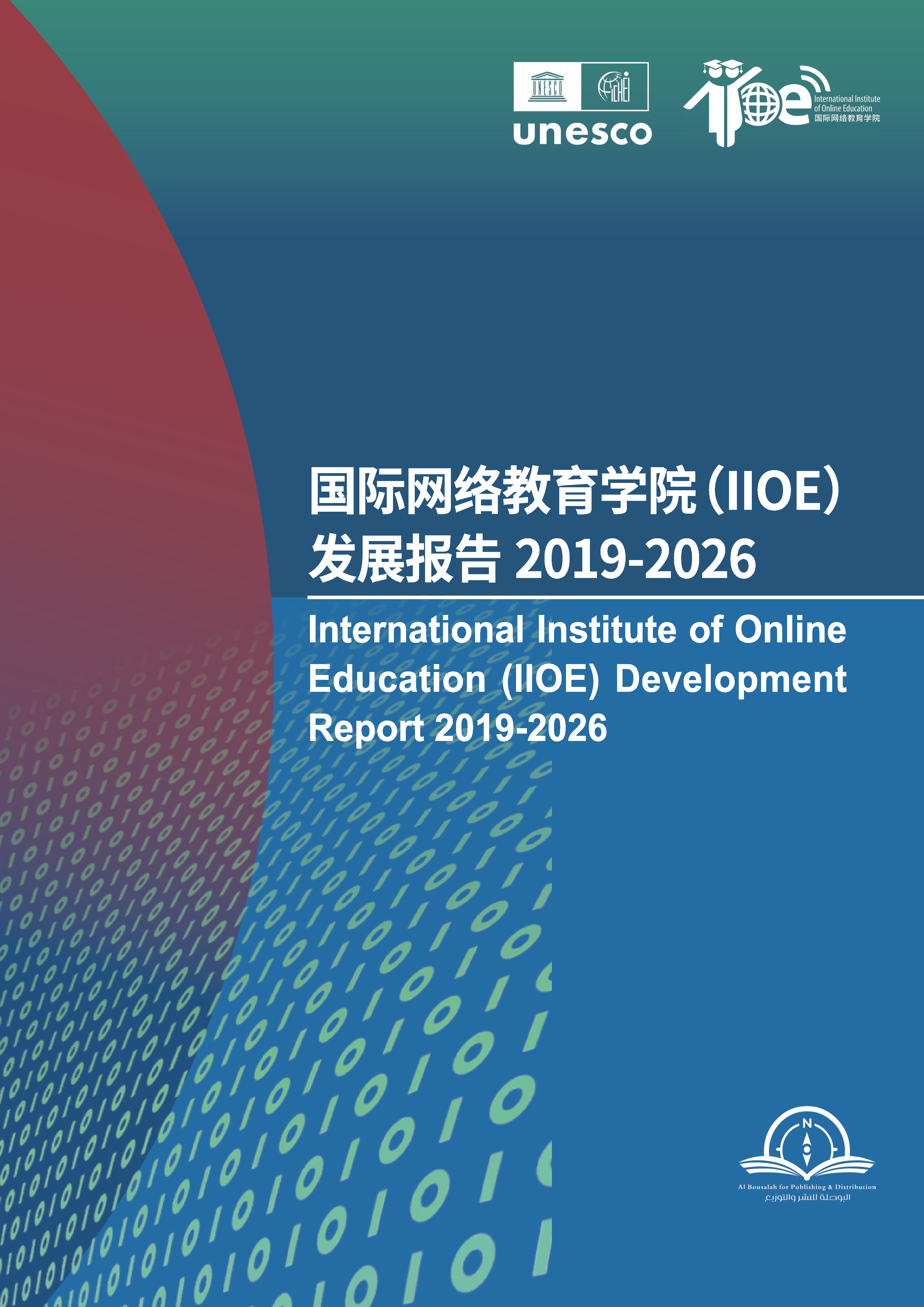
The International Institute of Online Education (IIOE) Development Report (2019–2026)
Technological Foresight Connecting IIOE's Global Partners
In the face of digital and AI-enabled transformation, IIOE translates its forward-looking technological vision into tangible tools and products that empower global higher education. This foresight is embodied mainly in the continuously iterating technological foundation of the IIOE platform and in a "partner needs + frontier trends" dual-driven course system. IIOE has progressively established four micro-certification course categories: "Higher Education Teaching Personnel Digital Competency", "GenAI for Higher Education Professionals", "AI + Discipline", and "AI + Industry". As of May 2026, the IIOE platform has cumulatively offered over 700 online courses, benefiting teachers across 135 countries and regions.
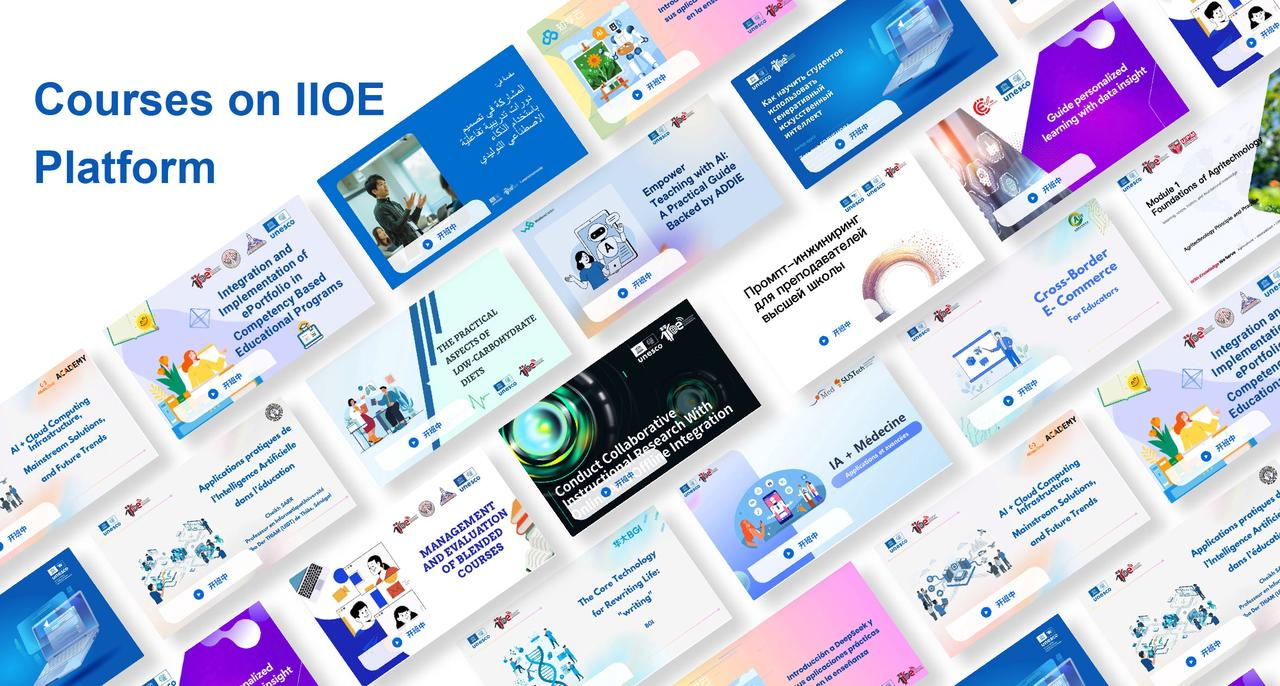
Courses on IIOE Platform (Partial)
Local Adaptation Fuelling IIOE's Sustained Growth
The building of a global network establishes IIOE's breadth, while local adaptation unlocks the depth and durability of its development. Digital transformation can achieve its essential shift from "externally driven" to "endogenous growth" only when rooted in local educational ecosystems. Through a multi-tiered operational system of IIOE National Centres, IIOE Training Centres, and IIOE Regional Centres, IIOE deeply integrates high-quality global resources with the specific policy frameworks, teaching contexts, and industry needs of each country.
UNESCO-ICHEI has established IIOE National Centres jointly with partner institutions in 17 countries. With the support of national higher education authorities, IIOE National Centres build nationwide university networks and lead and advance the digital transformation of higher education at the national level. The results are written into specific cases: the IIOE Egypt National Centre (Ain Shams University) has cumulatively empowered over 4,000 Egyptian higher education professionals as of May 2026, of whom women comprise 66 per cent; the IIOE Ethiopia National Centre (Addis Ababa University) has formally incorporated IIOE micro-certification courses into its institutional teacher professional development system, linking them to promotion criteria; the IIOE Mongolia National Centre (Mongolian University of Science and Technology) organises localised training, with relevant micro-certification courses incorporated into its teacher training system and eligible for credit transfer in Master's programmes; and the IIOE Indonesia National Centre (Indonesia Cyber Education Institute), through policy dialogues, promotes the recognition and harmonisation of micro-certification systems — including IIOE's micro-certification programme for higher education professionals — at both national and regional levels.
At the same time, IIOE has successively established IIOE Training Centres in Hong Kong SAR, Singapore, and France, focusing on fintech, healthy lifestyles, Environmental, Social and Governance (ESG), and "AI + Tourism", respectively. Leveraging the high-quality educational resources and industrial strengths of high-income economies, IIOE Training Centres develop cutting-edge, practical, and industry-recognised training programmes; while empowering local talent development, they share high-quality resources with global partners through the IIOE network, building a new ecosystem of North-South linkages for industry-academia collaborative talent development. The IIOE Arab Regional Centre and IIOE Southeast Asia Regional Centre were officially unveiled at the Global Future Higher Education Summit, and will draw on their respective regional advantages to accelerate the sharing of high-quality resources and deepen regional policy coordination, injecting sustained momentum into the digital transformation of higher education in the Arab region and Southeast Asia.
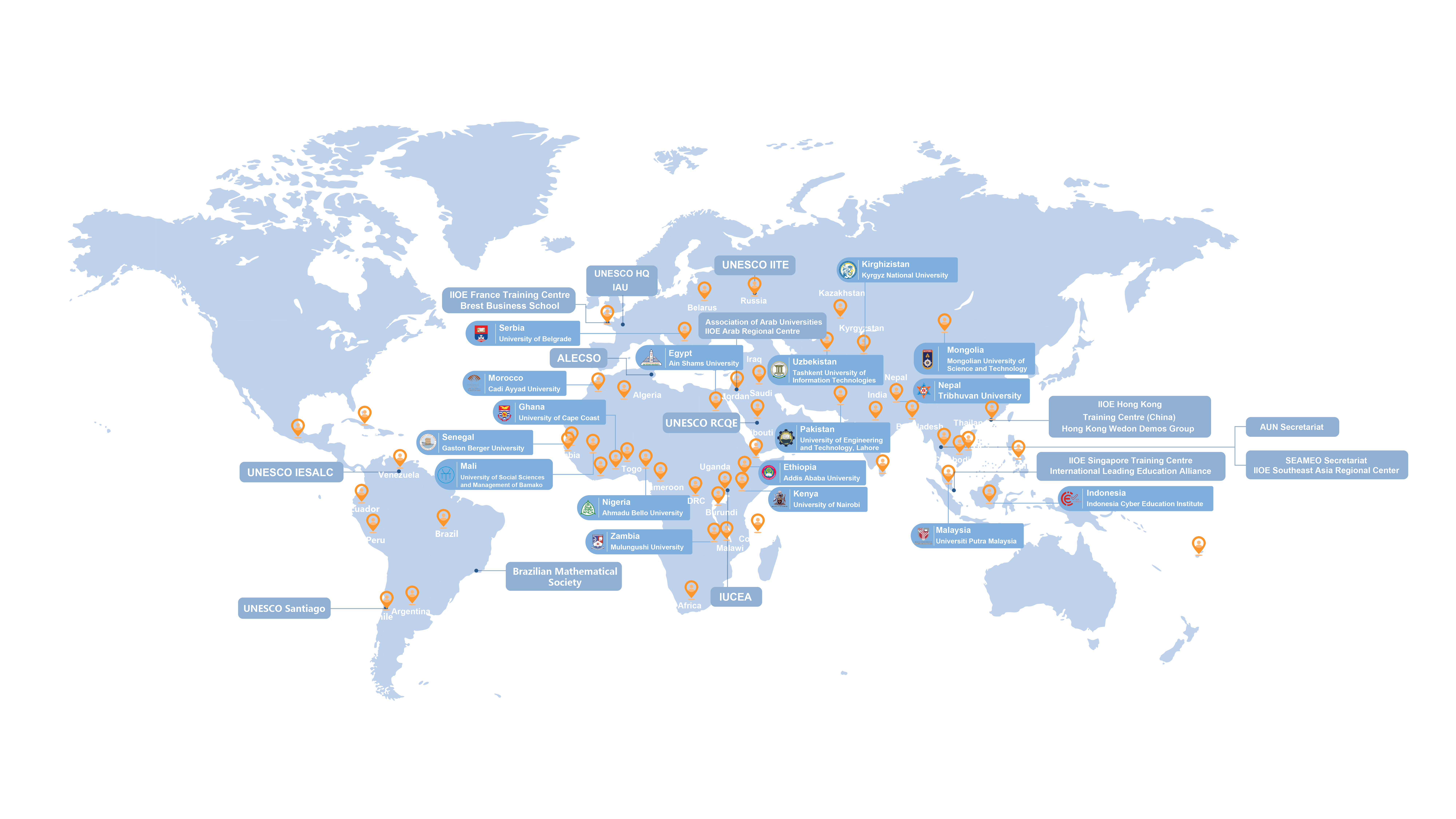
IIOE Ecosystem
Multilateral Cooperation Yielding IIOE's Fruitful Outcomes
IIOE has consistently adhered to the cooperative principle of "extensive consultation, joint contribution, and shared benefits", committed to maximising synergy by leveraging the complementary strengths of multiple stakeholders. From the co-construction of infrastructure foundations and high-quality resources through industry-academia collaboration, to the fostering of regional policy consensus and practical guidance through multilateral dialogue, and to the recognition of outstanding practices and global exchange of experiences inspired by pioneer cases, IIOE has established a collaborative empowerment system.
In enterprise cooperation, the Smart Classroom Project — with academic support from the Southern University of Science and Technology (SUSTech), hardware and software facilities provided by enterprises, and technical standards set by UNESCO-ICHEI — has been constructed and put into use at 17 IIOE partner institutions across Asia and Africa. In resource co-construction and talent development, IIOE engages with industrial frontiers, partnering with leading enterprises and industry associations to develop micro-certification programmes such as "AI + Industry".
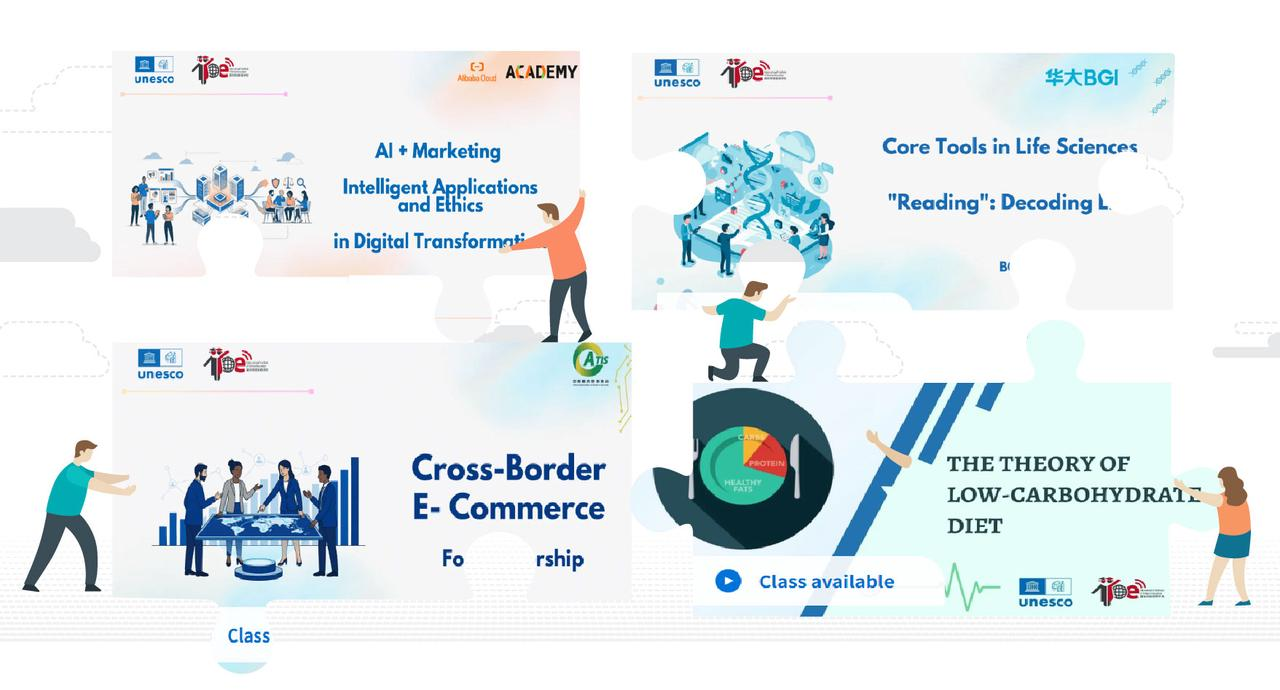
IIOE Courses Jointly Developed with Industry (Partial)

17 Smart Classrooms Worldwide
In multilateral dialogue, UNESCO-ICHEI, together with IIOE National Centres, partner institutions, relevant national higher education authorities, and international organisations, convenes regional high-level policy dialogues, establishing a long-term mechanism for multi-stakeholder dialogue and exchange within regions and assisting national bodies in formulating sound, practical, and effective policies and strategies for the application of AI in higher education. Since 2024, five regional high-level policy dialogues have been successfully held in Southeast Asia, Central Asia, Africa, East Asia, and South Asia, and the mechanism will be extended to Latin America and the Caribbean, the Arab region, and Southern Africa in the future.
As for pioneer cases, UNESCO-ICHEI launched the IIOE Higher Education Digitalisation Pioneer Case Award (the Pioneer Award) in 2023. Across two editions, guided by the four-dimensional evaluation framework of "innovation, inclusiveness, equity, and sustainability", the Pioneer Award has recognised 44 outstanding cases from countries worldwide — aiming to inspire global innovation from local practices and to promote the collective progress of the entire IIOE Ecosystem.
IIOE Higher Education Digitalisation Pioneer Case Award
What the IIOE Development Report offers is not merely outcomes, but a direction for development.
The global partners of the IIOE Ecosystem will undertake four priority actions: advancing technological empowerment, expanding the "AI + Industry" and "AI + Discipline" micro-certification programmes to support the development of talent equipped to meet the demands of industrial transformation across the Global South; deepening multilateral cooperation, strengthening cross-national, cross-regional, and multi-sectoral cooperation, and supporting the participation of industry bodies in competency standard-setting, curriculum development, and the recognition of competency-based learning outcomes; strengthening local operations, leveraging IIOE National Centres and regional cooperation mechanisms to support institutions in developing contextually grounded and sustainable training implementation plans; and promoting shared benefit, supporting the identification and dissemination of good practices, and facilitating the exchange of experience and the building of shared consensus.
The path written into this Report is one that the IIOE Ecosystem has walked through step by step. UNESCO-ICHEI will work together with global partners to further deepen multilateral collaboration, continuing to contribute to technological empowerment and the bridging of the digital divide, and jointly advancing the realisation of the Education 2030 Agenda and the vision set out in Futures of Education.