Report Release: Digitalisation and the Use of AI in African Higher Education
The readiness of higher education institutions(HEIs) for digital transformation is a key factor determining their ability to effectively adapt to the integration of artificial intelligence(AI) into education. Since 2023, the International Centre for Higher Education Innovation under the auspices of UNESCO (UNESCO-ICHEI) has collaborated with UNESCO regional offices, category 1 institutes, regional and international organizations, and higher education research institutions to conduct joint research. This includes studies on the digital transformation of higher education across eleven sub‑regions of the Global South, as well as an examination of critical issues related to the integration of AI into higher education systems. This series of articles will review the findings of these reports, aiming to provide knowledge‑based guidance for all stakeholders in higher education as AI continues to reshape the educational landscape.
UNESCO-ICHEI (hereinafter referred to as "ICHEI"), in partnership with the UNESCO International Institute for Capacity Building in Africa (IICBA), conducted a survey and research study. It analysed the current state of digital transformation in higher education institutions across the five sub-Saharan African regions (West, Central, East, Southern, and North Africa) and the key issues regarding the integration of AI into higher education systems. The joint outcome is presented in the report Digitalisation and the Use of Artificial Intelligence in Higher Education in Africa: An Exploratory Study.
This study consists of three parts. The first part reports on results from two online surveys implemented among higher education stakeholders. The second part consists of case studies documenting innovative experiences, typically at the level of specific universities but also in some cases with a broader scope. Apart from an initial case study from the African Association of Universities, the other case studies cover Botswana, Cameroon (through the continental work of the Pan African University headquartered in Yaoundé), Côte d’Ivoire, Ghana, Ethiopia, Kenya, Namibia, Nigeria, Sierra Leone, South Africa, Togo, and Zimbabwe. Finally, the third part of the study consists of a single short chapter that briefly outlines some of the frameworks and guidance documents available in UNESCO and African Union on issues pertaining to digitalization and the use of AI in education.
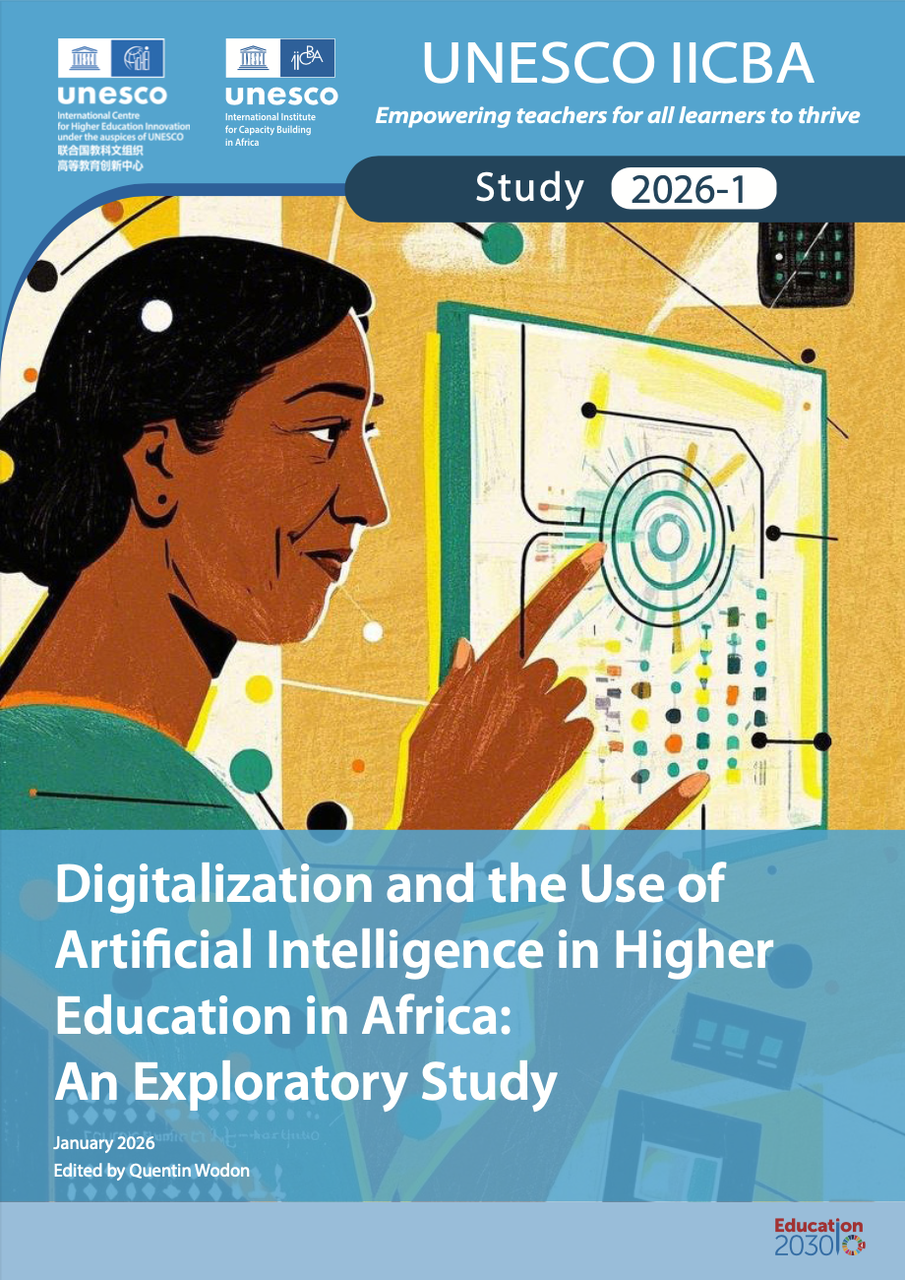
Digitalisation and the Use of Artificial Intelligence in Higher Education in Africa: An Exploratory Study
(Click the image to read the full report)
1、Report Launch
In January 2026, the report Digitalisation and the Use of Artificial Intelligence in Higher Education in Africa: An Exploratory Study was officially released online and included as part of the Africa Teachers' Capacity Building Training content in the UNESCO Digital Library. On 26 February 2026, Ms. BI Xiaohan, Deputy Director of ICHEI, and Professor Quentin Wodon, Director of UNESCO IICBA, jointly launched and provided an in-depth interpretation of the report at the "Africa Teachers Webinar Series".
Ms. BI Xiaohan pointed out: For Africa, digital transformation holds immense potential, but it requires careful coordination of policy, infrastructure, and institutional capacity, among other areas. This reality and challenge align closely with the mission and focus of the International Institute of Online Education (IIOE). The IIOE not only provides open capacity-building resources and skills in applied artificial intelligence for university faculty and administrators but also, as a global alliance, fosters multilateral stakeholder collaboration. UNESCO-ICHEI invites institutions and organisations from across Africa to actively participate in cooperation with the IIOE, to join hands and advance together towards shared prosperity and development in the field of African higher education.
Professor Quentin Wodon pointed out: This research report responds to the policy context of the new "Continental Education Strategy Framework" launched this year by the African Union. Data from multiple questionnaire surveys reveal the main challenges and current situation regarding digitalisation and AI application in African higher education. Although the survey results highlight widespread challenges, the 13 case studies included in the report showcase the innovative practices of African higher education institutions; these cases also constitute the most compelling part of the entire report. Based on the analysis of the current situation, UNESCO IICBA will continue to persist in research and policy dialogue, deepen efforts in teacher capacity building, and promote the piloting of e-learning platforms to support the implementation of the continent's overall education strategy.
|
|
Ms. BI Xiaohan, Deputy Director of ICHEI | Professor Quentin Wodon, Director of UNESCO IICBA |


2、Research Questions and Findings
The research report systematically observes the transformation of higher education by focusing on five aspects: institutional strategic planning and governance mechanisms, the development of online resources, digital services and course development, student skills cultivation and institutional support, bottlenecks in digitalisation implementation, and the current state of AI awareness. Among the surveyed institutions, the digitalisation process in higher education remains in its early stages. Although AI is expected to trigger significant industry changes, faculty, students, and administrators have not yet fully grasped these transformations. Notably, engagement with digitalisation and AI in Francophone Africa is significantly lower than in Anglophone Africa. Overall, the research results indicate that higher education institutions and national competent authorities need to increase their investment efforts to break through the constraints hindering digital transformation and AI application.
Strategies, Governance, and Online Resources
When asked whether their institution had formulated a digitalisation strategy, most respondents gave an affirmative answer. Regarding the coverage of various topics in the institutions' digitalisation policies, the proportion of institutions with policies covering these topics was generally consistent. Most institutions have a digitalisation strategy (88% of English respondents, 79% of French respondents), but these are mostly integrated into the overall institutional strategy or rely on national strategies, with no independent digital strategy document published. About half of the institutions have a well-developed digital communication strategy. Policies cover topics such as data protection and cybersecurity, but Francophone institutions have lower policy coverage in cybersecurity (26%) and intellectual property (36%). Furthermore, a significantly higher proportion of respondents from Anglophone regions affirmed the availability of online resources, indicating that the distribution of educational resources still shows considerable variation by language. Institutional libraries in Anglophone regions have far more online academic resources (e-books 67%, journals 62%, databases 58%) than those in Francophone regions (e-books 34%, journals 37%, databases 31%).
Digital Offerings for Services and Courses
The questionnaire inquired about the availability of various online services, including academic administration and learning support, and whether the respondents' institutions offered digital online short courses such as blended learning, online degree programmes, micro-credentials, etc. It was found that: online service coverage is uneven; except for registration (85% in Francophone regions vs. 69% in Anglophone regions) and student support services (both relatively low, around 35%-37%), Anglophone regions have higher proportions of services being offered online, such as course selection (63% vs. 32%) and grade inquiries (68% vs. 38%); blended learning is gradually becoming widespread, while degree programmes, MOOCs, etc., are lagging in development; institutions in Anglophone regions perform better than those in Francophone regions in integrating digital skills into the curriculum (e.g., general digital literacy 2.8 points vs. 1.9 points); digital assessment has seen some development and is mostly applicable to all courses rather than only online courses.
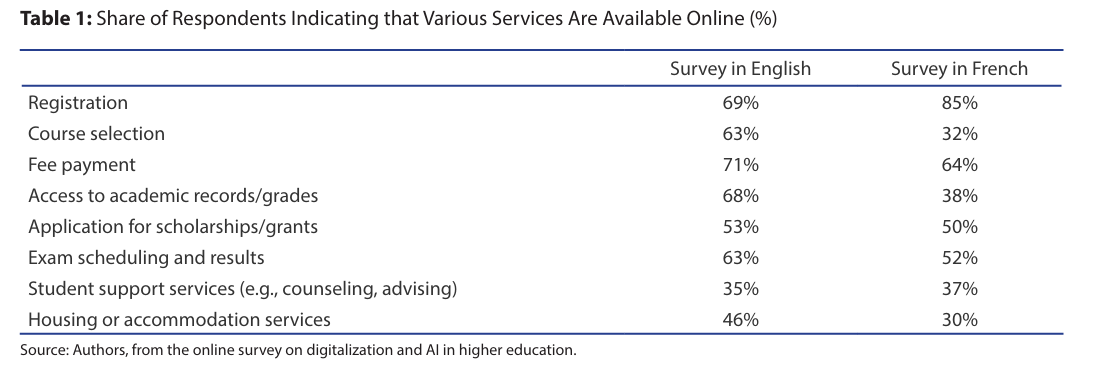
Share of Respondents Indicating that Various Services Are Available Online
Student Skills and Institutional Support
In the English survey, respondents believed that students generally possess basic computer operation skills and a certain level of digital communication ability. However, ratings were lower for online research skills, multimedia application ability, learning platform usage skills, and especially programming skills. In the French survey, ratings for all types of skills were generally low, indicating that students need more support. The support provided by universities typically focuses more on providing internet access and managing technical support centres, rather than more advanced digital skills training courses, digitally enhanced teaching support, or equipment provision. Regarding faculty support, the focus is more on digital skills training opportunities than on other forms of support.
Constraints to Digitalisation
The potential constraints listed by respondents included: insufficient infrastructure (e.g., inadequate network or equipment), conservative academic culture, lack of funding support, lack of technical support, insufficient leadership and strategic planning, centralised institutional management models, insufficient peer collaboration, unsatisfactory remuneration, lack of motivation for innovation, inadequate administrative organisation, lack of professional development support, insufficient digital technology application ability among educators, insufficient digital technology application ability among students, limited device access for students, limited device access for teachers, and other constraining factors. The survey showed that insufficient infrastructure (e.g., inadequate network or equipment) is the most important constraint. The importance of other constraining factors varied less, although in the French survey, the issue of insufficient funding was relatively less significant.
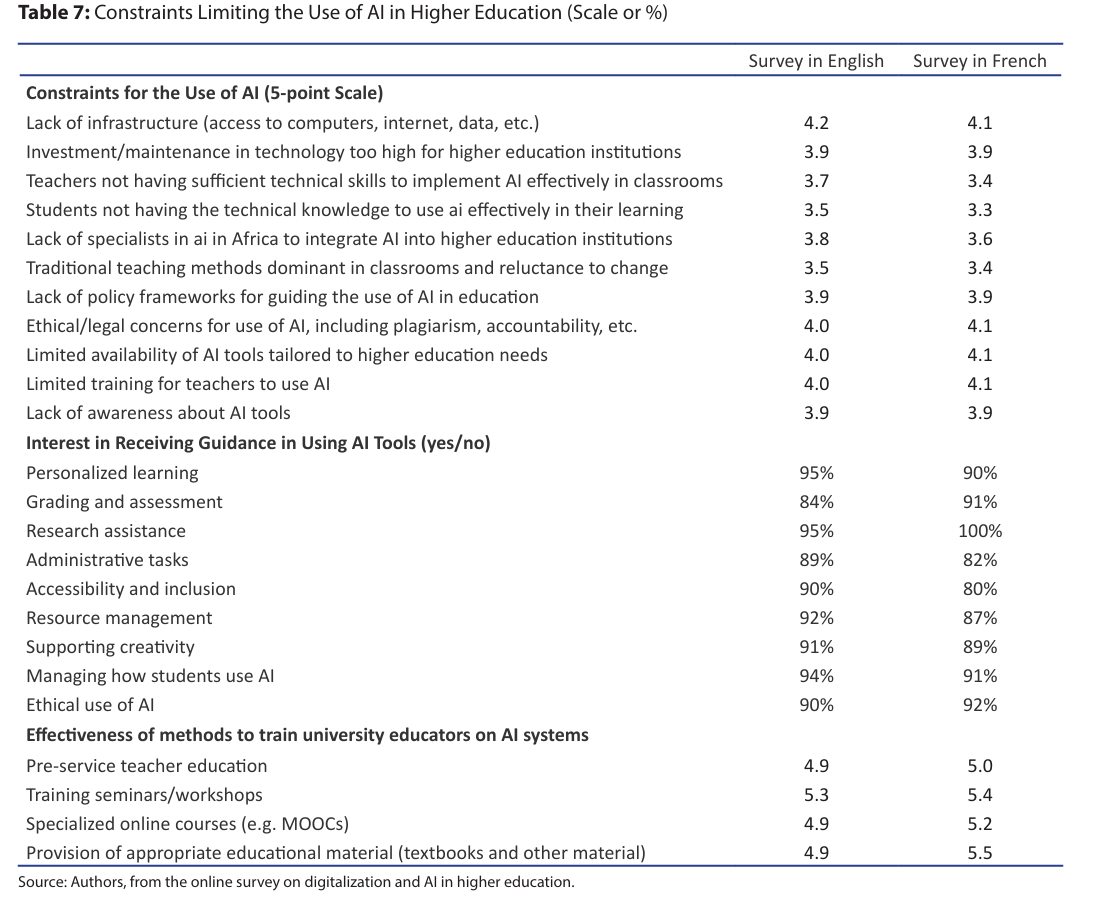
Constraints Limiting the Use of AI in Higher Education
Perceptions Regarding AI
The final part of the survey focused on perceptions related to AI. 71% of English respondents believed AI will greatly affect higher education, while only 39% of French respondents held the same view; the potential benefits of AI in research assistance (5.1 points in English, 5.3 points in French) were most recognised; student use of AI (69% English, 64% French) was higher than that of teachers (50% English, 44% French) and institutions (39% English, 26% French); most institutions lacked AI-related policies (only about 6%-21%), but had some awareness of AI risks (e.g., plagiarism, hindrance to critical thinking development); lack of infrastructure (4.2 points English, 4.1 points French) remains the primary obstacle to AI application, with ethical/legal concerns, insufficient tool suitability, etc., also being prominent; there is a strong demand among teachers for guidance on AI application, especially in areas like personalised learning, research assistance, and the ethical use of AI.
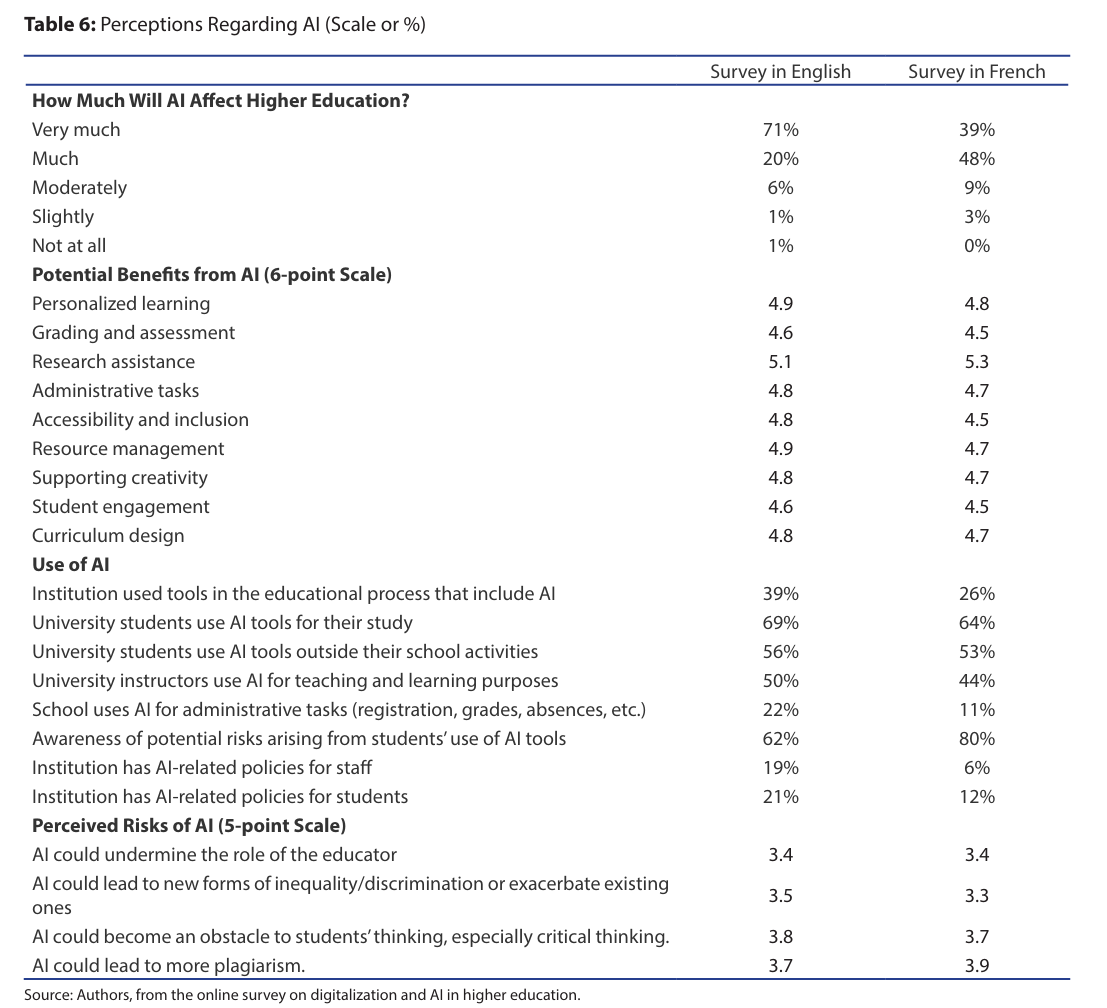
Perceptions Regarding AI
In summary, the African continent exhibits significant regional linguistic differences, lagging AI awareness and application, and prominent constraining factors. The development process in Francophone Africa is clearly behind that in Anglophone Africa. AI development is in a stage characterised by "shallow awareness, weak application, lack of policy, yet clear demand". This requires the sector to fully recognise the transformative value of AI and strengthen the development of policy norms at the institutional level. Concurrently, teachers' explicit demand for guidance on AI application provides a clear direction for future development. Overall progress urgently requires increased investment from universities and national competent authorities to break through developmental constraints.
3、The Path of Digital Innovation in Higher Education Across Countries
This report showcases, through multiple case studies, the innovative practices, challenges, and experiences of different types of higher education institutions across various African countries in digitalisation and AI application. The cases cover countries including Cameroon, Cote d'Ivoire, Ghana, Ethiopia, Kenya, Nigeria, Sierra Leone, South Africa, Togo, Zimbabwe, and Botswana. The Centre highlights some examples that demonstrate the shared characteristics and differences in Africa's digital education journey.
Côte d'Ivoire: Systematically Building a Virtual University. The Université Virtuelle de Côte d'Ivoire (UVCI) is not merely an online course platform but has created a complete digital education ecosystem including digital content production studios, innovation workshops (FabLabs), and incubators, actively incorporating AI and open science into its development blueprint through UNESCO Chairs. UVCI has significantly expanded access to higher education, especially for students in rural and disadvantaged groups, through flexible digital learning models (such as blended learning and MOOCs). UVCI has promoted the popularisation of digital pedagogy, trained hundreds of teachers, and helped other universities quickly transition to online learning during COVID-19, enhancing the resilience of the education system. Through collaborative networks (such as the Francophone Virtual University Network), UVCI has become a model for digital education in West Africa, fostering knowledge sharing and sustainable development.
Ghana: Emphasising Close Integration with the National Digital Agenda and Industry Needs. The Ghanaian government is cultivating AI talent through the National AI Strategy and the "1 Million Programmers Plan" to address youth unemployment. Ghanaian universities (e.g., Kwame Nkrumah University of Science and Technology (KNUST)) have collaborated with companies like Google to establish AI research centres and have developed low-bandwidth AI applications suitable for local conditions (e.g., creating learning systems adapted to low bandwidth through social media tools like WhatsApp communities), focusing on cultivating entrepreneurial talent to solve practical problems. Meanwhile, institutions like Ghana Tech Lab also send graduates to AI start-ups through entrepreneurship bootcamps (e.g., 6 weeks of coding + 2 months of incubation), alleviating youth unemployment and empowering students' independent entrepreneurial capabilities.
Ethiopia: Nationally Led Centralised Platform Construction. The "one-stop" digital platform (e.g., the e-Learning for Strengthening Higher Education (e-SHE) platform) promoted by the Ethiopian Ministry of Education aims to provide unified online learning services for all public universities. It attempts to achieve economies of scale and resource sharing through top-level design to address the common infrastructure challenges faced by various universities. This platform benefits all Ethiopian public universities, including first-generation universities (e.g., Addis Ababa University, Haramaya University, Hawassa University). With the platform's support, universities have made progress in digitalisation, for example, using the e-SHE platform for course delivery, online assessment, and resource sharing, but digitalisation remains in an early stage.
Nigeria: A "Dual-Track" Digitalisation Path. Taking the University of Calabar (UNICAL) as an example, UNICAL advances digitalisation through a "dual-track" path. On one hand, it vigorously digitalises the management processes of the postgraduate school to improve efficiency; on the other hand, it expands educational coverage through the newly established Open and Distance Learning Centre (ODLC) and actively explores the use of AI chatbots for student services. UNICAL's digital transformation has improved administrative efficiency (e.g., online registration and payment systems reduced paperwork), expanded educational access (the ODLC provides flexible learning for non-traditional students), and sparked student interest in AI (e.g., planning to use AI chatbots for student services). This blended learning model has improved the learning experience and increased student engagement.
South Africa: Cutting-Edge Research Focusing on Teacher Readiness. The case study uses a mixed-methods approach to deeply analyse teachers' willingness and obstacles to integrating AI into teaching, providing an empirical basis for the targeted design of teacher training courses to overcome cultural and pedagogical resistance. Technological Pedagogical Content Knowledge (TPACK) training was used to assess pre-service teachers' AI readiness. It was found that after training, teachers were more adept at using AI for personalised tutoring or assessment, thereby indirectly improving student performance. After teachers' TPACK training, students may experience a more interactive classroom environment, e.g., through AI-assisted simulations and assessment tools, enhancing engagement. Simultaneously, through adaptive learning paths enabled by AI tools (e.g., personalised learning systems), students can benefit from immediate feedback and customised content, thereby improving concept mastery and critical thinking skills.
4、Future Recommendations and Challenges
In facing the rapidly developing future of AI, the African continent still needs to ensure the following essential conditions:
(1) Reduce disparities in participation and equity in higher education;
(2) Improve quality and relevance;
(3) Help students prepare for the labour market;
(4) Enhance efficiency and institutional management;
(5) Support research and innovation.
However, despite the promising prospects in these areas, African higher education must first overcome existing challenges such as digital infrastructure, low digital literacy, limited funding, and the lack of robust policies and ethical guidelines. In response to the African Union's development goals and strategic visions like Agenda 2063: The Africa We Wantand the Continental Artificial Intelligence Strategy, and to jointly address Africa's digital development and higher education transformation, this report also makes the following recommendations to higher education stakeholders, especially higher education management authorities and university administrators:
Introducing Global Frameworks: The UNESCO ICT Competency Framework for Teachersand the more recent AI Competency Framework for Teachersprovide pathways and reference points for capacity building from a standards development perspective. The former covers competencies in multiple areas such as equipment operation and information literacy, while the latter emphasises that the development and application of AI should be human-centred, adhere to ethical principles, understand AI foundations and applications, integrate AI pedagogy and teacher professional development, etc., providing direction for teacher capacity building.
African Union Strategies and Recommendations: As a key hub for regional coordination and continental integration development in Africa, the African Union has recently released the Digital Education Strategy and Implementation Plan (2024)and the Continental Artificial Intelligence Strategy (2024). The former proposes three essential themes of AI in education: "learning with AI", "learning about AI", and "preparing for AI", along with six AI readiness areas. The latter emphasises formulating inclusive national AI education policies, cultivating AI competencies among teachers and students, investing in AI-related training, etc., while also mentioning key issues such as AI ethics and data security.
Ethical Application: According to the UNESCO Recommendation on the Ethics of Artificial Intelligence(2021), the African continent should adhere to the following necessary measures: (1) Promote AI ethics education; (2) Strengthen interdisciplinary research; (3) Cultivate responsible AI development capabilities; (4) Ensure inclusivity and lifelong learning. In short, the purpose of education and research is to teach people how to build AI responsibly and understand its societal impact. The goal should be to cultivate AI-literate, ethically aware global citizens and establish a research and innovation ecosystem that prioritises human well-being and fundamental rights.
Sustainable Investment: Respondents in this study believed that stable funding input environments are needed both in terms of infrastructure and the capacity of higher education workers to consistently enable higher education to keep pace with the constant changes of AI transformation. African universities should receive increased financial and technical support so that they can benefit from digitalisation and AI application.
About the Authors:
Digitalisation and the Use of Artificial Intelligence in Higher Education in Africa: An Exploratory Study was jointly developed by the UNESCO International Institute for Capacity Building in Africa (IICBA) and the International Centre for Higher Education Innovation under the auspices of UNESCO (UNESCO-ICHEI).
The International Institute for Capacity Building in Africa (IICBA), a category 1 UNESCO institute, is based in Addis Ababa. Founded in 1999, it aims to inform education policies, strengthen teacher professional development, and build capacity in education institutions, including Ministries of Education. To provide innovative solutions and scale-up efforts to improve educational outcomes in Africa, IICBA works with a range of partners, including the African Union, UN agencies, other international organizations, development banks, bilateral donors, foundations, teacher organizations, school networks, and non-profits.
Special thanks are also due to organizations that helped disseminate online surveys on which the first part of the study is based, including the African Association of Universities, the African and Malagasy Council for Higher Education (Conseil Africain et Malgache pour l’Enseignement Supérieur in French or CAMES), Deutscher Akademischer Austauschdienst, the Flemish Interuniversity Council and Bureau UOS, and OBREAL (which initially stood for the Observatory on EU-Latin America Relations). Finally, several authors of case studies are members of the UNESCO Chairs Network, with thanks to Maya Prince who manages the network at UNESCO for recommending selected UNESCO Chairs based in Africa to serve as potential contributors.