Empowering Digital Transformation in Higher Education: UNESCO-ICHEI Deepens Engagement in West Africa
As the wave of Artificial Intelligence (AI) sweeps across the globe, higher education in Africa is entering a pivotal window for digital transformation. While Africa remains at the heart of UNESCO's Global Priority Africa strategy, West Africa represents a crucial piece of the puzzle in driving this transformation.
This region possesses a vibrant youth population, yet its digital progress faces challenges such as fragile network infrastructure, a scarcity of high-quality multilingual educational resources, and a mismatch between teachers' AI literacy and rapidly evolving technological visions.
According to the study Digitalisation and the Use of Artificial Intelligence in Higher Education in Africa: An Exploratory Study, jointly authored by the International Centre for Higher Education Innovation under the auspices of UNESCO (UNESCO-ICHEI) and the UNESCO International Institute for Capacity Building in Africa (IICBA), the continent exhibits regional linguistic disparities. The study highlights that AI awareness and application currently trail behind due to the uneven distribution of linguistic corpora and resources, with prominent constraints causing Francophone Africa to lag significantly behind Anglophone regions.

Digitalisation and the Use of Artificial Intelligence in Higher Education in Africa: An Exploratory Study
To address these challenges, UNESCO-ICHEI has effectively catalyzed the construction and expansion of a digital higher education ecosystem in West Africa by hosting high-quality French-language AI webinars, establishing IIOE National Centres, and expanding local networks.
Currently, this cooperative path has yielded substantial results: the IIOE Ghana National Centre has facilitated the joining of 26 local institutions to the IIOE ecosystem, and the enthusiastic response from participants across 42 countries in Francophone webinars clearly reflects UNESCO-ICHEI's deep-rooted exploration of digital transformation in the region.
AI Webinars in Francophone Regions Empowering Higher Education Digital Transformation
On April 23, 2026, UNESCO-ICHEI hosted a French-language webinar titled "How to Use AI in Higher Education: Tools and Use Cases for Educators." The event featured Professor Cheikh SARR, Vice-President of Université Iba Der Thiam de Thiès (Senegal) and Secretary-General of the Network for Excellence in Higher Education in West Africa (REESAO).
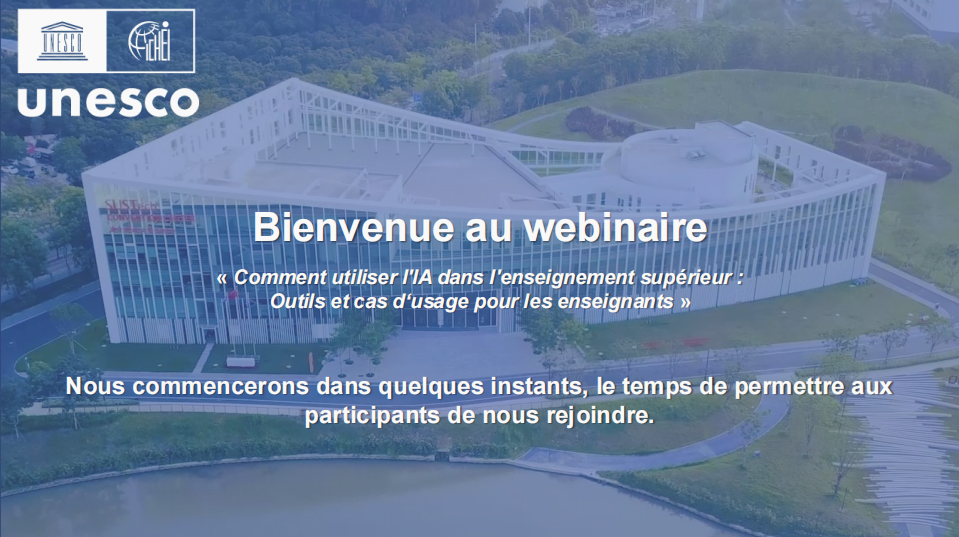
French webinar "How to Use AI in Higher Education: Tools and Use Cases for Educators."
Professor SARR systematically analyzed AI application scenarios in auxiliary teaching, personalized learning, automated assessment, and management decision-making, while offering forward-looking insights into ethical challenges such as algorithmic bias and data privacy. The webinar attracted 527 participants from 42 countries worldwide.
The success of the webinar was no coincidence, but rather the result of deep-seated foundations and proactive execution. First, the 2024 High-Level Policy Dialogue in Africa held in Senegal earned the UNESCO-ICHEI significant trust from local partners and established a solid foundation for cooperation. Second, the highly attractive theme of AI precisely addressed the core transformation needs of African universities. Furthermore, the project team's consistent daily operations have cultivated a deep-rooted learner base, ensuring efficient coordination and wide-reaching promotion during the preparatory stages.

Featured Speaker Professor Cheikh SARR
Notably, Professor SARR also collaborated deeply in the joint development of the "IIOE Digital Competency Reference Framework for Higher Education Workforce" curriculum. Twenty-one courses in this series are now live, targeting common issues such as weak digital foundations and tool unfamiliarity among faculty, aiming to enhance their capabilities in blended learning, resource design, and pedagogical organization.
Currently, the IIOE platform hosts over 700 free multilingual online courses and has attracted over 27,000 registered users from more than 100 countries. With over 60 micro-certification courses available—including 14 in French—the platform provides tailored resources for the digital capacity building of universities in Francophone nations.
IIOE Ghana National Centre Driving Large-Scale Institutional Growth by Model Innovation
Complementing these online activities is a network of institutional partnerships across the developing countries. Within the West African landscape, the performance of the IIOE Ghana National Centre is particularly outstanding.
Hosted by the University of Cape Coast, the IIOE Ghana National Centre has successfully attracted 26 local teacher-training institutions to the IIOE ecosystem, standing as one of the most extensive partner networks among all IIOE National Centres globally.
UNESCO-ICHEI provides global partner institutions with courses and capacity-building projects on the IIOE platform, coordinates the co-construction and sharing of resources, conducts joint research, and organizes annual meetings and dialogues to facilitate exchange. The University of Cape Coast assumes the responsibility of establishing a national blended learning hub, building a local partner network, and creating a dialogue platform for professional faculty development. This model precisely responds to the urgent expectations for digital transformation outlined in Ghana's National AI Strategy (2023–2033) and the World Bank-funded Ghana Digital Accelerator Project.
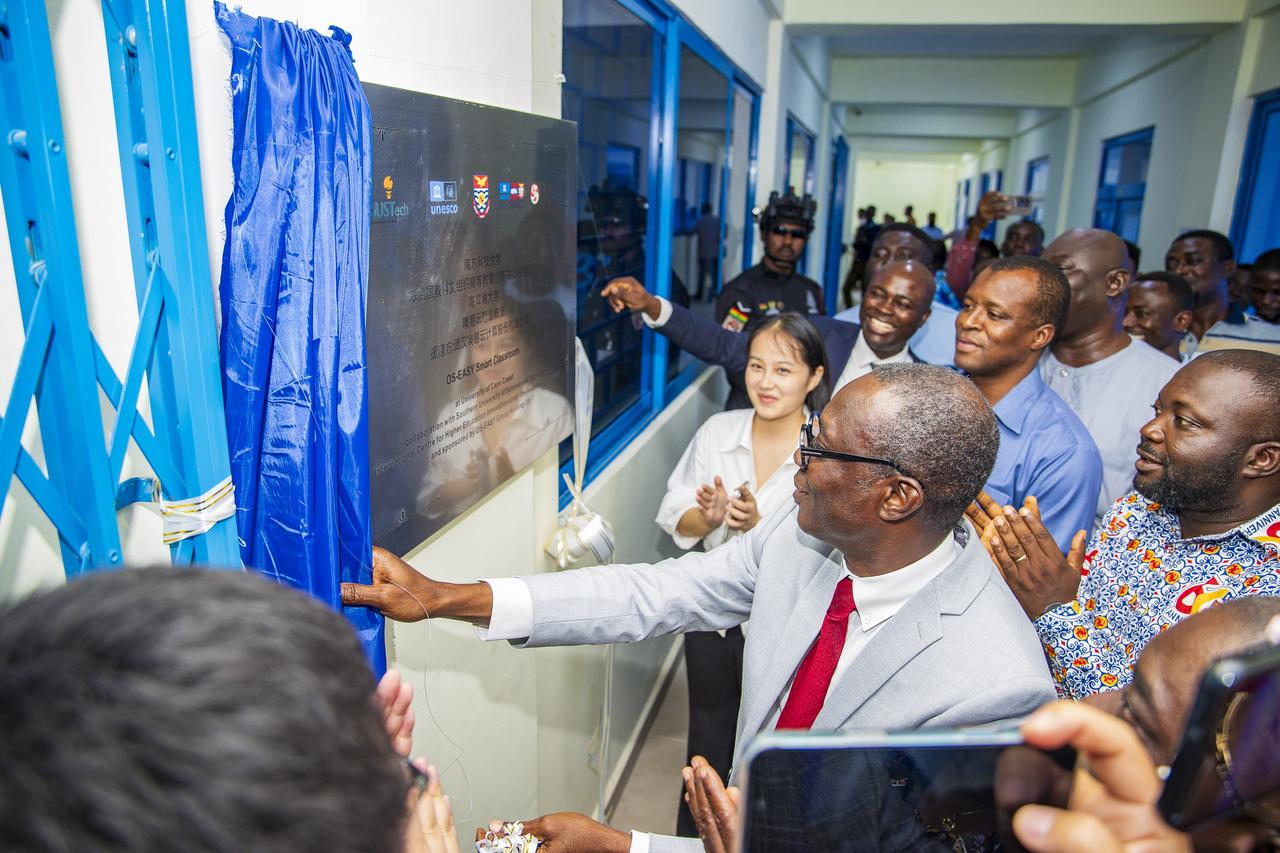
Smart Classroom established at the University of Cape Coast, Ghana, on July 31, 2025.
Although nations in West Africa possess ambitious digital transformation visions, they still face practical challenges such as high broadband costs, a scarcity of advanced AI faculty, and inconsistent data standards. Through the IIOE platform, UNESCO-ICHEI not only provides digital multilingual courses and micro-certifications to West Africa but also commits to empowering the AI capacity building of local faculty. UNESCO-ICHEI is doing more than disseminating knowledge and technology; it is assisting developing countries in building a credible and localized digital foundation.
Currently, the total number of IIOE global partner institutions has reached 196. From knowledge co-creation in Francophone regions to the expansion of the IIOE global ecosystem, UNESCO-ICHEI is precisely aligning with the digital transformation needs of developing countries with a forward-looking perspective, building a solid and sustainable bridge of collaboration for the vision of South-South Cooperation.
Event Preview | Global Future Higher Education Summit: A New Ecosystem for AI-Driven Industry-Academia Collaborative Talent Development
On 6 June 2026, UNESCO Regional Office for East Asia (UNESCO Beijing), the UNESCO Institute for Information Technologies in Education (UNESCO IITE), Southern University of Science and Technology (SUSTech) and the International Centre for Higher Education Innovation under the auspices of UNESCO (UNESCO-ICHEI) will jointly convene the "Global Future Higher Education Summit: A New Ecosystem for AI-Driven Industry–Academia Collaborative Talent Development" in Shenzhen, China.
The Summit aims to explore new models of industry–education integration and higher education ecosystems, while jointly charting forward-looking pathways for talent development in the digital and AI era. UNESCO-ICHEI will share its valuable experiences in higher education innovation in West Africa and its global cooperation network. The Summit will provide higher education stakeholders with actionable models for building an AI-enabled industry-academia collaborative ecosystem for talent development.
Registration link:https://us06web.zoom.us/webinar/register/WN_pKIpEan0RYybFWTgXtRCjw
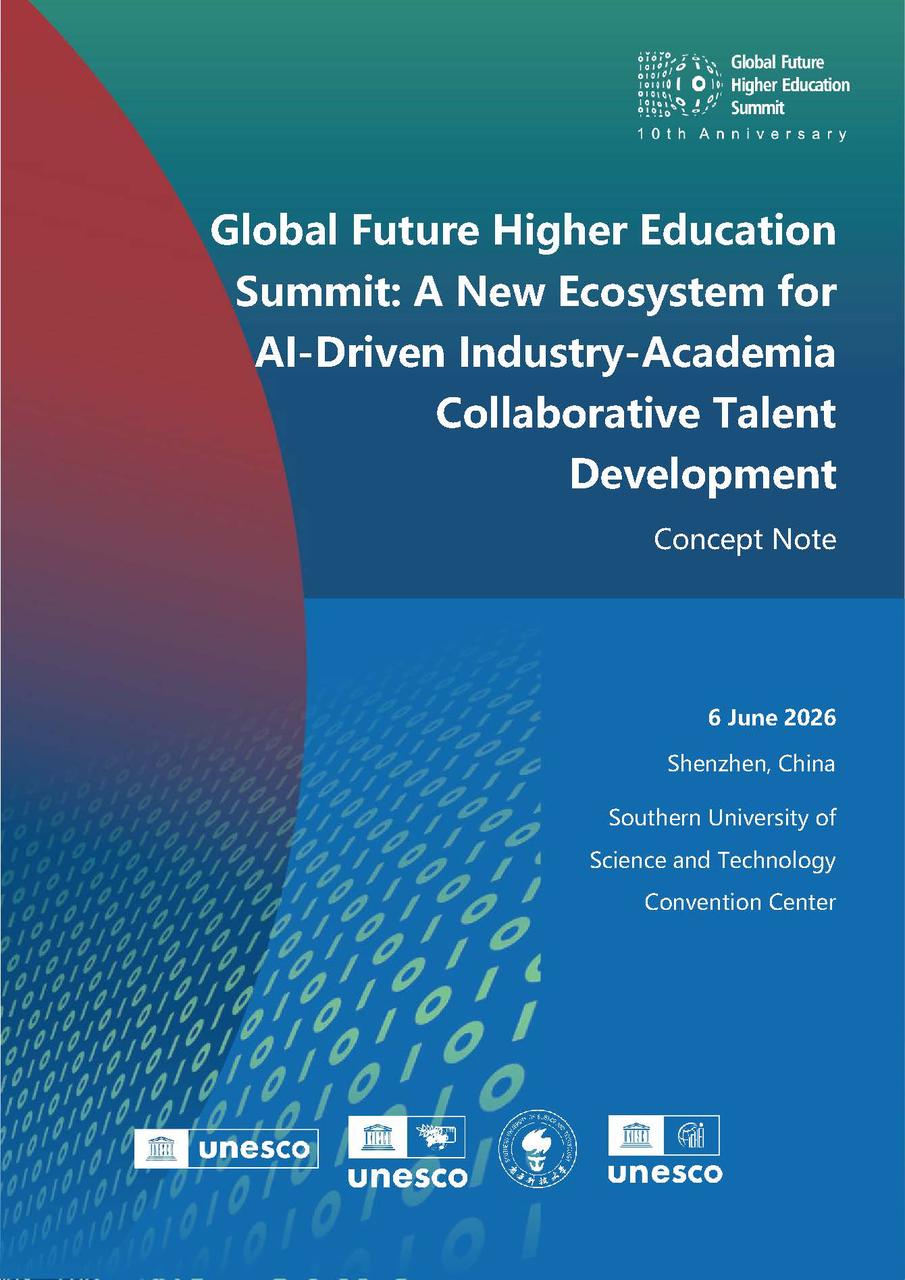
Global Future Higher Education Summit: A New Ecosystem for AI-Driven Industry–Academia Collaborative Talent Development