Report Launch: Global Higher Education Knowledge Production
On December 21st, 2025, the Higher Education Research Center of Southern University of Science and Technology (hereinafter referred to as "SUSTech"), and the International Centre for Higher Education Innovation under the auspices of UNESCO (hereinafter referred to as "UNESCO-ICHEI"), jointly lunches the The Global Higher Education Knowledge Production: Indicators, Dynamics, and Implications (Report 2025), (hereinafter referred to as "the Report") during the 6th Conference on the Construction of World‑Class Research Universities. This report is an open-access document, now available online on UNESCO-ICHEI's official website. Report Link available at the end of the article.
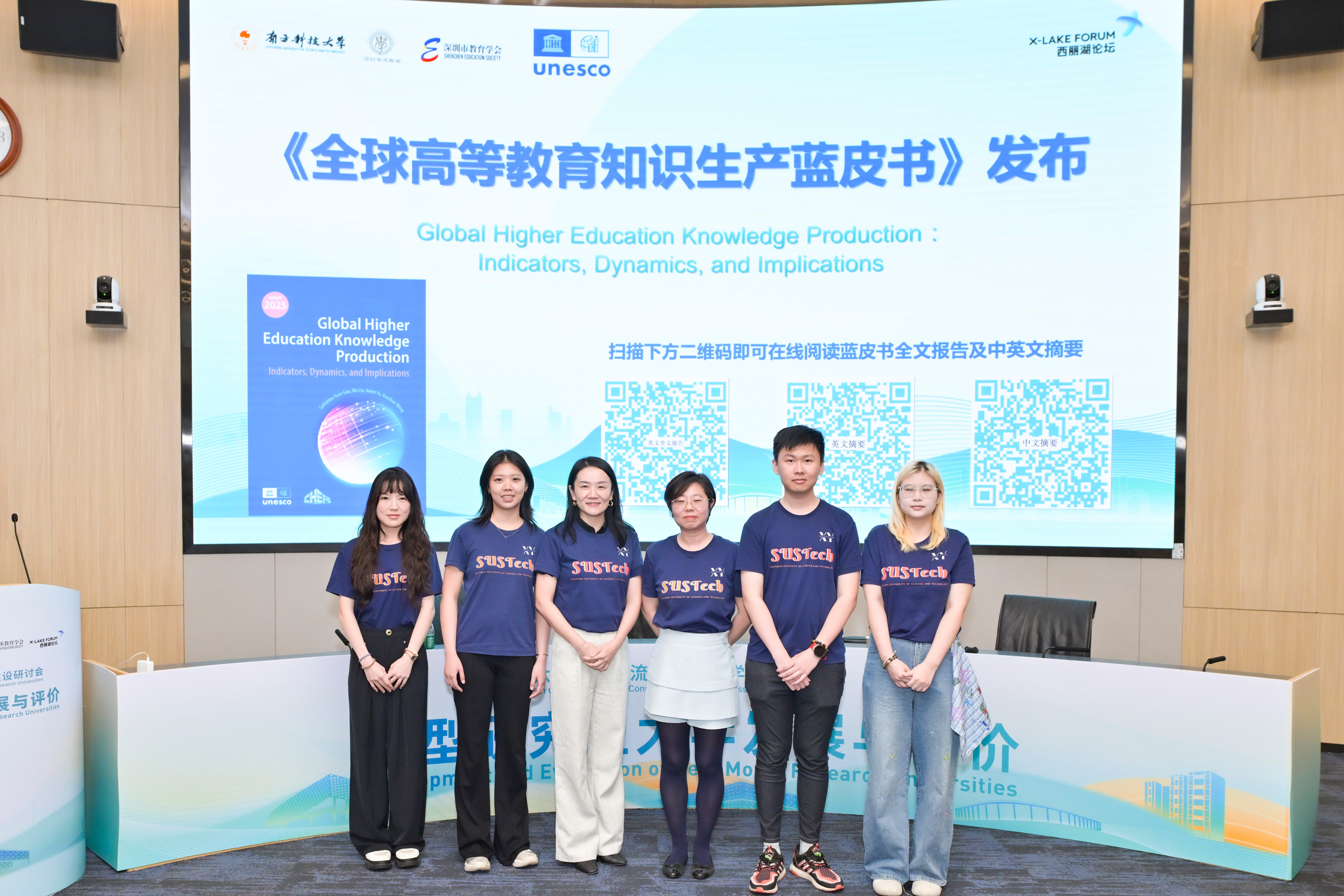
Group photo of the research team
The launch formed a dedicated session, moderated by Dr. LIU Xu from the Centre for Higher Education Research (CHER) of SUSTech. Ms. BI Xiaohan, Deputy Director of the UNESCO International Centre for Higher Education Innovation (UNESCO‑ICHEI), delivered an opening remark.
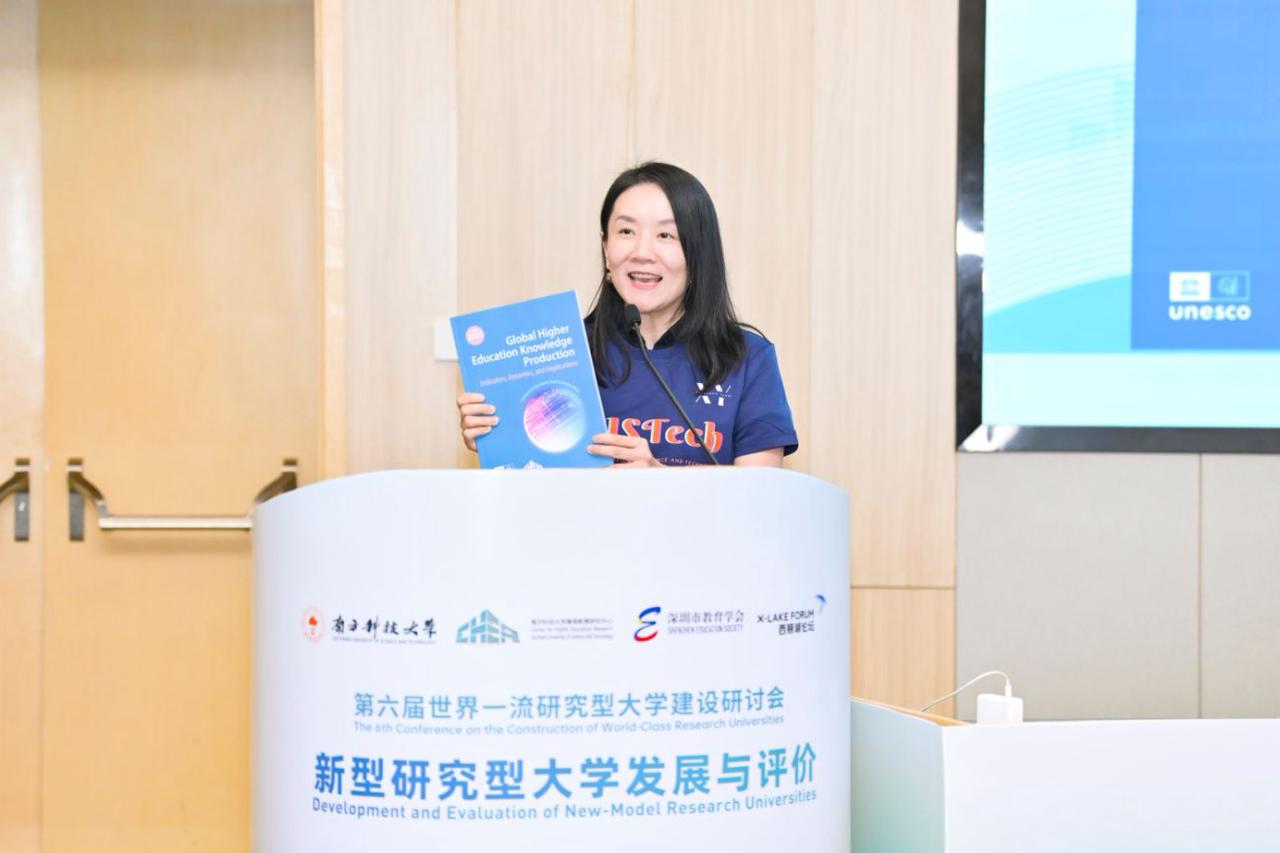
Dr. LIU Xu from the Centre for Higher Education Research (CHER) of SUSTech moderated the session
Speaking on behalf of UNESCO‑ICHEI, Ms. BI noted that UNESCO-ICHEI has long conducted multilateral cooperation to release a series of reports, frameworks, and guidelines focusing on the digital transformation and innovative application of higher education. Knowledge is shared through UNESCO's global system and UNESCO-ICHEI's network of over 130 partner universities, numerous international organizations, and cooperative enterprises. The Report is one of the latest achievements. She hopes to utilise the UNESCO platform to promote the academic research results of SUSTech globally, provide intellectual resources for related research projects and knowledge production, and foster more multilateral interconnection and cooperation in the future.
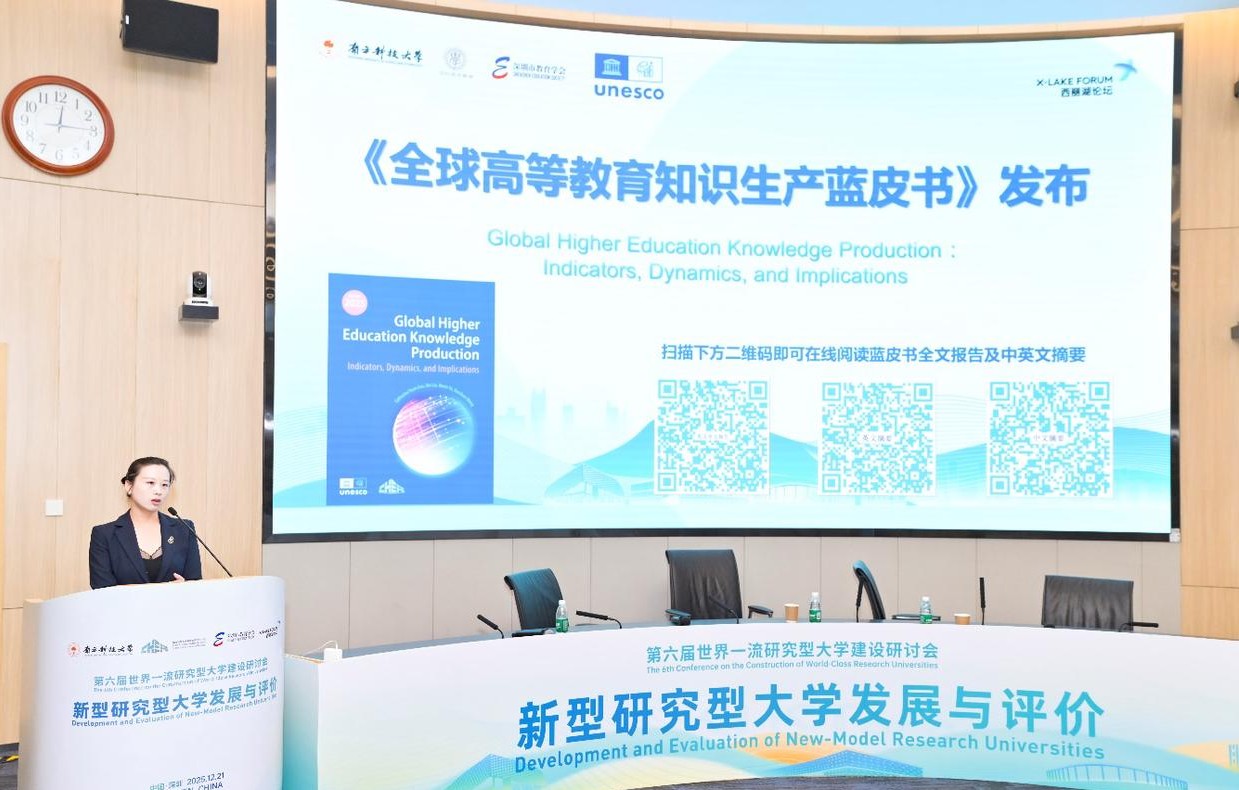
Ms. BI Xiaohan delivered opening remarks
Dr. GAO Yuan, Assistant Professor at CHER and lead author of the Report, then introduced the report's key contributions to the higher education research community. She outlined the rationale for advocating open and cumulative knowledge sharing in global higher education research and emphasised that the research team was independently developed at SUSTech and supported by the broader research ecosystem of the Guangdong–Hong Kong–Macao Greater Bay Area. Dr. GAO noted that the team plans to update the Report on a five‑year cycle, gradually building a cumulative and reflective global knowledge repository capable of addressing emerging and complex challenges in higher education.
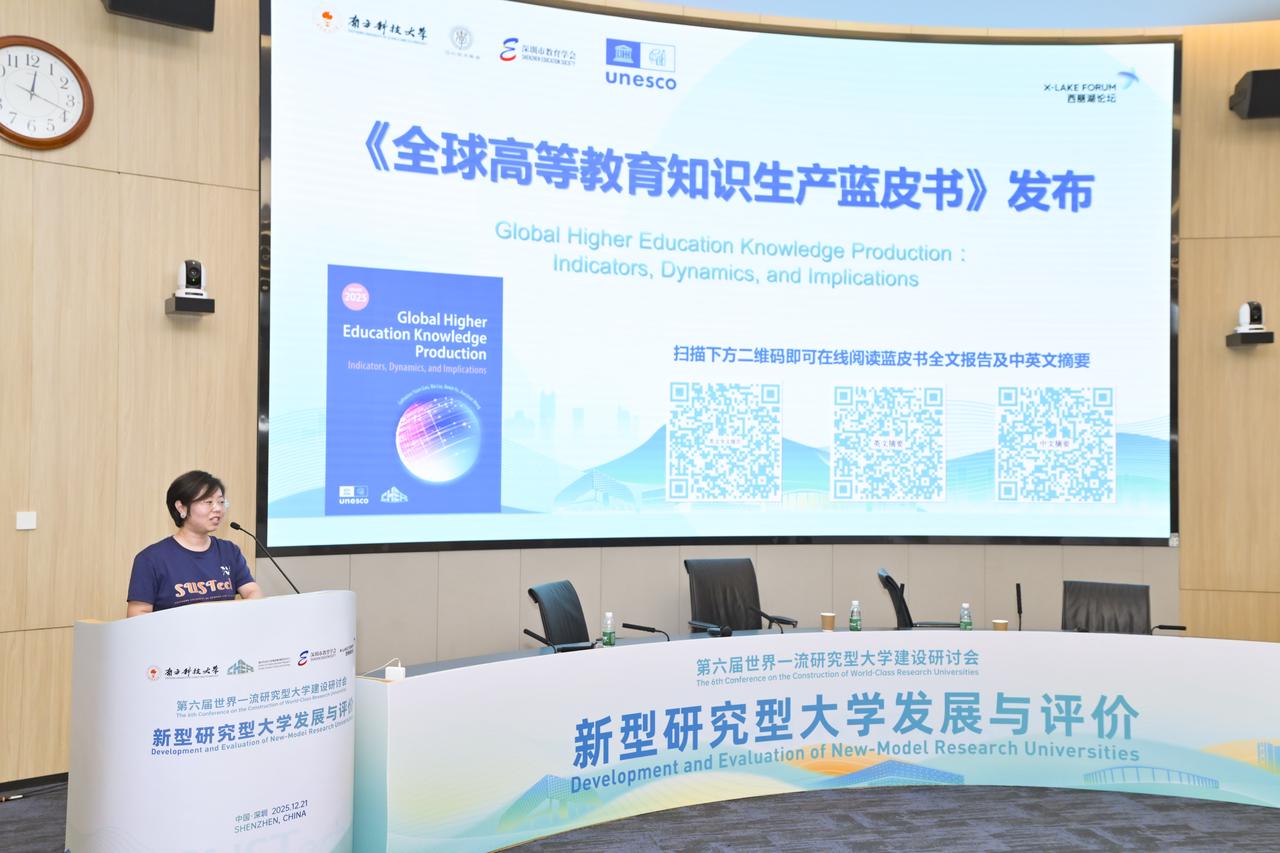
Dr. GAO Yuan, Assistant Professor at CHER and lead author, introducing the Report
The Report 2025 provides an integrated empirical account of how knowledge about higher education is produced and organised worldwide. Covering the period from 1991 to 2024, the report examines who contributes to higher education research, where knowledge is generated, the channels through which it is disseminated, the thematic priorities that shape the field, and the evolution of collaboration networks during a period of profound global transformation. It is intended as a key reference for researchers and policymakers seeking to understand and engage with the changing global landscape of higher education research.
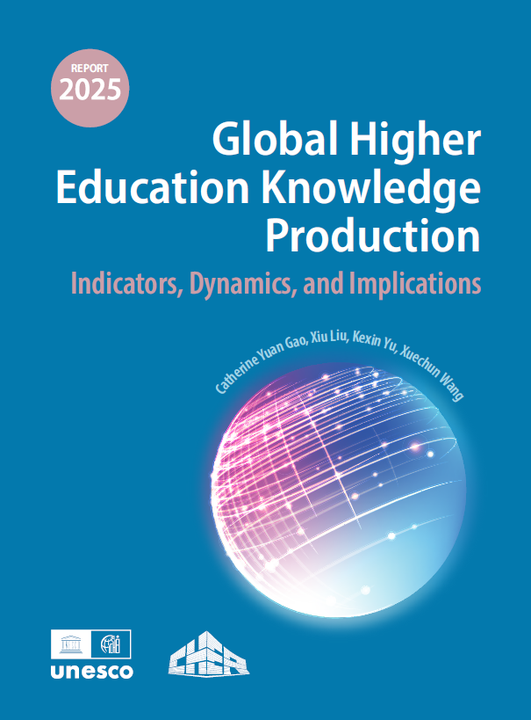
The Global Higher Education Knowledge Production: Indicators, Dynamics, and Implications (Report 2025)
Main Finding
Adopting a "global–national–local" (glonacal) analytical framework, the Report integrates multi‑scale data, applies a relational perspective, and employs bibliometric analysis and Structural Topic Modelling (STM) to map global higher education knowledge production. The study draws on 213,492 English‑language articles indexed in Web of Science (1991–2024) and 99,975 Chinese‑language articles from CNKI core journals (1992–2024). By combining international and national‑language databases, the report addresses the English‑centric bias of global indexing systems and enables systematic comparison between the Global North and the Global South, as well as in‑depth analysis of national research spaces in the United States, the United Kingdom and mainland China.
The findings show that global higher education research has expanded rapidly in scale, but patterns of output and participation remain highly uneven. A relatively small group of scholars and core institutions dominate knowledge production, while a large and interdisciplinary "hidden mass" of contributors sustains the breadth of the field. Institutional centres of higher education research have multiplied, with thematic attention increasingly shifting towards digital transformation, wellbeing, practice‑oriented inquiry and data‑driven approaches.
Knowledge dissemination is highly concentrated in a small number of interdisciplinary English‑language journals. Although international collaboration has increased over time, co‑authorship remains predominantly domestic and regional, reflecting the continued influence of Global North‑centred structures. Participation from the Global South, while still limited, is expanding in diverse ways. Research output from Southeast Asia is growing rapidly, Latin American scholarship places strong emphasis on critical reflection, and African research foregrounds decolonisation, albeit with substantial internal disparities in capacity. Together, these patterns challenge simplistic centre–periphery models of global knowledge production.
At the national level, the report finds that the United States maintains global leadership through scale and the strength of its public research universities; the United Kingdom exerts influence through editorial leadership and international collaboration; and mainland China has developed a large‑scale, policy‑oriented and practice‑focused higher education research system closely aligned with technological development. Overall, the Report reveals a multi‑scale, dynamic, and institutionally differentiated landscape of global higher education knowledge production.
About the Report
Global Higher Education Knowledge Production: Indicators, Dynamics, and Implications (Report 2025) offers a comprehensive, data‑driven overview of global higher education research from 1991 to 2024. The Report was conducted based on an original bilingual corpus and advanced bibliometric and topic‑modelling methods.
Report link:
• English version: https://en.ichei.org/en/knowledge/yjbg/
• Chinese version: https://cn.ichei.org/knowledge/yjbg/